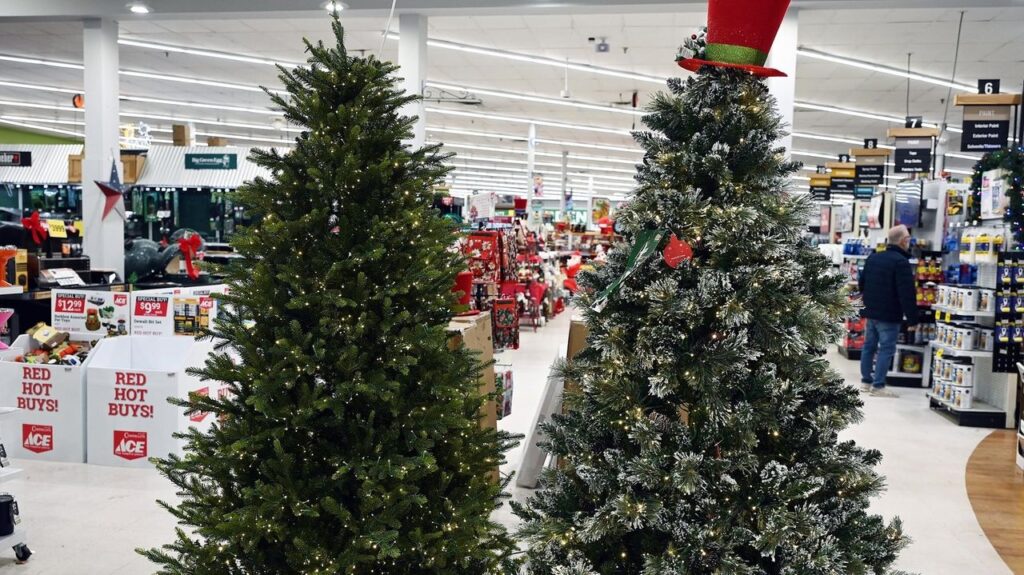
As U.S. consumers prepare for the holidays, significant changes in the Christmas tree market are unfolding due to increased tariffs on imports. With the rising costs of artificial Christmas trees, more people are leaning towards buying real trees. This shift is creating unique challenges and opportunities for retailers.
In Plainview, New York, Trio Hardware opted not to stock artificial Christmas trees this year. Rising tariffs on seasonal imports would have led to soaring prices, discouraging buyers. Todd Kirschner, co-owner of the store, noted a surprising trend: a sell-out of real tree stands, indicating a consumer shift towards real trees over the more expensive artificial ones.
Impact of U.S. Tariffs
The implementation of a 30% tariff on artificial Christmas trees from China is significantly impacting the U.S. market. According to the American Christmas Tree Association, 87% of the artificial trees sold in the U.S. are from China. As a result, prices for artificial trees have increased by 10% to 15% this year. This price hike is encouraging consumers to either reuse existing artificial trees or purchase real trees, which often cost less.
“They had to pass some of the costs on [to consumers],” explained Jami Warner, executive director of the association. “Otherwise, they would have completely gone out of business.”
Despite these changes, there is no shortage of Christmas trees, though there is less variety due to retailers ordering smaller quantities as a precaution against fluctuating tariffs. This was corroborated by Michael Costello from Costello’s Ace Hardware, who noted the difficulties in predicting tariff impacts, which affect their buying decisions months in advance.
The Retail Response
Retailers like Costello’s Ace Hardware have adjusted by reducing holiday product orders and sourcing merchandise already in the U.S. to maintain control over prices. “The result this year is a smaller overall assortment, fewer new and innovative choices, and less inventory depth,” Costello shared.
Consumers are feeling the squeeze, with some, like 63-year-old Julie Liebow, opting to hold out for sales instead of purchasing new artificial trees at steep prices. Others, like Merrick resident Georgia Nagy, are contemplating switching to real trees this year, drawn by the natural appeal versus the rising cost of artificial options.
Assessing the impact on the real tree market, Marsha Gray of the Real Christmas Tree Board noted that most real trees in the U.S. are locally grown, with no anticipated price increases from growers. The board’s survey confirms that a significant majority (84%) of wholesale growers plan to keep prices steady.
The holiday season thus seems poised for a potential boost in real tree sales, depending on consumer response to the inflated costs of artificial trees. The final figures, however, remain to be seen, as the industry prepares for a robust season despite the economic dynamics shaped by the new tariffs.