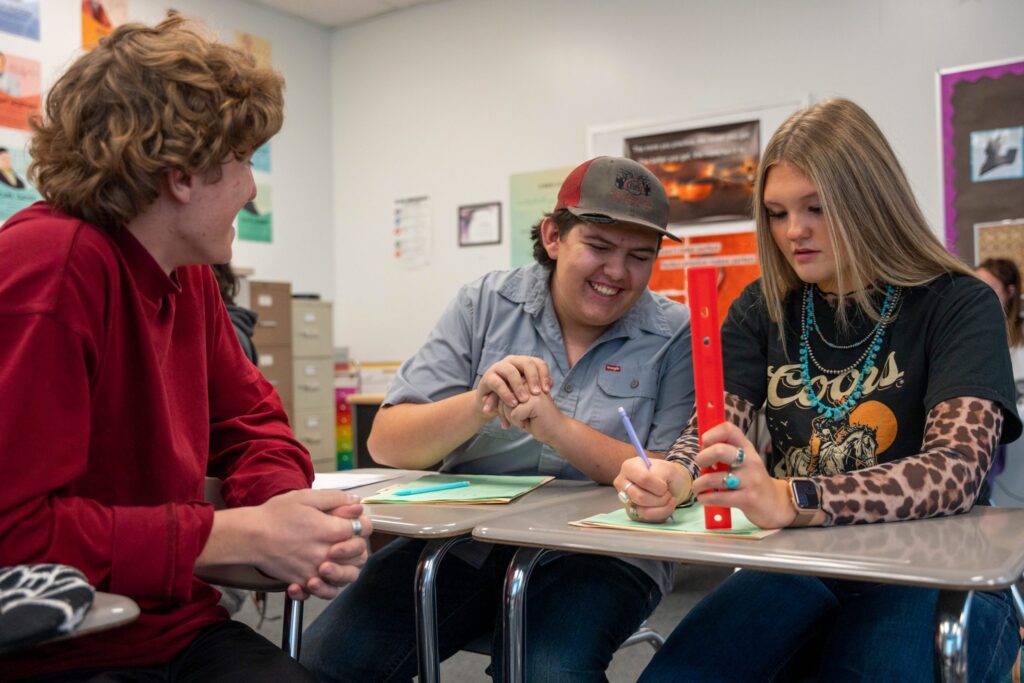
LEHI, Utah — High school math teacher Sarah Gale turned a regular class before Thanksgiving into a unique lesson on data science. Instead of typical math problems, students at Lehi High School explored a 2017 study using Marmite, a salty spread uncommon in Utah. This hands-on approach aimed to illustrate how a doctor’s tone can affect patient compliance.
Students analyzed data from the study, coding statistical models to see how different doctor delivery styles influenced patient behavior. Gale guided her class, asking, “What’s the hypothesis we’re trying to prove here?” This initiative is part of a larger effort in Utah to integrate data science into high school curricula, supported by a $20,000 state grant split among 16 math teachers.
As data science gains traction in schools nationwide, Utah is among 14 states offering pilot courses or training teachers. Advocates believe understanding data science can lead to jobs in tech and healthcare, while critics worry it may overshadow traditional math subjects. This debate intensified when Utah proposed introducing data science from preschool onwards, causing concerns over potentially lowering academic standards.
Despite the controversy, the state aims to adjust its K-12 math standards, offering a standalone data science course for juniors and seniors. However, the Utah State Board of Education paused the overhaul to review teaching methods and standards, responding to parent and educator concerns.
Meanwhile, the demand for data science skills in Utah’s job market grows, with a 2024 report noting that a quarter of job postings require these skills. Yet, less than 1 percent of high school students receive data science instruction. As the state reviews its math curriculum, educators like Sarah Gale continue to champion data science education, emphasizing its relevance in today’s data-driven world.
Political and tech leaders recently advocated for expanding data science education in Utah to maintain economic competitiveness. The state’s pilot courses, including Gale’s, could soon expand statewide, offering high school students a chance to apply data science across various fields.
Utah currently requires three years of foundational math in high school, but students can substitute the third year with alternate courses. Data science could become a more challenging alternative for students uninterested in algebra and calculus. This approach has resonated with students like Hailee Kubbe, who found data science more engaging and relevant than traditional math.
Experts like Georgetown University’s Jeff Strohl praise Utah’s balanced approach to teaching data science alongside foundational math. Despite challenges like AI-induced job market instability, data science remains a valuable skill. As more states consider updating their math standards to include data science, Utah continues to explore ways to integrate this vital subject into its education system effectively.
—
Read More Kitchen Table News