Article Summary –
About one-third of Wisconsin children did not receive all recommended vaccinations by age 2 in 2025, with a decline from 68.8% in 2024 to 66.9% in 2025, prompting concern from the Wisconsin Department of Health Services. Factors contributing to this decline include vaccine accessibility issues, misinformation about vaccines, and recent changes in national vaccine policies under U.S. Health Secretary Robert F. Kennedy Jr. To address the issue, Wisconsin utilizes programs like the Vaccines for Children Program to provide free or reduced-cost vaccinations, and health officials emphasize the importance of increasing vaccination rates to prevent outbreaks of diseases such as measles.
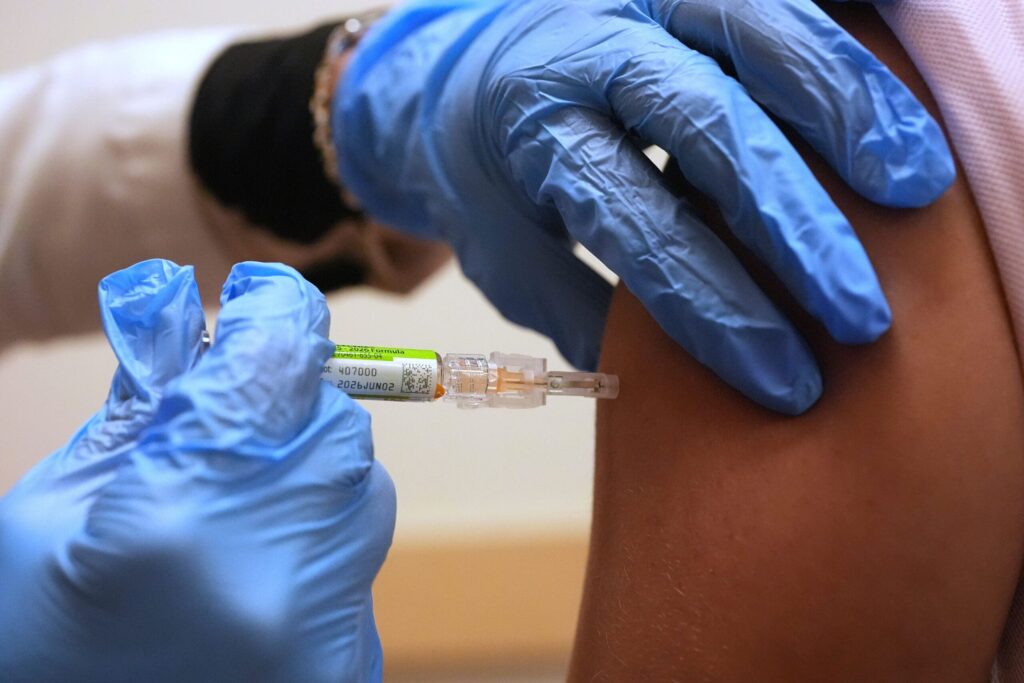
Approximately one-third of Wisconsin children did not receive all of their recommended vaccinations by age 2 in 2025, according to state health department data.
Leaders from the Wisconsin Department of Health Services expressed concern over a nearly 2% decline in fully vaccinated children by 24 months from 2024 to 2025.
“That means fewer kids are protected,” stated Dr. Stephanie Schauer, manager of the Wisconsin Immunization Program, during a press briefing on March 9. “Behind these numbers are children, families, and our community.”
In 2019, 72.1% of Wisconsin kids were fully vaccinated by age 2. This rate dropped to 68.8% in 2024 and further to 66.9% in 2025, which Schauer indicated affects approximately 1,200 children.
According to Paula Tran, the state health officer, this type of public health data functions as an alert system, signaling risk to Wisconsin’s communities and kids’ health.
“Today, the alert system signals that Wisconsin’s health and well-being are at risk,” Tran stated. “Vaccination rates reflect real people—children, families, and neighbors. Even minor declines increase the risk of preventable diseases and outbreaks.”
Schauer suggested that vaccine accessibility might play a role, as busy parents struggle to schedule numerous appointments, and misinformation about vaccines remains prevalent.
These trends arise amid U.S. Health Secretary Robert F. Kennedy Jr.’s policy changes on vaccines, which conflict with scientific consensus. His views have raised questions in Congress.
For more vaccine information, visit the state health department’s website.
The Vaccines for Children Program helps provide free or reduced-cost vaccinations for eligible children, explained Schauer.
“Cost is a major concern for parents, but this program allows children to stay protected without financial worry,” she noted.
Dr. Ryan Westergaard, chief medical officer, emphasized that timely vaccinations prevent the spread of vaccine-preventable diseases.
Democratic Gov. Tony Evers recently announced Wisconsin will join WHO’s Global Outbreak Alert Network after the U.S. withdrawal.
Wisconsin is addressing emerging measles cases, with the health department dashboard showing two cases and a hospitalization as of March 10.
State data for 2025 indicates nearly 80% of kids received at least one dose of the MMR vaccine by age 2; however, a 95% rate is crucial for halting the disease’s spread, Schauer stated.
“We haven’t heard much about measles due to past control,” Schauer said. “We need more children protected, not fewer.”
—
Read More Wisconsin News