Article Summary –
Nearly 30 Wisconsin communities benefit from over $159 million in state and federal funding, primarily from the 2021 Bipartisan Infrastructure Law, to replace lead pipes and improve access to clean drinking water. This funding includes grants and low-interest loans, allowing communities like Oshkosh, Milwaukee, and Thorp to replace lead service lines, with Milwaukee receiving over $50 million to meet the EPA’s 2037 deadline for lead pipe replacement. Challenges remain in encouraging residents to participate in these programs, but efforts, including information campaigns and potential use of AI tools, aim to overcome skepticism and identify lead service lines more efficiently.
Nearly 30 communities in Wisconsin are leveraging over $159 million in state and Biden-era federal funding to eliminate lead pipes and enhance clean drinking water access.
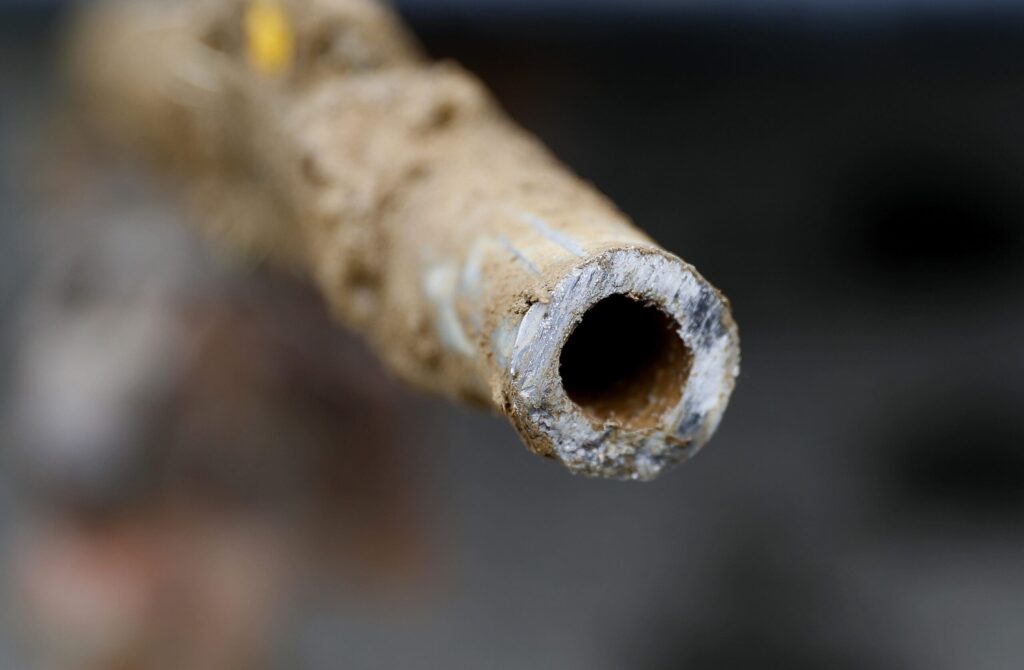
Wisconsin’s Lead Service Line Replacement Program, funded by the 2021 Bipartisan Infrastructure Law, allocates $15 billion over five years for identifying and replacing lead service lines nationwide.
Democratic Gov. Tony Evers stated in a news release, “There is no safe level of lead, period, and removing these harmful contaminants from our water systems has been a top priority since Day One.” Wisconsin is a frontrunner in lead pipe replacement.
Wisconsin has over 132,000 public lead service lines, 128,000 private lead lines, and over 208,000 unknown material lines possibly containing lead, according to the release.
Lead exposure decreases IQ and attention span in children, causing learning and behavior issues, says the state Department of Natural Resources. Adults face heightened risks of heart disease, high blood pressure, and nerve problems.
James Rabe, Oshkosh’s Director of Public Works, told Wisconsin Independent that the city sent over 15,000 notices; about 55% confirmed lead pipes, 43% had unknown materials, and 2% were galvanized pipes needing replacement.
Oshkosh receives over $6 million from the Lead Service Line Replacement Program, with $2.7 million in principal forgiveness, a federal subsidy, and the balance as a 0.25% interest loan.
“This is impactful for residents replacing lead services to their homes,” Rabe remarked, calling it “huge for our community.”
Milwaukee, about 90 miles from Oshkosh, secures over $50 million, with $19 million forgiven and the rest as a 0.25% interest loan.
Betsy Vornholt from Milwaukee Water Works said, “The award aids the city in meeting the EPA’s mandate to replace all lead lines by 2037.”
Even smaller towns benefit. Thorp, a northwest Wisconsin city, receives over $733,000, including $366,000 in forgiveness, with the rest as a 0.25% loan.
Thorp officials stated, “This funding allows for affordable lead service replacement. The City of Thorp is dedicated to eradicating lead from our water system.”
Rabe noted challenges in convincing residents to replace lead pipes despite extensive information campaigns. “Skepticism is part of human nature,” he said. “Gaining buy-in is the toughest part.”
Oshkosh offered a program for residents to send photos for lead pipe identification, Rabe mentioned. He now partners with a developer using AI to analyze such images.
“We still have 6,700 unknowns. That’s a lot to identify,” he said. “If there’s a tool to help residents identify them, we’ll try it.”
For more information on lead projects and funding, visit the DNR’s website.
—
Read More Wisconsin News