Michigan’s political landscape is marked by a complex interplay between the Senate and the House, particularly amid recent legislative slowdowns. Despite these challenges, Senate Majority Leader Winnie Brinks remains optimistic about potential policy advancements in the upcoming year.
Legislative Tensions
The 2023-2024 legislative session has been a tumultuous one, with the Senate engaging in legal action against the House over the non-delivery of nine bills to the governor. This clash arose after Republicans assumed control of the chamber, leaving the bills in limbo. Brinks attributes the fewest number of bills in Michigan’s history to House leadership but maintains that bipartisan cooperation can still yield benefits for the state.
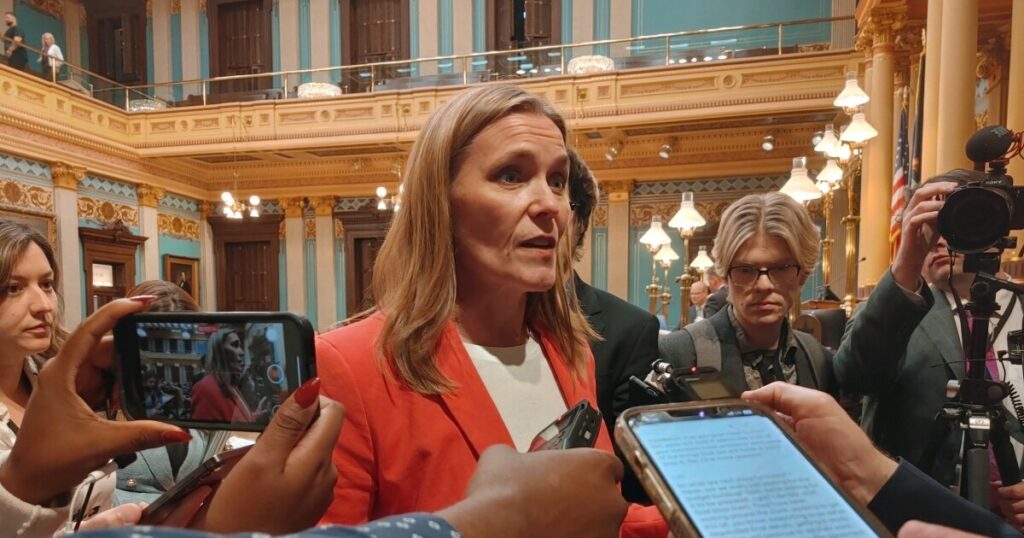
Brinks stated, “I reject that that will be a barrier to us as Democrats and any other person here, Republicans included, in being committed to doing what we still can: that is to benefit the people of our state.” Meanwhile, House Speaker Matt Hall argues that the House is ensuring only well-prepared policies are considered.
Policy Priorities
Looking ahead, Brinks identifies timely budget approval and online safety for children as key priorities. Senate Democrats have introduced the Kids Code Act, designed to enhance consumer protections and regulate children’s social media use.
Despite a challenging year, Brinks highlights successful policies, including road funding and free school meal protections. A 24% wholesale cannabis tax was agreed upon to fund roads, though Brinks expressed a preference for more diversified funding sources.
Ongoing Funding Disputes
Brinks is also advocating for the restoration of $645 million cut by the House Appropriations Committee. This funding was earmarked for social safety nets and infrastructure. House leadership contends that the cuts targeted non-essential projects.
Brinks criticized the decision, stating, “I will point out that the speaker was there. He was the minority leader at the time, he had a seat at the table. If he is unhappy with the negotiation from a year and a half ago, he should’ve done a better job with it then.”
Data Center Legislation
Legislation facilitating data center development has sparked debate, with some communities expressing concern over potential impacts on energy rates and the environment. Brinks assured that Michigan’s laws address these issues, emphasizing the need for developers to engage responsibly with local communities.
Despite the bipartisan push to repeal these laws, Brinks maintains that developers must be “good neighbors” and adhere to community standards.
—
Read More Michigan News