Article Summary –
December’s sluggish job growth capped a lackluster year for employment gains, with only 50,000 jobs added, reflecting a hesitancy among businesses to hire due to factors like shifting tariff policies, inflation, and automation. Despite low layoffs and a slight drop in the unemployment rate to 4.4%, the overall weak job market has frustrated job seekers while prompting mixed views at the Federal Reserve regarding interest rate changes. Economic growth has picked up to healthy levels with a 4.3% annual rate in the third quarter, driven by strong consumer spending, but productivity improvements mean companies are producing more without needing to add jobs.
WASHINGTON (AP) — December ended with slow hiring, capping a year of weak job growth despite steady low unemployment. Employers added only 50,000 jobs, almost the same as November’s revised 56,000, according to the Labor Department’s report. The unemployment rate fell to 4.4% from November’s 4.5%.
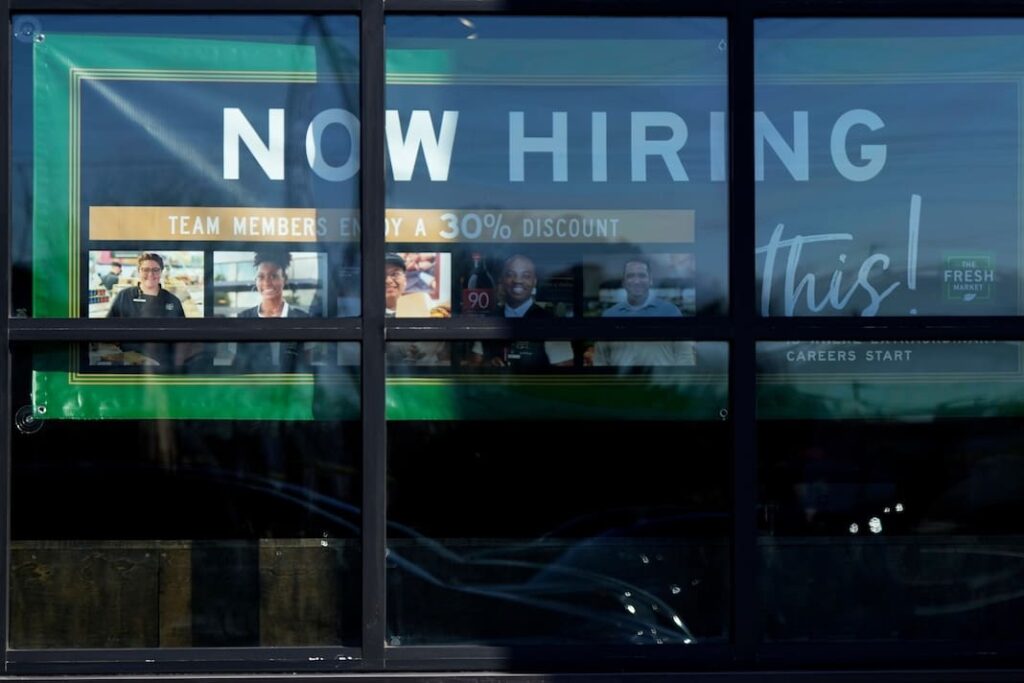
Businesses showed caution in adding workers, even as economic growth increased. The pandemic’s hiring surge has waned, and unpredictability from tariff policies, rising inflation, and AI have delayed hiring.
Economists lauded the declining unemployment rate after four consecutive months of increases, though the weak job market has concerned the Federal Reserve, which reduced interest rates last year.
Blerina Uruci, T. Rowe Price’s chief economist, noted, “The labor market appears stable, though employment growth is slow. The Fed has no immediate need to cut rates.” Some Fed members worry inflation exceeds the 2% target, while others fear stalled hiring and advocate lower interest rates to boost economic activity.
November’s job addition was revised to 56,000 from 64,000, and October’s saw a significant drop, with a revised loss of 173,000 jobs. Nearly all new December jobs were in health care, restaurants, and hotels. Health care added 38,500 jobs, and restaurants and hotels gained 47,000. State and local governments added 13,000 jobs.
Conversely, manufacturing, construction, and retail sectors shed jobs. Retail lost 25,000 jobs, indicating weaker holiday hiring. Manufacturing has consistently shed jobs since April’s tariff announcements.
Friday’s report drew attention as it was the first comprehensive labor market read in three months. The economy added just 584,000 jobs in 2025, the smallest annual increase since 2020, excluding recessions.
Trump claimed 654,000 new private-sector jobs since January, while government jobs declined by 181,000. His remarks, including December data and earlier revisions, were released before public access. Despite slow hiring, low layoffs suggest firms aren’t cutting jobs rapidly, maintaining job security.
Ernesto Castro, 44, is struggling to find work due to AI and automation competition. With nearly a decade in software support, he’s considering starting a software company or pursuing project management roles.
The hiring slowdown highlights a significant issue as the economy enters 2026: Growth improves, yet hiring weakens. Tariff uncertainty has postponed job additions for some companies.
Steve Heckeroth, CEO of Renewables, Inc., explained tariffs delayed hiring for his small electric tractor startup in California, affecting parts costs. Economists predict hiring will soon accelerate due to solid growth and anticipated tax refunds. Yet, weak job growth could limit future expansion, or the economy may grow while AI reduces job needs.
Productivity rose nearly 5% from July to September, allowing more output without more jobs, potentially increasing worker pay. The economy grew at a 4.3% annual rate in the last July-September quarter, the highest in two years, driven by consumer spending. The Federal Reserve Bank of Atlanta expects growth to slow to 2.7% in the last year’s final quarter.
—
Read More Michigan News