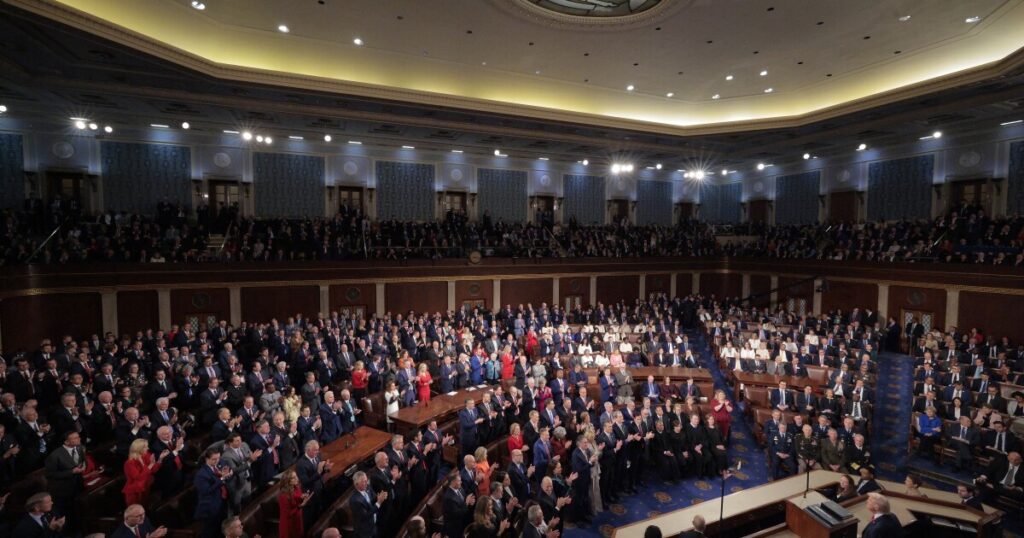
In a historical context, only once has a U.S. president addressed Congress during a State of the Union and declared the union to be “not good.” This was not the case for President Trump during his latest address.
That unique moment belonged to Gerald Ford in 1975, during economic hardships similar to those faced today, including high inflation. Currently, many attribute their economic woes to Trump’s policies, particularly tariffs. Despite these challenges, Trump painted an optimistic picture, stating, “our nation is back” and describing it as a “turnaround for the ages.”
Here is a closer look at the significant points from Trump’s midterm election year address:
Trump Skips Over Economic Hardships
The concerns of voters about inflation and living costs weren’t addressed in Trump’s speech. Instead, he offered a positive outlook, focusing on the stock market and reduced gas prices. However, public sentiment remains critical, with many blaming his policies, especially tariffs, for their financial struggles. Trump even defended these tariffs in his speech, despite recent Supreme Court rulings against them.
Repetitive Midterm Message
Trump’s speech did not introduce any new political agendas. Instead, he reiterated familiar themes: immigration, crime, and cultural issues. He emphasized border security and crimes attributed to undocumented immigrants, a strategy frequently used despite insufficient data to support claims of increased crime by this group. However, the public’s dissatisfaction with Trump’s handling of the economy and immigration policies could hinder his message this time.
Lack of a Legislative Roadmap
Unlike traditional State of the Union speeches, which often outline legislative agendas, Trump’s address was sparse in this regard. He made a few specific requests, such as “codifying” drug price reductions and passing the “Stop Insider Trading Act” and the “Delilah Law.” Additionally, he called for restoring funding to the Department of Homeland Security and passing the SAVE America Act. Yet, these proposals do not constitute a comprehensive legislative strategy.
Diverse Democratic Reactions
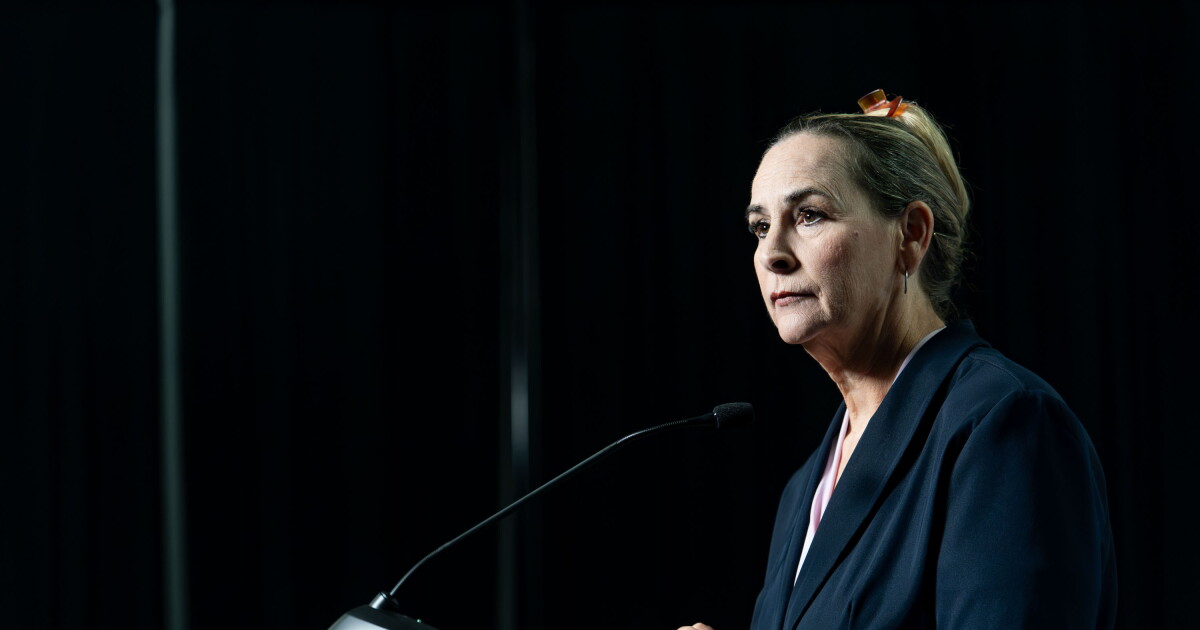
The Democratic response to Trump’s speech was marked by both protest and policy focus. Several Democrats voiced their disapproval during the address, while others boycotted the event. Virginia Governor Abigail Spanberger delivered the official Democratic rebuttal, emphasizing economic issues. Her message resonated with swing district voters and could be pivotal in the upcoming elections.
Established Perceptions of Trump
Despite the opportunity to reshape public opinion, Trump’s address largely reinforced existing perceptions. According to an NPR/PBS News/Marist poll, Trump’s image seems firmly entrenched in the public mind. Instead of broadening his appeal, he engaged in partisan tactics, branding Democrats as “crazy” and turning the event into a spectacle with appearances by the Olympic hockey team and decorated veterans.
Although the State of the Union offered Trump a platform to address national concerns, his focus remained on showmanship, with limited impact on shifting public perception in this critical midterm election year.
Stay up to date with our Politics newsletter, sent weekly.
—
Read More Michigan News
![Jody White’s Unconventional Michigan Supreme Court Candidacy Explored[embed]https://www.youtube.com/watch?v=8NfxFIPE4ac[/embed]](https://www.kitchentablenews.org/wp-content/uploads/2026/10/Jody-Whites-Unconventional-Michigan-Supreme-Court-Candidacy-Exploredembedhttpswwwyoutubecomwatchv8NfxFIPE4acembed.com2F842F0e2Fc7223daa43c9876b36a4e00773a42Fme-supc.png "Jody White’s Unconventional Michigan Supreme Court Candidacy Explored[embed]https://www.youtube.com/watch?v=8NfxFIPE4ac[/embed]")