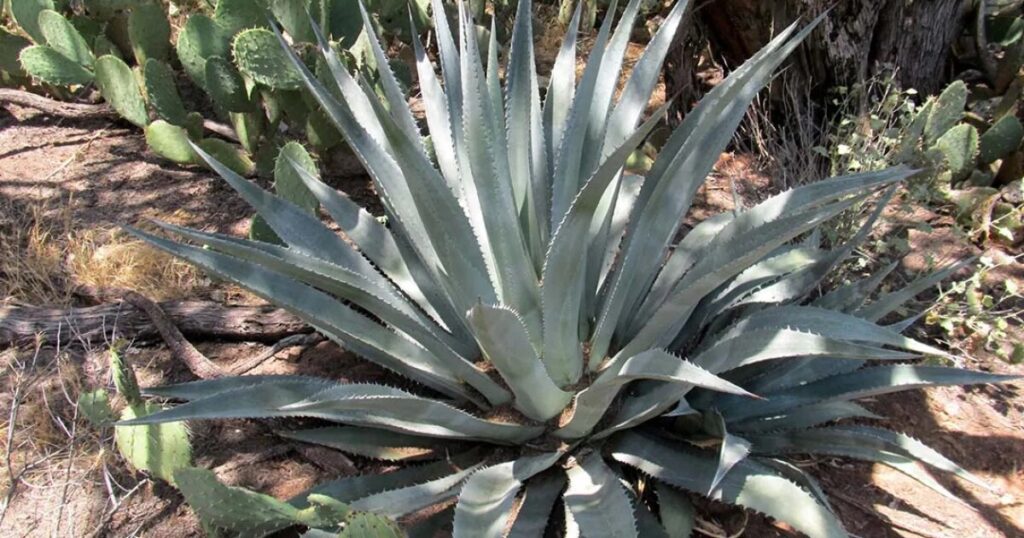
While ancient artifacts like petroglyphs and pottery fragments visibly narrate human history in the American Southwest, some stories are etched in the landscape itself, particularly through the cultivation of agave plants. These botanical records offer a silent testament to the ingenuity of early agricultural societies in the region.
Agave was indispensable to the Hohokam and other ancient communities, serving as a source of food, fiber, and beverage. By engineering river terraces, these societies created extensive agave fields, leaving behind a legacy of rock piles, roasting pits, and cultivation plots that illustrate their farming expertise.
At the Desert Botanical Garden, researchers have identified at least six domesticated agave species within these ancient fields. The selective breeding process initiated by early farmers focused on traits such as sweetness and spike orientation, leading to domesticated agave species that differ genetically from their wild counterparts.
This research sheds light on the dietary habits, trade, migration, and agricultural strategies of people who lived over a millennium ago. Such insights are invaluable for contemporary farming practices, especially as the world faces more frequent drought conditions.
Today, agave remains integral to the daily life of Southwest Indigenous communities. Its hearts are baked into a sweet, nutritious food, its fibers are crafted into cordage, and its sap is used in traditional soaps. Beyond these uses, agave plays roles in construction, fencing, and ceremonial practices.
Agaves serve as a bridge between the natural world and cultural traditions, blending scientific understanding with storytelling. They remind us of the enduring connection between past and present, weaving a tapestry of shared history.
This episode of Earth Notes is funded in part by Pink Jeep Tours, written by Danika Thiele and produced by KNAU and the Sustainable Communities Program at Northern Arizona University.
—
Read More Arizona News



![Jody White’s Unconventional Michigan Supreme Court Candidacy Explored[embed]https://www.youtube.com/watch?v=8NfxFIPE4ac[/embed]](https://www.kitchentablenews.org/wp-content/uploads/2026/10/Jody-Whites-Unconventional-Michigan-Supreme-Court-Candidacy-Exploredembedhttpswwwyoutubecomwatchv8NfxFIPE4acembed.com2F842F0e2Fc7223daa43c9876b36a4e00773a42Fme-supc.png "Jody White’s Unconventional Michigan Supreme Court Candidacy Explored[embed]https://www.youtube.com/watch?v=8NfxFIPE4ac[/embed]")