Updated July 29, 2026 at 2:06 PM EDT
The Federal Reserve opted to maintain its benchmark interest rate in the latest decision, signaling that adjustments could occur if inflation continues to pose challenges. This decision impacts various credit-related aspects across the economy, such as auto loans and credit card rates.
The rate-setting committee’s decision to keep the short-term borrowing rate between 3.5% and 3.75% was passed with a 9 to 3 vote. Notably, three regional Fed bank presidents expressed a preference for a rate increase of a quarter percentage point.
“Inflation remains elevated relative to the Committee’s 2 percent goal, in part reflecting supply shocks that have driven price increases in certain sectors, including energy,” policymakers explained in their statement.
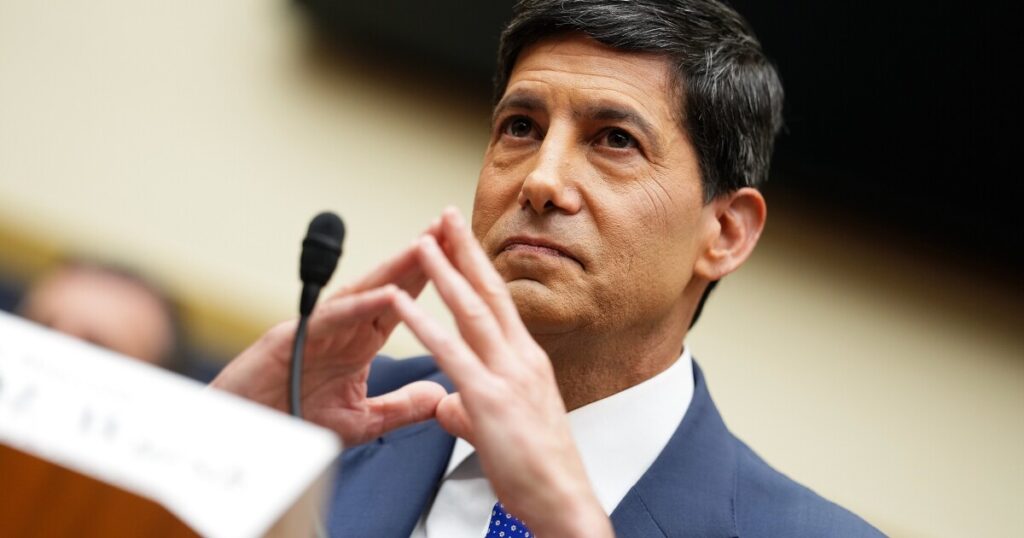
This meeting marked the second one under the leadership of Kevin Warsh, who assumed the role of chairman in May. Warsh has communicated a strong commitment to achieving price stability, addressing the inflation concerns that have persisted over the last five years.
“My colleagues and I recognize that high inflation has been an undue burden on American households and businesses,” Warsh remarked to the Senate Banking Committee. “The members of our committee have no tolerance for persistently elevated inflation.”
Recent geopolitical conflicts, particularly the U.S. war with Iran, have driven gasoline prices up, pushing the annual inflation rate to a 4.2% high in May, the most significant increase in over three years. Although oil and gas prices have stabilized somewhat, the ongoing tensions in the Strait of Hormuz suggest that fuel costs may remain elevated in the near future.
Interest rate fluctuations have historically influenced the job market, with higher rates often slowing employment growth. Last year, the Fed reduced rates three times due to labor market weaknesses, but recent trends suggest a recovery.
“America’s labor force appears to be broadly stable,” Warsh conveyed to lawmakers. “Job creation has kept pace with the workforce. The unemployment rate [is] quite low and has changed little, quite frankly, over the last year.”
AI’s Emerging Role in Economic Dynamics
Significant investments in artificial intelligence by tech firms are buoying the economy and stock market. Warsh views AI positively, anticipating productivity gains for workers. However, the expansion of data centers is increasing the demand for building materials, electricity, and computer chips, while the impact on employment remains uncertain.
“Over the long term, my best guess is this will improve the real wages and will help us on full employment,” Warsh stated during a Congressional hearing. “But between the short-term and the long-term, it can have a disruptive effect.”
In response, Warsh has formed several task forces focused on AI, comprised of external economists and business leaders, to advise the Federal Reserve. These groups are expected to deliver their insights by the end of the year.
Copyright 2026 NPR
—
Read More Michigan News


![Jody White’s Unconventional Michigan Supreme Court Candidacy Explored[embed]https://www.youtube.com/watch?v=8NfxFIPE4ac[/embed]](https://www.kitchentablenews.org/wp-content/uploads/2026/10/Jody-Whites-Unconventional-Michigan-Supreme-Court-Candidacy-Exploredembedhttpswwwyoutubecomwatchv8NfxFIPE4acembed.com2F842F0e2Fc7223daa43c9876b36a4e00773a42Fme-supc.png "Jody White’s Unconventional Michigan Supreme Court Candidacy Explored[embed]https://www.youtube.com/watch?v=8NfxFIPE4ac[/embed]")