Arizona House to Decide on Cesar Chavez Day Repeal Amid Heated Debates
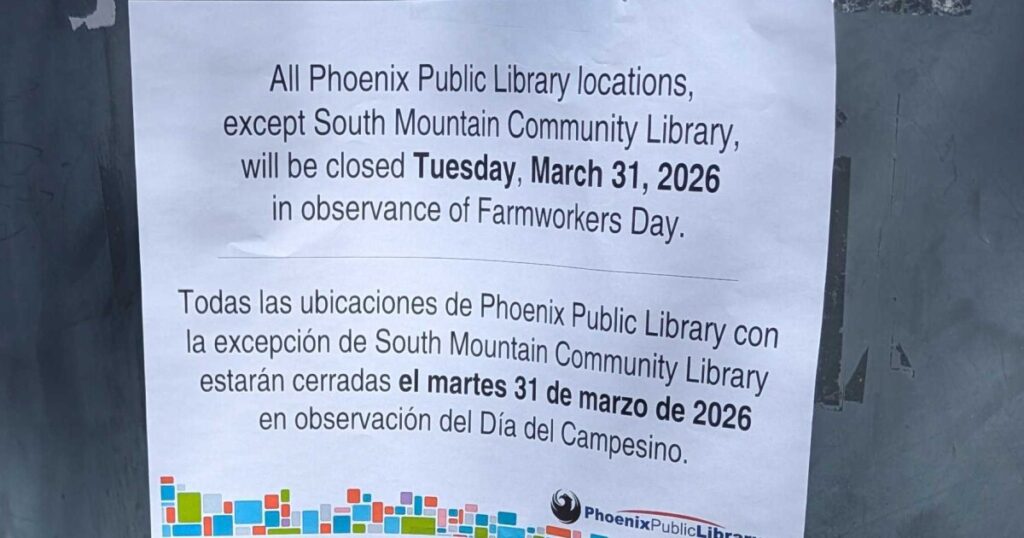
As legislative sessions unfold in Arizona, attention has turned to the House’s impending vote on whether to uphold the Senate’s decision to repeal Cesar Chavez Day. This week, although committee debates are paused, significant discussions are still anticipated on the House floor.
Howie Fisher from Capitol Media Services, who frequently covers these sessions, shared his insights on the situation. “Good morning. Yes, gonna be an interesting day given what happened in the Senate last week,” he remarked.
The Senate’s decision to repeal the holiday honoring Cesar Chavez was contentious, particularly after Republican members dismissed a Democratic proposal to merely rename the day instead of abolishing it. Fisher noted, “There’s a lot of feeling that, look, Cesar Chavez may have been a very flawed individual,” referencing recent findings from a New York Times investigation and comments from Dolores Huerta, co-founder of the farmworkers union.
State Representative Sally Ann Gonzales voiced her concerns, recalling her childhood spent in the fields alongside her mother. “Why do you want to erase my history here?” she questioned, emphasizing the personal and cultural significance of the holiday.
Despite the emotional arguments, some Republicans remain skeptical. John Kavanagh questioned, “Well, you know, what about a police day and a firefighter’s day and a lawyer’s day and a plumber’s day?” Tim Dunn, representing Yuma, hinted at a future “farmworker day,” but its realization seems uncertain as the Cesar Chavez holiday remains in limbo.
Controversy Surrounds Arizona’s Anti-Antisemitism Bill
Another pressing issue on the legislative agenda is HB 2575, a bill aimed at curbing antisemitism in Arizona’s educational institutions. The legislation, however, has sparked a divide even among Jewish organizations.
Fisher explained the bill’s intent to prevent hostile educational environments but highlighted concerns about its definition of antisemitism, which borrows from the International Holocaust Remembrance Association Alliance. This definition includes statements like “the media is controlled by Jews,” which Fisher noted as inherently antisemitic and misleading.
The bill also addresses controversial topics, such as denying Jewish self-determination and comparing Israeli policies to Nazi actions, which could stifle legitimate political discourse. “There’s a lot of fear that given what’s going on in Gaza and what’s going on in southern Lebanon, anybody who would comment on that would be accused of being antisemitic,” Fisher remarked.
Testimonies from the Jewish community have been deeply personal. Some argue the bill could inadvertently increase animosity toward Jews, while others stress the need for preemptive measures against antisemitism, drawing parallels to historical events in Germany.
Governor Hobbs previously vetoed a similar bill, citing community division and First Amendment concerns. With no Democratic support for the current bill, its future remains uncertain, especially considering potential legal challenges, as seen with similar legislation in Texas.
—
Read More Arizona News