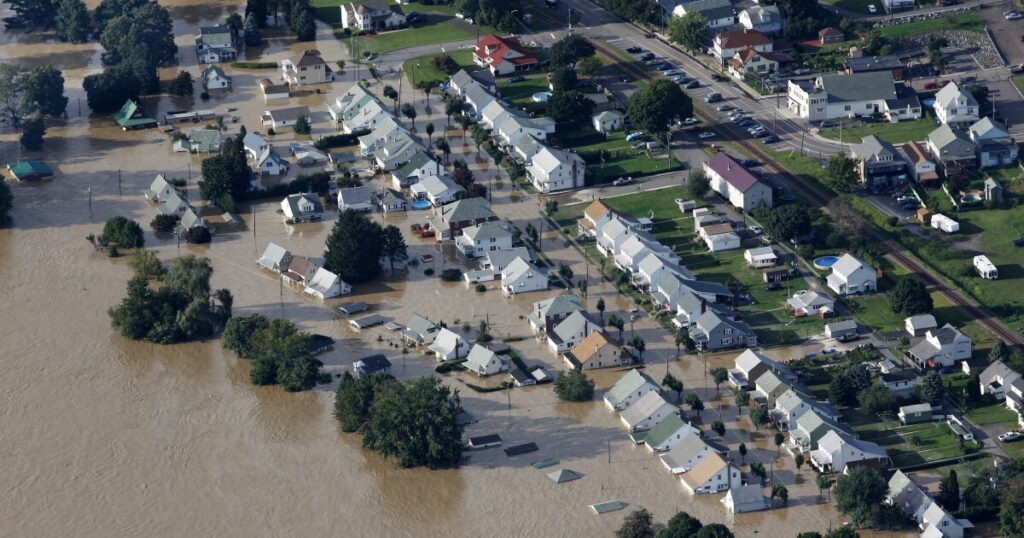
Along the tranquil banks of the Lackawanna River lies the town of Duryea, Pennsylvania. While the river provides scenic views for its residents, it also poses a significant risk during heavy rains, leading to potential flooding.
Since the 1970s, an earthen levee has shielded Duryea from floodwaters. However, climate change and development have altered the river’s dynamics, increasing the frequency of heavy rainstorms and raising water levels. Laura Holbrook, director of the flood protection authority in Luzerne County, emphasizes the urgency of upgrading the levee, stating, “We are seeing increased storms and increased water volumes.” The proposed solution involves raising the levee by approximately three feet to ensure the town’s safety.
Time is of the essence for these upgrades, as recent years have seen the area suffer millions of dollars in flood damage. According to the National Climate Assessment, the heaviest rainstorms in the Northeast now produce 60% more rain than in the mid-20th century. Holbrook admits, “It definitely keeps me up at night.”
Despite the pressing need, federal funding for levee improvements has been elusive. Local officials have invested significantly in design plans, hoping to secure $11 million in federal assistance. However, the Trump administration’s decision to withhold billions in disaster preparedness funds has left small communities like Duryea in limbo.
Following a lawsuit by 20 states, FEMA announced the resumption of its primary disaster preparedness grant program. However, competition for these funds will be fierce due to a backlog of applications. FEMA’s ambiguous response regarding the timeframe and eligibility of climate-related projects adds to the uncertainty.
Andrew Rumbach, a disaster policy expert at the Urban Institute, comments on the situation, “We’re a country full of sitting ducks, unfortunately,” highlighting the vulnerabilities faced by many communities.
Mixed Messages from Federal Authorities
Small towns like Duryea depend heavily on federal support for critical infrastructure projects. Keith Moss, Duryea’s emergency management director, explains, “We don’t have the money to do it, and we don’t have the tax base to do it.” The cost of the levee upgrade dwarfs the town’s annual budget.
The Trump administration had initially bolstered support for disaster preparedness with the 2018 Building Resilient Infrastructure and Communities (BRIC) program. However, the program’s cancellation last year halted funding for vital projects, prompting legal action and legislative efforts to restore it.
FEMA’s reinstatement of BRIC comes with additional support for impoverished communities. However, previous initiatives that aided small towns in competing for funds have been reversed, leaving rural areas at a disadvantage. As James Brozena, a former flood protection official, notes, these communities often lack the resources to navigate complex grant processes.
Future Funding and Project Eligibility Concerns
Amidst critiques of inefficiencies and calls for restructuring FEMA, there is uncertainty about future funding priorities. The federal government plans to prioritize major infrastructure projects, but the fate of climate-related initiatives remains unclear.
As Duryea and similar towns await federal assistance, the challenge remains to secure funding for essential projects that address both immediate and long-term risks associated with climate change.
—
Read More Michigan News