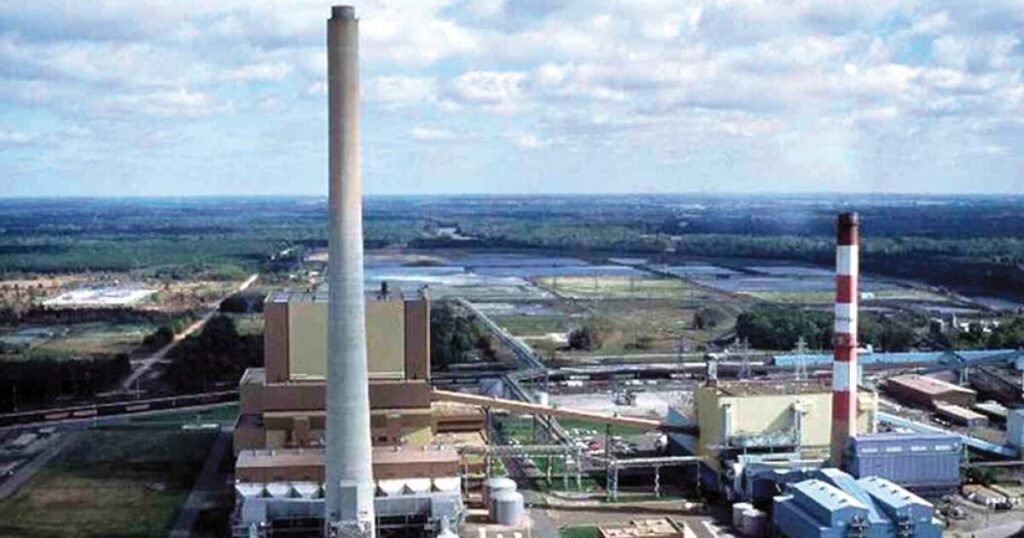
Debate Arises Over the Future of Michigan’s Last Coal-Burning Power Plant
An intense legal battle is unfolding over the fate of the last coal-burning power plant operated by Consumers Energy in Michigan. The U.S. Court of Appeals is currently reviewing arguments related to the Campbell power plant’s future. This case comes after a controversial decision last year by the Department of Energy that halted the plant’s retirement.
In a surprising move, just days before Consumers Energy planned to permanently shut down the aging facility, the Department of Energy mandated its continued operation. The rationale behind this decision was an alleged electricity shortage, as detailed in an official order. This directive disrupted the utility’s strategy to transition to a cleaner natural gas facility, which had already received approvals from both the state of Michigan and the regional grid operator, MISO.
The decision sparked legal action spearheaded by the state of Michigan and several advocacy groups, including the Sierra Club and Earthjustice. Michael Lenoff, an attorney with Earthjustice, argued that the shortage claim was a pretext. “This administration came in with a fixation to funnel Americans’ money to the coal industry,” he remarked. “The administration is abusing federal authority to overrule decisions to retire polluting, failing coal plants, letting coal companies pollute the air we breathe and the water we drink — and then charge us the bill.”
Michigan Attorney General Dana Nessel’s legal team argued before the judges that the Department of Energy’s decision was arbitrary and unlawful. Nessel emphasized in a press release that the closure of the Campbell Plant, constructed in the 1960s, and its replacement with more economical solutions, was anticipated to save Michigan ratepayers nearly $600 million. Instead, Consumers Energy has incurred at least $180 million in additional costs due to the plant’s extended operation.
In defense, attorneys representing the Energy Department contended that the Secretary of Energy possesses the authority to declare energy emergencies based on their assessments. They referenced federal law, which permits proactive measures in anticipation of increased electricity demand from data centers.
The outcome of this case could set a precedent impacting the future of other coal plants across the country. Several facilities that were slated for closure have similarly been ordered to remain operational by the Department of Energy, prompting additional legal challenges.
Editor’s note: Consumers Energy is among Michigan Public’s corporate sponsors.
—
Read More Michigan News