Flagstaff Experiences One of Its Least Snowy Winters on Record
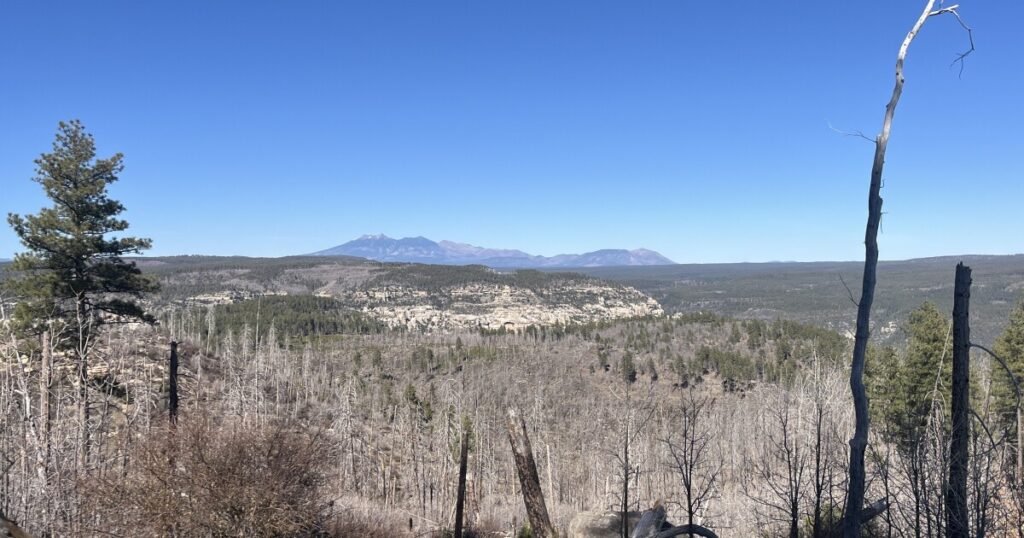
In an unusual turn of weather events, Flagstaff has recorded one of its least snowy winters since records began, tying with the winter of 1918. The National Weather Service has highlighted this as a significant climatic anomaly, raising concerns among local forest management teams about the impending wildfire season.
With March bringing temperatures usually reserved for June, fire conditions in the region have been on high alert. Adrian Skabelund from KNAU sat down with Jesse Causer, a fire planner for the Coconino National Forest, to discuss these unusual weather patterns and their implications.
Early Fire Season Looms with Dry Conditions
ADRIAN SKABELUND: In terms of fire conditions, what are you seeing right now?
JESSE CAUSER: Well, like any resident of the southwest and specifically Northern Arizona, we’ve experienced a very dry winter, and so that’s creating a very dry spring. So we did see an unprecedented heat spell here in early March, and that has compressed our seasonal, kind of, normal timelines for fire season up by about four to six weeks.
Causer elaborated that the current conditions are akin to late April or early May, leading to a shift in their timelines for initiating proactive fire management projects such as prescribed burning.
Comparing to Past Winters
SKABELUND: Can you compare this past winter to maybe what we would’ve seen in a typical winter?
CAUSER: So, looking back through all of our data that we manage, the most representative, I think, in recent history would probably be 2006. That was a similar winter where we saw similar conditions this time of year. And so we did have some increased fire behavior earlier into our fire season.
The 2006 winter serves as a recent parallel, with similarly dry conditions leading to heightened fire risks. In contrast, the previous year had ample snowfall and spring rains that mitigated fire hazards to an extent.
Arizona fire officials are already anticipating that drought and heat will likely result in an early and active wildfire season. By May, high fire activity is expected to advance northward across the Mogollon Rim, eventually reaching higher altitudes.
Proactive Measures and Coordinated Efforts
SKABELUND: And when you say proactive measures, I think a lot of folks also think of things like forest closures and fire restrictions, that kind of thing.
CAUSER: Yes, it is. So with the conditions, we started our annual fire restriction weekly meetings that we do with all of our neighboring public land management agencies and our cooperators that help each other manage those conversations.
This proactive approach includes early coordination and communication to ensure swift implementation of necessary restrictions, should conditions necessitate them.
Preparation and Optimism Amidst Challenges
SKABELUND: When you think about, just generally, this fire season, how optimistic or worried are you about what the next six to 12 months is going to look like on the Coconino?
CAUSER: Yeah. With these conditions this early it definitely doesn’t feel great.
While Causer acknowledges the early onset of fire season is concerning, he remains hopeful that potential weather events could help alleviate the situation. The Coconino Forest Service boasts a robust fire suppression program, well-prepared to tackle the challenges posed by the dry conditions.
SKABELUND: Jesse, thanks so much for giving me some of your time today.
CAUSER: My pleasure, Adrian.
In other news, the Arizona Supreme Court has denied Mohave County Supervisor Ron Gould’s bid for immunity in hand-counting ballots, maintaining that such counts are not prohibited by Arizona law.
—
Read More Arizona News

![Botched Ad Mix-Up: Super PAC Error in Arizona Congressional Race[embed]https://www.youtube.com/watch?v=bEMgIlCkHz0[/embed]](https://www.kitchentablenews.org/wp-content/uploads/2026/10/Botched-Ad-Mix-Up-Super-PAC-Error-in-Arizona-Congressional-RaceembedhttpswwwyoutubecomwatchvbEMgIlCkHz0embed.com2F0e2F962Fe971102f49e7a4f2a64fd3cc60a22Fjonatha.png "Botched Ad Mix-Up: Super PAC Error in Arizona Congressional Race[embed]https://www.youtube.com/watch?v=bEMgIlCkHz0[/embed]")