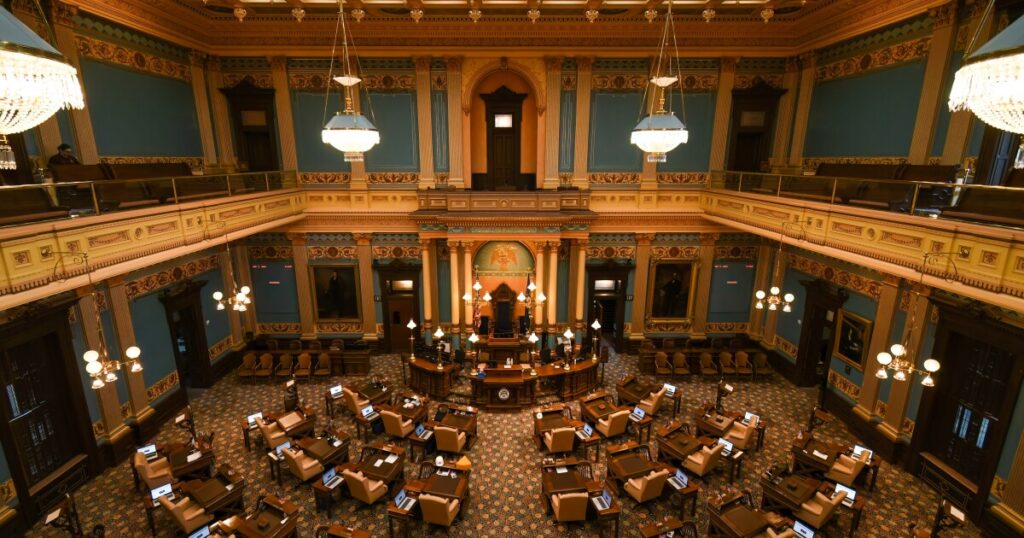
The Michigan Senate has shifted slightly more in favor of Democrats after Chedrick Greene’s decisive win in a special election. Greene’s triumph not only secures a two-seat majority for the Democrats but also provides insights into possible trends for the upcoming midterm elections this November.
Zach Gorchow, president of Gongwer News Service Michigan, discussed the election’s implications with Doug Tribou, host of Michigan Public’s Morning Edition. They explored how the election results reflect current political dynamics and what they might mean for future legislative priorities and budget negotiations.
Special Election Dynamics
In the recent special election, Democrat Chedrick Greene defeated Republican Jason Tunney, winning 59% of the vote compared to Tunney’s 39%. Libertarian Ali Sledz received less than 2% of the vote. Gorchow described Greene’s victory margin as “earthquake-level stuff.”
Doug Tribou: “Why is the outcome of this election so significant?”
Zach Gorchow: “This district was narrowly won by Kamala Harris over Donald Trump in 2024, and the previous seat holder, Kristen McDonald Rivet, won by just six points. It’s a competitive seat with a slight Democratic bias. Greene winning by 19 points is extraordinary, especially considering he was not well-known.”
Predictive Value of Special Elections
Gorchow emphasized the predictive nature of special elections, suggesting that significant gains by one party can indicate momentum heading into larger elections. He noted past Michigan special elections where unexpected outcomes foreshadowed broader electoral shifts.
“There is a long track record of evidence in Michigan and around the country that when you have one party dramatically overperforming in special elections or off-year elections, that it does signal they have a lot of momentum.”
Zach Gorchow of Gongwer News Service on what Democrat Chedrick Greene’s victory in the Michigan Senate 35th district special election could signal for midterm races this fall
State Budget Negotiations
The Michigan Legislature is facing a tight schedule for budget discussions, with the Republican-controlled House and Democratic-led Senate having passed their respective proposals. As Gorchow noted, election year pressures could expedite the process.
Doug Tribou: “How does the election cycle impact the budget timeline?”
Zach Gorchow: “Election year dynamics can indeed speed things up. Unlike last year, when the House Republicans delayed budget bills until August, both chambers have already passed their versions, aligning closer to normal timelines and facilitating negotiations.”
Key Budget Proposals
Among the budget proposals, the House Republicans aim to reduce spending without overtly cutting programs, proposing significant cuts to information technology funding. Gorchow highlighted this approach as unusual, noting that the governor is unlikely to approve such extensive IT budget reductions.
Interestingly, neither chamber has yet supported the governor’s call for new Medicaid funding, despite passing budgets that maintain current Medicaid services. This aspect remains a critical point to watch as negotiations proceed.
Editor’s note: Some quotes in this article have been lightly edited for length and clarity. You can play the audio of the full interview near the top of this page.
—
Read More Michigan News