As monsoon rains loom over northern Arizona, Grand Canyon National Park officials brace for potential flash floods in areas scarred by last summer’s Dragon Bravo Fire. With over 145,000 acres burned, the risk of sudden flooding is a significant concern, especially for trails and campgrounds.
“It is still safe,” mentioned Joëlle Baird, a spokeswoman for the park. “However, with a post-fire landscape, it is susceptible to change.” The fire’s aftermath poses particular risks to the North Kaibab Trail, where a specific 2-mile stretch is vulnerable to erosion and flooding.
Comprehensive studies of the burned zones indicate no heightened flood risk for permanent structures or established campgrounds. Yet, officials emphasize caution for hikers, especially in sections where trail safety could be compromised.
In anticipation of the upcoming weather challenges, park officials have developed a response plan. This includes rain forecasts and newly installed stream gauges to signal when the flood threat becomes imminent. Such warnings would initiate evacuations, particularly at Bright Angel Campground and Phantom Ranch. An advanced text alert system is also in place for backcountry travelers equipped with satellite phones.
This alert system, a collaborative effort involving the National Park Service, the National Weather Service, the U.S. Geological Survey, and Coconino County Emergency Management, aims to safeguard visitors by providing timely updates.
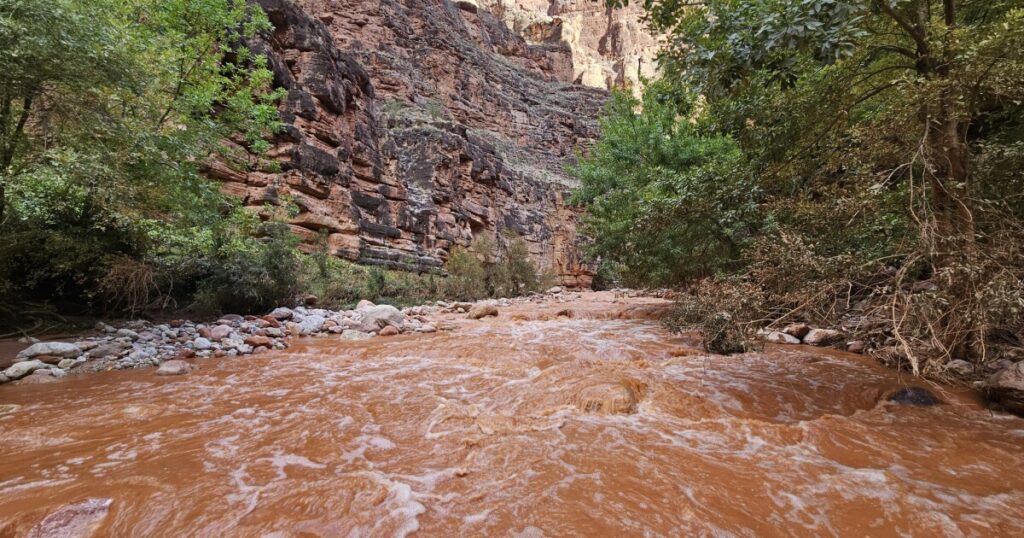
Flash floods in fire-affected regions can be particularly intense. The burned soil fails to absorb rainwater, leading to rapid surface runoff. These floods often carry debris, mud, and rocks at high speeds, posing severe safety hazards. “If you have any kind of warning that this is coming,” Baird advised, “we would recommend people not delay and move to high ground immediately to seek safety. They are very rapid and very intense events.”
The North Rim has previously experienced such natural events, with a significant flash flood in 2021 impacting the Bright Angel Creek watershed. While that incident did not necessitate evacuations, similar rainfall on the now-burned landscape could lead to more severe consequences.
Visitor education is a crucial component of the park’s safety strategy for the upcoming summer. As the North Rim reopens, park staff will actively inform hikers of potential risks, anticipating increased visitor traffic during peak months.
This story was produced by KJZZ, the public radio station in Phoenix, and published by KNAU as part of the Arizona Public Media Exchange.
The North Rim of the Grand Canyon reopened Friday eight months after the Dragon Bravo Fire burned 145,000 acres and destroyed the historic Grand Canyon Lodge.
—
Read More Arizona News