LINCOLN, Neb. — The aerial view of Nebraska reveals expansive brown farmlands prepped for planting corn and soybeans, the state’s primary crops. However, beneath this landscape lies an essential network of aquifers supplying water to these fields, threatened by drought and nitrogen fertilizer contamination. The University of Nebraska-Lincoln is addressing these challenges through innovative solutions and preparing students for the future of precision agriculture.
At Nebraska-Lincoln, the new agricultural systems technology major combines hard science, data science, engineering, and management. This program equips students for precision agriculture, focusing on tech-driven farming to boost efficiency and environmental impact. Students gain skills in data science to analyze satellite imagery and sensor data for soil health, crop growth, and water usage.
Despite the advantages, older farmers often hesitate to adopt these technologies due to a lack of data interpretation skills, according to a 2024 Government Accountability Office report on precision agriculture. Experts suggest that leveraging new technology could sustain farms with reduced manpower.
Derek Heeren, a professor in Nebraska-Lincoln’s biological systems engineering department, emphasized the importance of data in precision irrigation, stating, “There’s growing numbers of data available, but it’s hard to make use of all that data.” This highlights the necessity of teaching undergraduates to manage and analyze agricultural data.
Courses in the program include hydraulics, electrical systems, and entrepreneurship. Students learn drone operations for tasks like pesticide spraying and land surveying, along with remote operation of autonomous tractors. Nebraska-Lincoln is one of only six institutions offering a full major in agricultural systems technology, alongside Iowa State, Oklahoma State, the University of Missouri, South Dakota State, and Utah State.
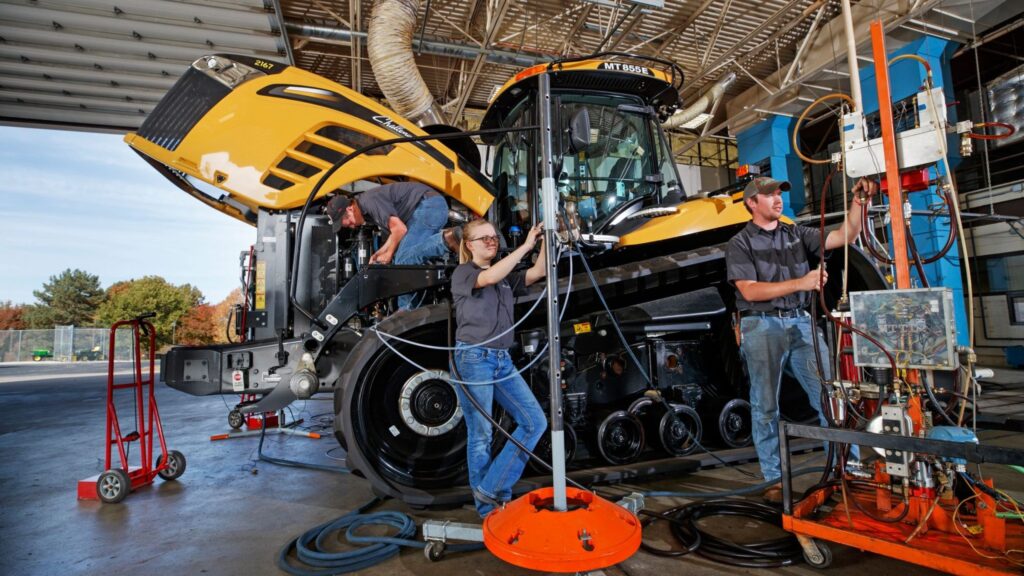
Internship opportunities at on-campus labs like the Machine Automation & Agricultural Robotics Lab, Agricultural Intelligence Lab, and the unique Nebraska Tractor Test Lab enhance practical learning, giving students a competitive edge. Cody Nieratka, a sophomore majoring in agricultural systems technology, expressed enthusiasm for autonomous equipment and AI in farming, seeing potential for technology to bolster smaller farms.
However, labor shortages persist in agriculture, exacerbated by the aging farmer population. According to the USDA’s 2022 Census of Agriculture, the average farmer’s age rose from 53 in 2002 to 58 in 2022. The Purdue University and USDA report highlights a gap, predicting nearly 20,000 annual job openings in food production between 2025 and 2030, with colleges only providing 58.7% of the necessary graduates.
Joe Luck, interim department chair at Nebraska-Lincoln, noted difficulties in attracting undergraduates to the new major, with enrollment dropping post-pandemic. He emphasized the need for universities to better promote agriculture degree programs’ career prospects. Bruce Erickson from Purdue University linked declining student interest to industry challenges, including high fertilizer prices and environmental concerns.
The USDA is also establishing a National Center for Resilient and Regenerative Precision Agriculture in Lincoln, which may attract more students by offering internships and hosting classes. As technology evolves, parents are increasingly concerned about AI-proof careers, with Rick Stowell from Nebraska-Lincoln advocating for responsible AI use in agriculture. He reassured that AI would enhance, not replace, future agricultural jobs, focusing on interactions with natural systems.
Contact editor Lawrie Mifflin at 212-678-4078 or mifflin@hechingerreport.org.
This story about agriculture degrees was produced by The Hechinger Report, a nonprofit, independent news organization focused on inequality and innovation in education. Sign up for the Hechinger newsletter.
—
Read More Kitchen Table News