While on his investigative journeys, Scott Thybony often encounters unexpected conversations that leave a lasting impression. In this month’s Canyon Commentary, he reflects on some of these surprising exchanges.
Journalistic assignments frequently take unforeseen paths, often sparked by a fleeting comment during an interview or a child’s innocent inquiry.
When planning a trip to northern Mexico for a story, Thybony chose to drive, bringing his family along. He and his wife prepared their 4-year-old son, Erik, for the journey, explaining that they were visiting a country where Spanish was the primary language, even on street signs. As Erik settled in for the night before their departure, his curiosity about the unfamiliar country surfaced.
He asked, “Do people in Mexico dream in Spanish?”
“Yes,” Thybony replied.
“It’s hard to imagine,” Erik mused.
After pondering for a moment, Erik questioned, “Do pigs oink the same way in Mexico as they do up here?”
With a smile, Thybony assured him, “Yes.”
Upon crossing the border and arriving in Casas Grandes, a visit to a local grocery store led to an unexpected discovery. Erik received a Spanish comic book, and as his mother, Sandy, read it with him, they uncovered something intriguing.
In the speech bubble above a barking dog were the words “Gua! gua!” instead of the familiar “Bow-wow!” Thybony found himself pondering Erik’s question about the pigs once more.
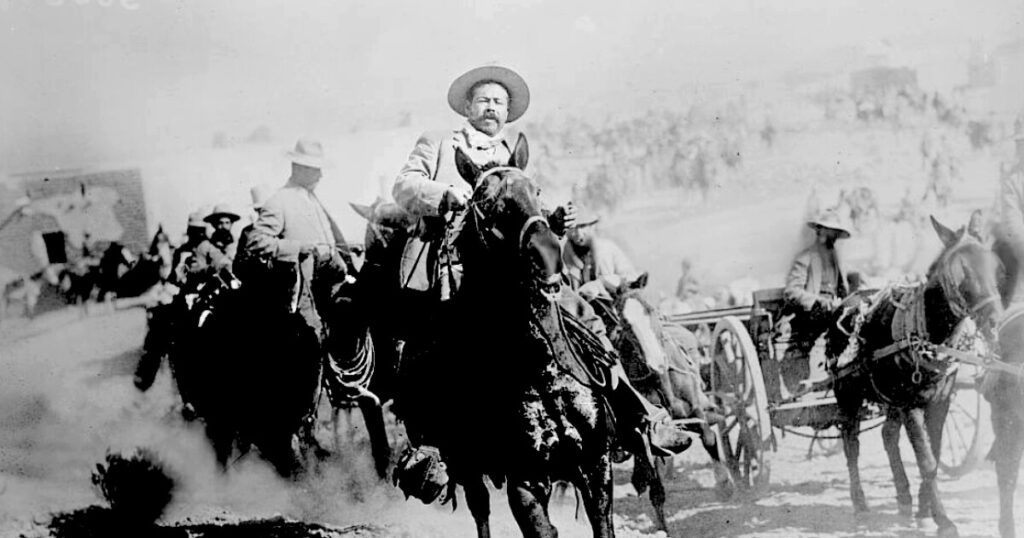
During the same assignment, Thybony had the opportunity to speak with one of the last living witnesses who had served with Pancho Villa. Emerging from his adobe home at the base of the Sierra Madre, an elderly farmer with a thick Zapata mustache greeted Thybony. Tito, as he was called, spoke English with a distinct Texas accent.
Despite being in his 90s, Tito continued to work his fields, having grown up during the turbulent Mexican Revolution. As a young boy, he guided Pancho Villa’s men through the mountains. When asked about Villa, Tito hesitated to revisit old memories but obliged out of politeness.
“Some say he was a very bad man. I don’t know. There were lots of bad men in those days. All I know is that Villa came in and killed those men who were killing us,” Tito explained, reflecting on the harsh realities of survival.
People who overcame significant challenges often shared their stories in unexpected ways. In West Texas, a rancher recounted life during the Great Depression: “We were so poor, my only pet was a tumbleweed.”
In Zion Canyon, a microbiologist described post-World War II life in rural Japan: “We were so poor, we had to argue with each other for entertainment.”
Humor often aids river guides through their season. A Snake River boatman’s tall tale prompted a passenger to question its truthfulness. “Everything I say is true,” the guide assured, “because I’m not creative enough to make it up.”
During a winter visit to Yellowstone, Thybony passed through a grove of skeletal trees. A wildfire in 1988 had stripped them bare. A curious passenger inquired about the trees.
“We call those dead-dog trees,” the driver replied, anticipating the inevitable follow-up.
“Why do you call them that?” the passenger asked.
“No bark to them,” the driver responded with a straight face.
The unpredictable nature of the world often serves as a reminder to maintain a sense of humor and humility in the face of life’s surprises.
Scott Thybony is a Flagstaff-based writer. His Canyon Commentaries are produced by KNAU Arizona Public Radio and air on the last Friday of each month.
Brought to you by Grand Canyon Adventures, offering guided tours of the South Rim, Antelope Canyon, and Sedona.
—
Read More Arizona News