Michigan’s Proposed Data Center Regulations Aim to Protect Resources and Residents
Amid growing concerns about resource usage and cost distribution, Senate Democrats in Michigan are pushing for new legislation aimed at regulating data centers in a way that benefits residents rather than burdening them. The proposed measures are designed to address electricity and water concerns while ensuring that residential consumers are not left footing the bill.
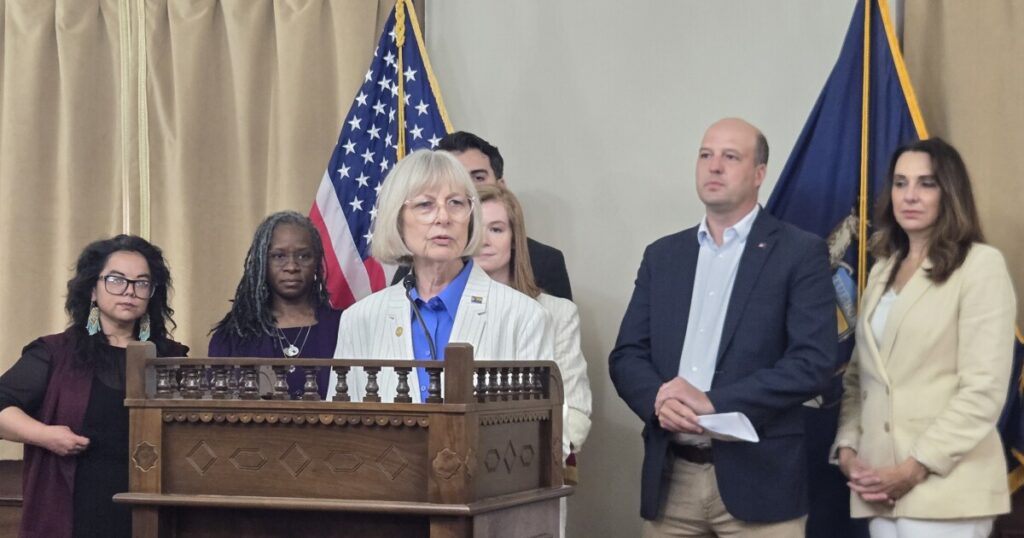
State Senator Rosemary Bayer (D-West Bloomfield) emphasized residents’ worries about increased costs and resource availability during a press conference. “Michiganders are rightfully worried about the impact on electricity and water cost as well as availability,” Bayer stated. “They want to make sure that they aren’t paying the bill for this massive computing for very large companies.”
The legislative package includes a series of measures to regulate data centers, including limiting water usage, requiring upfront payments for up to 20 years of power costs, and restricting public officials’ ability to enter into non-disclosure agreements related to these projects.
This initiative builds upon Michigan’s 2024 data center laws that offered tax incentives to attract large-scale projects under specific conditions, including assurances that residential utility customers would not subsidize data center power costs. However, skepticism remains among residents and critics.
State Senator Kevin Hertel (D-St. Clair Shores) noted the importance of consistent application of these regulations across all data centers, stating, “The work we are doing here now is to make sure that any data center built here in the state to this size will be beholden to these regulations.”
Supplementing these new proposals, Senate Democrats have already introduced bills requiring annual reports on energy and water usage and preventing water costs from being transferred to residential customers.
Senator Erika Geiss (D-Taylor), who co-sponsored these bills, highlighted the necessity of protecting public resources. “Our communities deserve protections that keep essential public resources affordable and reliable,” Geiss stated. “Water infrastructure is a public necessity and we must ensure that Michigan is not being exploited by private industries to help their profit margins.”
Unlike earlier bipartisan efforts to halt new data center permits, the current package of bills does not propose a moratorium. Instead, it focuses on ensuring data centers can positively contribute to Michigan’s clean energy goals by 2040.
Senator Mallory McMorrow (D-Royal Oak) pointed out the potential benefits for residents, noting that having companies like OpenAI and Oracle fund their own power connections could enhance the state’s energy grid. “It actually benefits all Michiganders and helps bring energy generation on to the grid that we wouldn’t otherwise have,” McMorrow said.
While the Democratic-led Senate backs these proposals, passage requires support in the Republican-controlled House of Representatives. House Speaker Matt Hall (R-Richland Twp) expressed interest in further regulating data centers, particularly in reducing water usage and ensuring costs do not escalate for residents. “We need to be a lot more collaborative when they come into communities,” Hall remarked, acknowledging he had yet to review the new proposal.
—
Read More Michigan News






![Jody White’s Unconventional Michigan Supreme Court Candidacy Explored[embed]https://www.youtube.com/watch?v=8NfxFIPE4ac[/embed]](https://www.kitchentablenews.org/wp-content/uploads/2026/10/Jody-Whites-Unconventional-Michigan-Supreme-Court-Candidacy-Exploredembedhttpswwwyoutubecomwatchv8NfxFIPE4acembed.com2F842F0e2Fc7223daa43c9876b36a4e00773a42Fme-supc.png "Jody White’s Unconventional Michigan Supreme Court Candidacy Explored[embed]https://www.youtube.com/watch?v=8NfxFIPE4ac[/embed]")