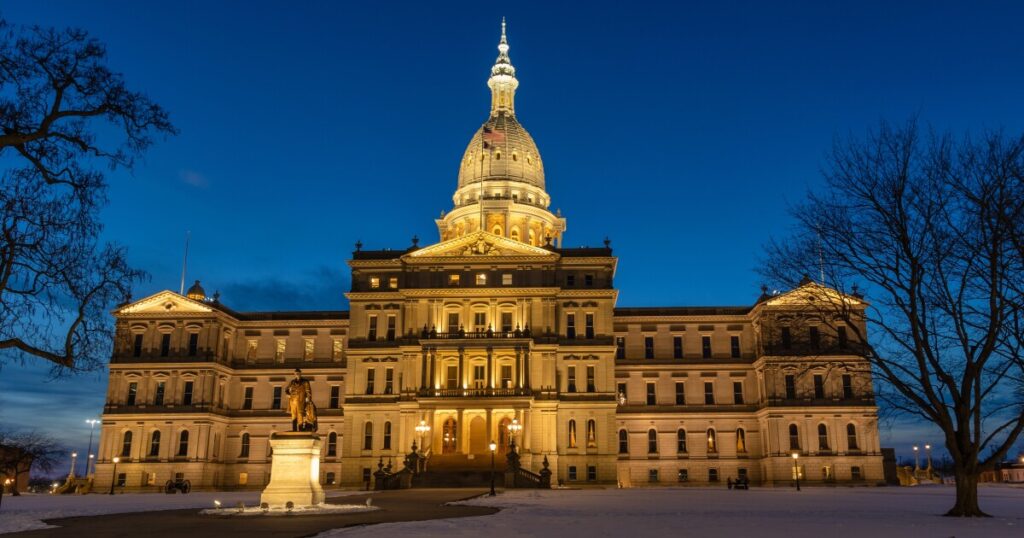
Michigan Lawmakers Advocate for Reparative Justice Initiatives
In a bid to address historical inequities, the Michigan Legislative Black Caucus has introduced a series of bills focused on “reparative justice.” This legislative package aims to establish a state office dedicated to serving American descendants of slavery, initiate a reparations commission, and develop new data categorization to distinguish between Black descendants of slavery, those who are not, and individuals with unknown heritage.
Representative Jason Hoskins (D-Southfield) emphasized the enduring impact of slavery and segregation on Black communities in Michigan. “If we are serious about addressing these challenges, we must first understand the harms that were done, the policies that perpetuated these harms, who’s affected, and what remedies are appropriate,” Hoskins stated during a press conference held on Thursday.
Data from the state highlights disparities in income, poverty, and health between Black Michiganders and their white counterparts. Representative Donovan McKinney (D-Detroit) pointed out that Michigan has yet to fully explore the root causes of these disparities, such as housing discrimination and urban renewal programs that dismantled thriving Black neighborhoods.
“Put emotions aside, put the culture wars aside, this is about honoring and recognizing the harms that have happened years prior to now,” McKinney remarked. His proposed bill would establish the reparations commission, with the responsibility of developing policy recommendations based on the commission’s findings, rather than directly implementing reparations payments.
Detroit’s reparations taskforce released its plan last year, which included suggestions such as housing and business grants, the construction of affordable housing units, and a temporary halt on water shutoffs.
House Speaker Matt Hall (R-Richland Twp) has not yet reviewed the proposed legislation but expressed concerns about potential reparations payments, specifically regarding funding sources. The bills have been forwarded to the House Committee on Government Operations, a committee with a reputation for stalling legislation.
Representative Brenda Carter (D-Pontiac) highlighted the ongoing advocacy for the legislative package, regardless of its current outcome. Carter, a member of the Delta Sigma Theta Sorority, remarked that Michigan has previously established commissions and offices for various communities. “Descendants of individuals emancipated in slavery in the United States also deserve dedicated offices to coordinate resources, conduct research, preserve history, and advise policymakers,” she stated.
—
Read More Michigan News




![Jody White’s Unconventional Michigan Supreme Court Candidacy Explored[embed]https://www.youtube.com/watch?v=8NfxFIPE4ac[/embed]](https://www.kitchentablenews.org/wp-content/uploads/2026/10/Jody-Whites-Unconventional-Michigan-Supreme-Court-Candidacy-Exploredembedhttpswwwyoutubecomwatchv8NfxFIPE4acembed.com2F842F0e2Fc7223daa43c9876b36a4e00773a42Fme-supc.png "Jody White’s Unconventional Michigan Supreme Court Candidacy Explored[embed]https://www.youtube.com/watch?v=8NfxFIPE4ac[/embed]")