Stay up to date with our Politics newsletter, sent weekly.
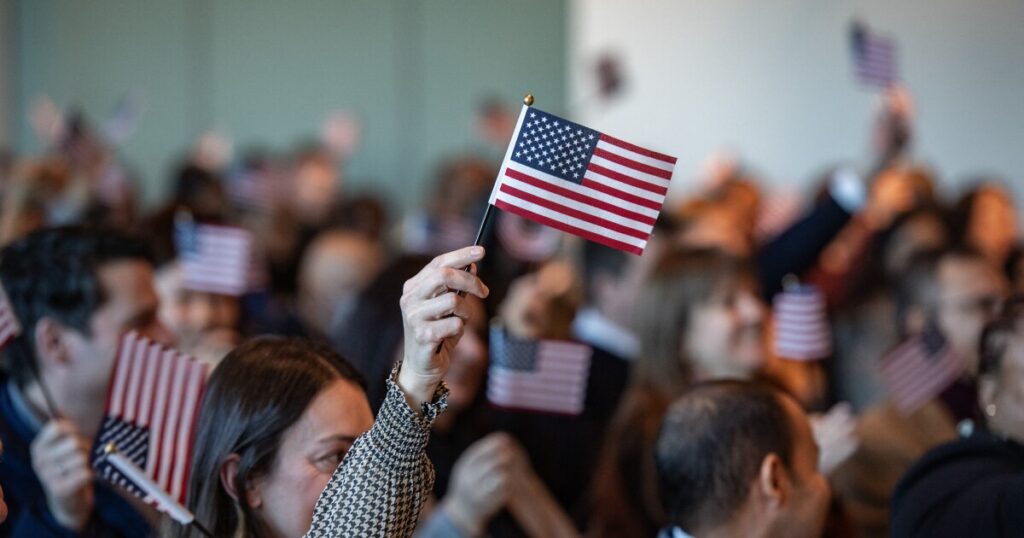
The Trump administration’s recent changes in immigration policies are impacting U.S. citizens and their foreign spouses, a group traditionally shielded from such measures. With new rules introduced since Trump’s return to office, individuals married to Americans find themselves navigating an increasingly complex and challenging immigration system.
Among the most affected are spouses of U.S. citizens, who face heightened scrutiny and potential deportation despite marriage being a traditional pathway to legal status. “Life has become a lot more difficult for Americans who are married to somebody who is not born in this country,” noted Ashley DeAzevedo, executive director of American Families United. Her organization has seen its membership swell to approximately 1.4 million in the U.S. and another 300,000 abroad, as more families seek assistance.
Many families impacted by these changes are choosing to leave the U.S. voluntarily to avoid indefinite detention. “We saw so many of our members make the decision to self-deport,” DeAzevedo said, as the administration’s policies continue to create uncertainty.
Increased Scrutiny on Marriage-Based Immigration
Historically, spouses of U.S. citizens enjoyed certain privileges under immigration law, exempt from quotas and not required to maintain legal status before adjusting their status. However, the current administration argues that these applications deserve closer examination. USCIS spokesman Zach Kahler explained that the rigorous vetting process is meant to prioritize American safety by thoroughly screening all applicants.
Despite having a pending or approved Form I-130, non-citizen spouses can still face deportation if they are found to be in the U.S. unlawfully. “All aliens are expected to comply with U.S. immigration laws,” Kahler stated.
Family Petitions at the Heart of Green-Card Approvals
Data from the Department of Homeland Security indicates that family sponsorships, including those for spouses and fiancés, are a major pathway for immigration. In 2024, approximately 343,000 green cards were granted through marriage, accounting for a quarter of all approvals. This pathway remains crucial for many immigrant families.
Processing times have remained relatively stable, with family member petitions taking about 13 months and fiancé petitions around seven months, similar to pre-2025 figures. In early 2026, there were 167,401 family petitions and 8,612 fiancé petitions approved.
Challenges for Military Families and Others
The implications of these policy shifts extend to military families and those from countries subjected to travel bans. A green-card holder known as Es’ shared her struggles with obtaining citizenship due to such restrictions, despite being married to a U.S. Army member. “We were actually due to [move] to Germany,” she said, explaining the disruption to her family’s plans.
These issues are compounded by delays at consulates, leaving some spouses without legal status, which adds further pressure to families. “People who are marrying U.S. citizens often are no longer in status,” explained Sharvari Dalal-Dheini of the American Immigration Lawyers Association.
Impact on Engagement with Immigration Processes
Recent policy changes have deterred many from engaging with the immigration system, as increased scrutiny and mandatory interviews create obstacles. Eric Welsh, an immigration attorney, noted that spouses must now provide extensive evidence of “good moral character” and other credentials beyond what was previously necessary.
This heightened scrutiny has led some families to hesitate in pursuing their cases, as DeAzevedo observed a “chilling effect” on their willingness to participate in the process. Such developments underscore the growing complexity of navigating the U.S. immigration system under current policies.
Copyright 2026 NPR
—
Read More Michigan News

![Botched Ad Mix-Up: Super PAC Error in Arizona Congressional Race[embed]https://www.youtube.com/watch?v=bEMgIlCkHz0[/embed]](https://www.kitchentablenews.org/wp-content/uploads/2026/10/Botched-Ad-Mix-Up-Super-PAC-Error-in-Arizona-Congressional-RaceembedhttpswwwyoutubecomwatchvbEMgIlCkHz0embed.com2F0e2F962Fe971102f49e7a4f2a64fd3cc60a22Fjonatha.png "Botched Ad Mix-Up: Super PAC Error in Arizona Congressional Race[embed]https://www.youtube.com/watch?v=bEMgIlCkHz0[/embed]")