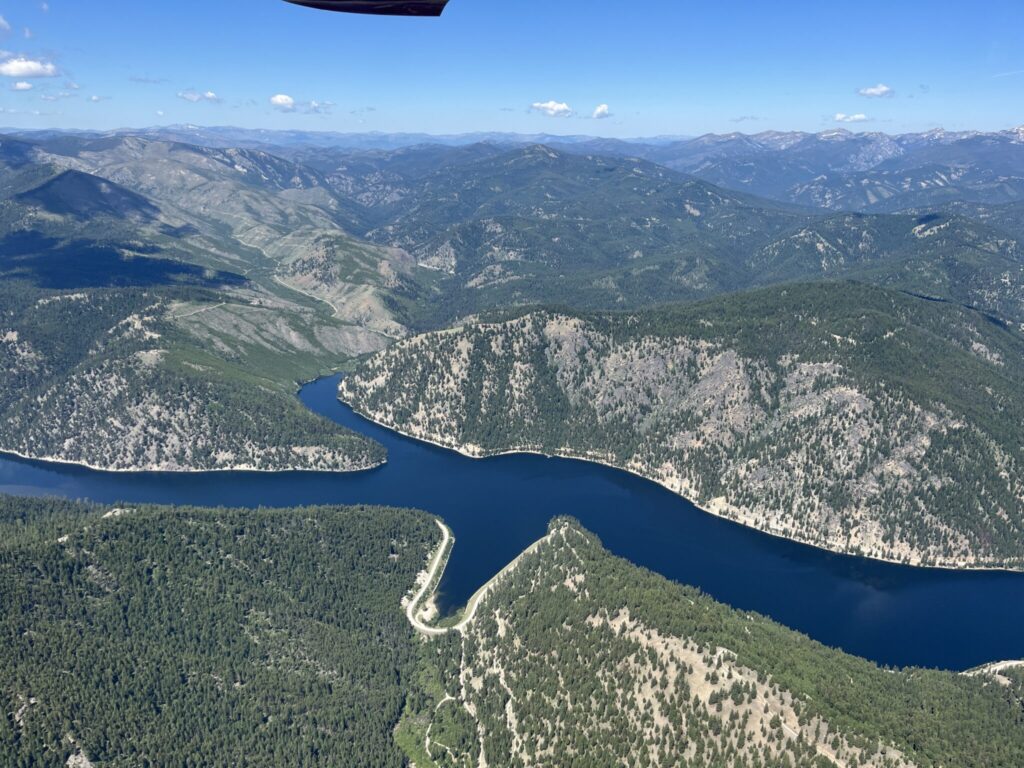
STEVENSVILLE — The Painted Rocks Reservoir, nestled under timbered mountains, is a crucial water source for the Bitterroot Valley. Alex Ocañas from the Bitterroot Water Partnership highlights concerns about a mining project that could threaten this water supply. Despite the reservoir’s vastness of one square mile, Ocañas notes that the mining claims are 11 times larger. U.S. Critical Materials has resubmitted a proposal to mine rare earth minerals, sparking debate and concern from local residents and beyond.
CEO Scott Osterman argues that the project will boost the Darby area economically and reduce U.S. reliance on Chinese rare earth minerals. However, skepticism persists among Bitterroot Valley residents, and questions about environmental impacts continue to rise. Recently, officials and conservationists, including James Brown, Commissioner of Securities and Insurance, toured the area by air to assess potential impacts. Brown emphasized the need for a thorough environmental review, stating, “All of us have a responsibility to make decisions future generations will thank us for making.”
Revised proposal still controversial
The Bitterroot National Forest recently reviewed an updated proposal from U.S. Critical Materials, emphasizing the need to reduce U.S. reliance on imports. The exploration targets minerals like neodymium and praseodymium, deemed critical by the U.S. Government. Despite changes, including helicopter transport to minimize road impact, local opposition remains strong, citing concerns about environmental and community impacts.
Osterman acknowledges the increased cost of helicopter transport but insists it’s necessary to address community concerns. The proposal details potential flights and outlines material transport plans, involving helicopters and ground vehicles. The exploration aims for minimal disturbance while ensuring efficient operations, though many locals remain unconvinced.
View of the Bitterroot, West Fork
Recent aerial tours revealed the project’s potential impact on the landscape and water systems. Ocañas pointed out the thriving Bitterroot Valley economy, reliant on agriculture and tourism. The Painted Rocks Reservoir, vital for 1,400 local farms and ranches, delivers 32,000 acre-feet of water annually. The valley’s $80 million tourism industry could face risks from mining activities, with concerns about potential flooding due to landscape geography.
Tony Hudson, an advocate with Save the American West, emphasized the geographical challenges, noting the narrow canyon through which all drainage exits, posing a flood risk. The tours highlighted the interconnectedness of the environment and local economies, stressing the importance of careful consideration of any mining activities.
Concerns about mine proposal
Lisa Ronald from American Rivers outlined ongoing concerns about U.S. Critical Materials’ plans, emphasizing the need for better community communication. Despite some responsive steps, water quality worries persist, especially regarding chemical use and storage. The proposal lists hazardous substances, raising further questions about safety and environmental impact.
Other concerns include potential disruptions from helicopter traffic and the lack of evidence supporting proposed mining techniques. Ronald stressed the importance of not using the Bitterroot as a “test tube,” calling for proven methods and transparent communication.
Proposal goal to have ‘limited to zero discharge,’ Osterman says
U.S. Critical Materials recently opened a Darby office to enhance public engagement. Osterman promises minimal waste and emphasizes the project’s environmental stewardship, economic potential, and national security benefits. He also highlights the need for “mineral sovereignty” in light of China’s recent export restrictions.
While some community members remain concerned about environmental impacts, Osterman points to successful mining operations near trout streams as evidence that responsible mining is possible. District Ranger Dan Pliley confirmed that project timelines are pending, with public comment periods dependent on environmental analysis outcomes.
—
Read More Montana News