Efforts Underway to Restore Health to Coconino National Forest
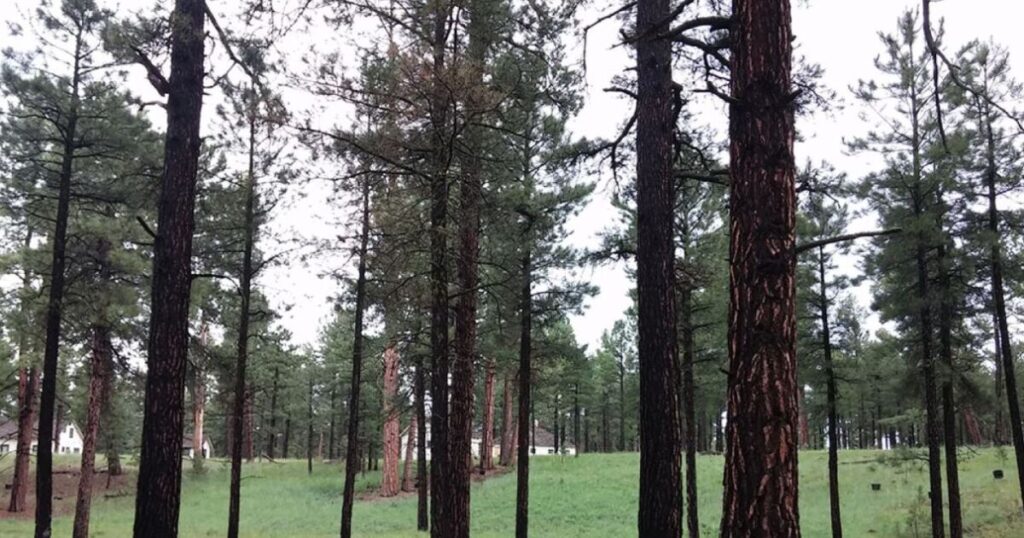
The lush green appearance of the Coconino National Forest belies its underlying problems, as decades of fire suppression have caused an overgrowth of small, unhealthy trees. This dense thicket is raising both fire and flood concerns in the area.
In response, federal and county authorities are launching a thinning project aimed at mitigating potential flood damages and controlling fires. The project is expected to span a year.
Jay Smith, who leads forest restoration for the Coconino County Flood Control District, describes the situation as a “tree pandemic.” He stated, “Even though it looks green and healthy, it’s very unhealthy. The best way to get ourselves back to a healthy forest is to reduce the number of trees.”
The initial phase of the thinning project will focus on 500 acres out of a total planned 1,500 acres near Snowbowl. Smith emphasized that overly dense forests exacerbate fire control challenges and contribute to local flood risks.
Smith warned that combined fire and subsequent monsoon rains could result in $2.8 billion in regional economic impacts, particularly affecting Flagstaff. He explained the threat of post-fire flooding is significant.
The Nature Conservancy suggests that healthy forests should maintain around 100 trees per acre. However, many Western forests, including Coconino, now have more than 1,500 trees per acre due to climate changes and fire suppression.
Smith acknowledged that fully restoring the forest to its original state might be unrealistic. “We will likely never get back to truly what it naturally looked like,” he noted. Historical photographs provide a glimpse of the past forest structure, but returning to that condition may be impossible.
Financially, the county is investing $4.27 million in the project, while the U.S. Forest Service contributes $500,000 and will oversee the operations.
—
Read More Arizona News