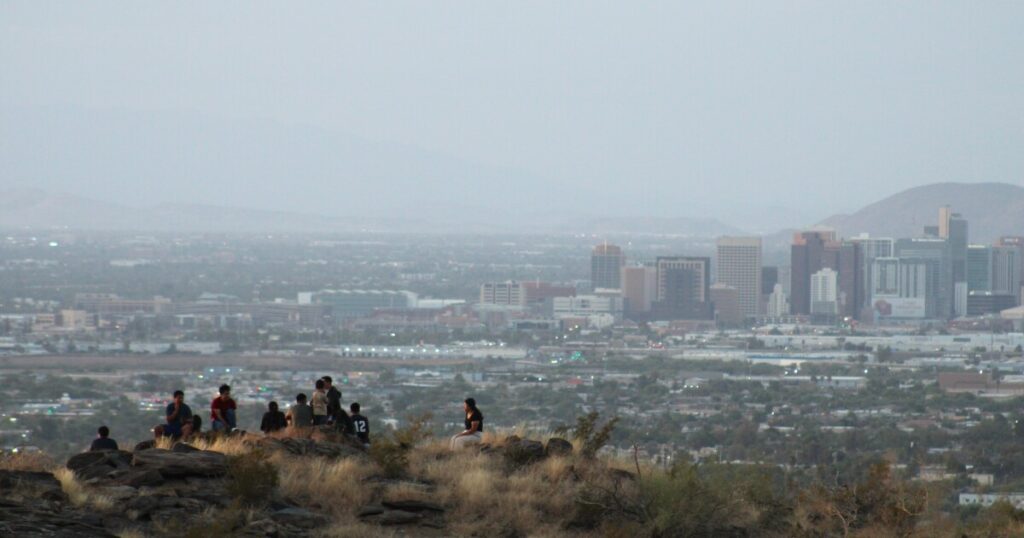
As the federal government braces to announce significant reductions in Colorado River water usage, cities in the Phoenix area are preparing for extensive impacts. However, despite potential cuts, residents need not worry about losing access to water in the near future.
The ongoing shortages from the Colorado River have been an anticipated issue as climate change and drought have progressively reduced water supply for over two decades. Various strategies to manage demand have been developed, with new reductions being planned for over a year.
The reliance on Colorado River water varies across Valley cities. Some are more equipped than others to handle the current dry conditions, but all have developed plans to address the upcoming reductions.
“Residents should feel confident that all cities have been preparing for a future with less Colorado River water,” stated Max Wilson, a water resources management advisor for Phoenix. “This has been a situation that we have been actively monitoring for a long time and taking actions for decades to be able to withstand Colorado River cuts.”
The Interior Department recently outlined a plan that could cut the Colorado River supply for Arizona, California, and Nevada by up to 40%. Arizona officials have labeled the plan as “unacceptable,” warning of severe economic impacts and urging for a more lenient alternative.
Details on the cuts affecting Phoenix in 2027 and 2028 are expected soon. Meanwhile, city leaders insist they are ready to maintain water supply through various measures, including backup supplies and engineering projects. However, Lauren Hixson, a water resources manager in Gilbert, notes these solutions will lead to higher costs, saying, “Arizona’s not running out of water, but we are running out of cheap water.”
Cities have been diversifying their water sources, relying on groundwater and the Salt River to offset reductions. Groundwater, managed under state law, offers a backup during surface shortages. Many cities have been storing unused Colorado River water underground to retrieve during shortages. In Gilbert, new wells are being drilled to tap into groundwater reserves.
In July, the Arizona Water Banking Authority announced plans to use stored water to compensate utilities facing reductions from the Colorado River.

Supplies from the Salt River system will likely get more important for cities adapting to Colorado River cutbacks.
The Salt River has historically been a stable water source, contributing to the development of the Valley. Its supplies are managed separately from the Colorado River, and many cities may rely more heavily on it during Colorado River cuts. Older cities generally receive more Salt River water, and have funds for engineering projects to diversify water sources, like Phoenix’s upcoming $350 million water recycling plant.
Cities with less diverse water portfolios can benefit from collaborative efforts, such as the “Secure Water Arizona Program” (SWAP) initiated by Phoenix and Tucson. This program aims to facilitate water sharing among cities, creating an emergency pool for short-term needs and a platform for long-term solutions.

SWAP consists of an emergency water pool for short-term crises and a platform for long-term solutions by connecting cities in need with those that have surplus water. This program aims to prevent reputational damage from water shortages, as seen in Rio Verde Foothills, by ensuring continuous water supply in the region.
Cave Creek, heavily reliant on the Colorado River, faces potential significant cuts, prompting neighboring cities to offer assistance. Future water solutions may include transfers from farms or Native American tribes, who hold substantial legal water rights. Desalination also presents a promising yet costly option, with the largest facility in Carlsbad, California, being considered for water rights exchanges.
Despite the challenges, innovative solutions and cooperation among cities and states may help navigate the drier future expected with the ongoing climate changes impacting the Colorado River.
—
Read More Arizona News