Sign up for alerts on breaking news and exclusive reporting from NPR
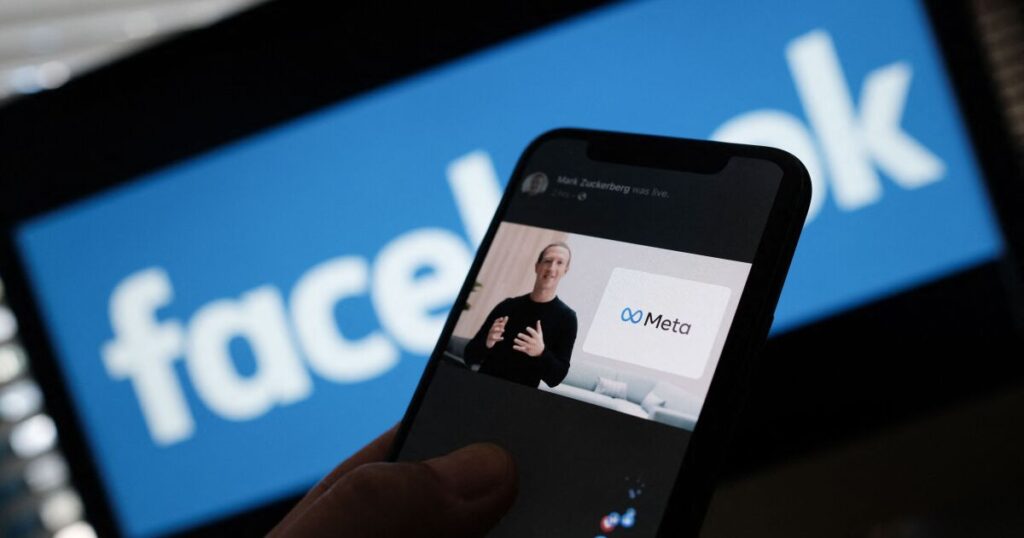
Meta Platforms, the parent company of Facebook and Instagram, is gearing up for a legal battle in federal court, facing accusations from state attorneys general that it crafted its platforms to be addictive to children, misled the public about the potential dangers, and illegally collected data from minors.
This lawsuit is part of a broader movement aiming to hold social media companies accountable for their design choices, drawing parallels to historic cases against tobacco and opioid manufacturers. Such litigation reshaped those industries and public perception about the risks involved.
Attorneys general from California, Colorado, Kentucky, and New Jersey are demanding up to $1.4 trillion in penalties and changes to Meta’s products, asserting that the company violated consumer protection laws and the Children’s Online Privacy Protection Act (COPPA) by gathering information on minors without consent.
“We allege in our complaint, and what we’re prepared to prove at trial, is that they’re deceiving consumers about Facebook and Instagram’s dangers,” stated New Jersey Attorney General Jennifer Davenport in an interview with NPR. “They’re putting the profits … over the health of a generation of young people.”
The suit, a linchpin in multidistrict litigation, consolidates numerous similar cases to streamline processes and ensure consistency.
Central to the allegations is the claim that Meta implemented features such as the “like” button, infinite scrolling, and recommendation algorithms to captivate young users, maximizing their time on the platforms. This engagement directly benefits Meta financially through targeted advertising.
The states argue these features compromised the safety of young users, affecting their education, sleep, and self-image due to visual filters linked to eating disorders and body dysmorphia. These claims contrast with Meta’s public assertions about promoting the well-being of younger users.
Allegations also include Meta knowingly allowing children under 13 on its platforms, breaching its own policies and COPPA by collecting their personal data without parental approval.
In response, a Meta spokesperson told NPR that the states’ claims lack substantiation and are exaggerated. The spokesperson noted, “The AGs offer no proof anyone in their states was misled, claim benign features like having an additional Instagram account somehow harmed their residents, and attempt to penalize Meta for industry-wide challenges like age verification. We stand by our record of creating strong protections for teens, and look forward to making our case in court.”
Social media platforms have historically been shielded from many legal challenges due to First Amendment protections and Section 230 of the Communications Decency Act. This law largely protects companies from liability for user-generated content.
However, Meta has faced setbacks in similar cases this year. In March, a Los Angeles jury awarded $6 million in damages to a young woman whose mental health was affected by social media use, citing Meta and Google as contributors. Additionally, a New Mexico judge required Meta to pay $567 million and enhance safety measures after failing to protect young users from exploitation.
The federal trial focuses on design features alleged to foster addiction among minors, rather than the content they encountered on the platforms.
Stuart Benjamin, from Duke University School of Law, noted the complexity in separating claims of addictive product design from those related to content. “Can the claims you’re letting go forward be disentangled from the claims you’re saying can’t go forward? Or is it all really one unified theory of harm, that you failed to have parental controls and you had an infinite feed of addicting content?” he said.
What did Meta know about the risks of its products?
As the trial unfolds, it may reveal contrasts between public and private statements from Meta leaders regarding the impact of their products on minors. The states’ lawsuit points to over 100 potentially misleading statements from Meta personnel.
A pretrial ruling in June referenced Meta’s internal documents, supporting the claim that time-restriction tools were a mere “public relations stunt,” as employees reportedly acknowledged that prolonged social media use was detrimental to teens.
Nora Freeman Engstrom, a Stanford University law professor, remarked on the broader implications of the litigation: “The significance of this litigation isn’t limited to who wins or how much Meta pays. The litigation itself can substantially change what the public knows,” which could influence public opinion, regulatory actions, or legislation.
Given the high stakes, Meta, which reported 3.6 billion daily users in late July, is anticipated to appeal any unfavorable ruling, potentially escalating the case to the Supreme Court.
“It’s not as easy as it might seem for Meta to write a check” and settle, said Benjamin Zipursky, a professor at Fordham University’s School of Law. The plaintiffs are “claiming humongous amounts of money, and there’s a huge number of plaintiffs — and it’s a potentially endless list of people going forward.”
The trial is taking place in the U.S. District Court for the Northern District of California, presided over by Judge Yvonne Gonzalez Rogers, known for overseeing Elon Musk’s recent lawsuit against OpenAI. The proceedings are expected to last about six weeks.
Copyright 2026 NPR
—
Read More Michigan News


![Botched Ad Mix-Up: Super PAC Error in Arizona Congressional Race[embed]https://www.youtube.com/watch?v=bEMgIlCkHz0[/embed]](https://www.kitchentablenews.org/wp-content/uploads/2026/10/Botched-Ad-Mix-Up-Super-PAC-Error-in-Arizona-Congressional-RaceembedhttpswwwyoutubecomwatchvbEMgIlCkHz0embed.com2F0e2F962Fe971102f49e7a4f2a64fd3cc60a22Fjonatha.png "Botched Ad Mix-Up: Super PAC Error in Arizona Congressional Race[embed]https://www.youtube.com/watch?v=bEMgIlCkHz0[/embed]")