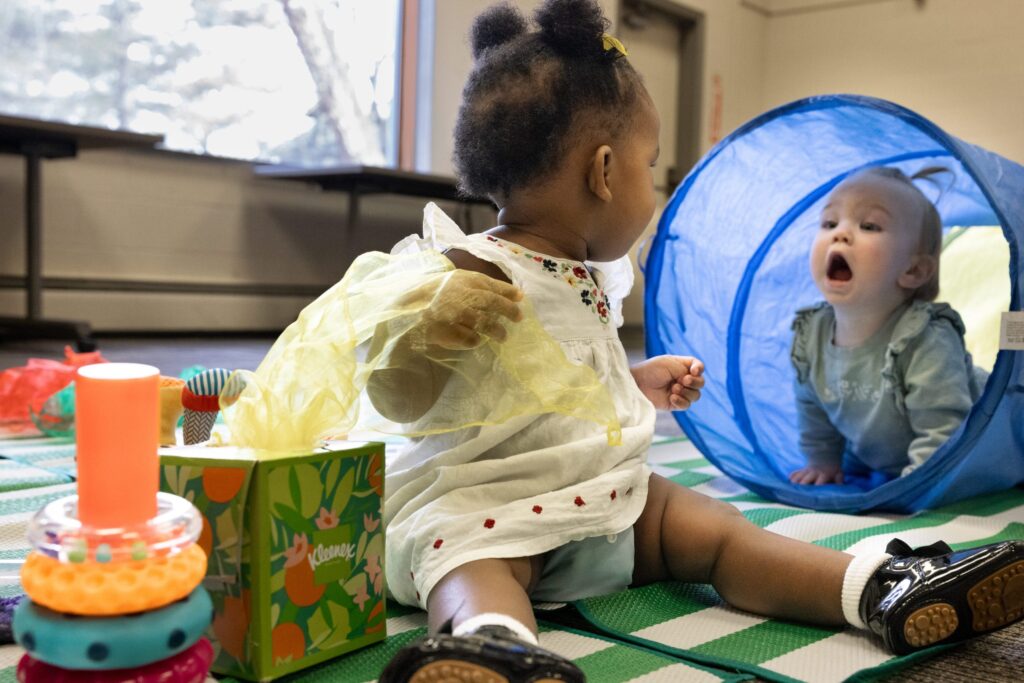
SYRACUSE, N.Y. — Valerie Gregory diligently supported her son’s early development by engaging him in activities like reading and socializing. During a playgroup session, organizers introduced a developmental questionnaire to assess if children were meeting critical milestones such as eye contact and sitting up. Despite regular pediatric visits, this was Gregory’s first encounter with such a screener.
Gregory discovered that her son lagged in speech and walking, leading her to seek early therapies that significantly improved his start in school. “I have told people, ‘Get checked out. It’s free, and they figure out things you might not realize,'” she advised.
The American Academy of Pediatrics recommended regular developmental screeners 25 years ago, yet implementation is inconsistent. According to a National Survey of Children’s Health, only 36% of parents nationwide reported completing one in the past year, with New York trailing at 28%. Experts suggest these figures may underestimate actual screening rates, as some parents might not recall the process.
Communities are now expanding screenings beyond medical settings to places like libraries and markets, supported by the Help Me Grow network. In Onondaga County, screenings increased from 150 to over 4,600 annually since 2019, with parents showing more interest in child development.
Doctors often perform various health checks on children but not standardized developmental screeners. The American Academy of Pediatrics recommends these at 9, 18, and 30 months, along with autism and social-emotional screens. A typical screener might ask if an 18-month-old uses two-word phrases or walks steadily.
Screening flags are not diagnoses but prompt further evaluations. Early intervention services are federally mandated for children up to age three with developmental issues. Studies show children receiving these services perform better academically later.
Funding challenges hinder screenings, with clinics struggling to cover costs for electronic tablets and staff training. Some clinics find it difficult to get insurance reimbursements. “Pediatric clinics often lose money on screening,” said Noelle Hause from Zero to Three.
New York recently acknowledged the need to improve screening rates. A memo from the State Health Department called for greater efforts to identify developmental concerns early. The “Be Their Biggest Champion” campaign aims to boost awareness and understanding among parents.
Efforts to broaden access include text reminders for families receiving WIC benefits. The initiative has significantly increased recorded screenings, with numbers approaching 5,000 annually at its peak.
Despite improvements, challenges remain. Some families, especially those in poverty or non-English speakers, struggle to access screenings. Early intervention waitlists are often lengthy, particularly in rural areas.
Events like “Books, Balls, and Blocks” provide screening opportunities and child development education, offering resources to support children’s growth. Parents like Edythe Smith appreciate the guidance these events provide, helping them understand and nurture their child’s development effectively.
—
Read More Kitchen Table News