Meteor Showers: A Spectacular Display Without a Grounded Conclusion
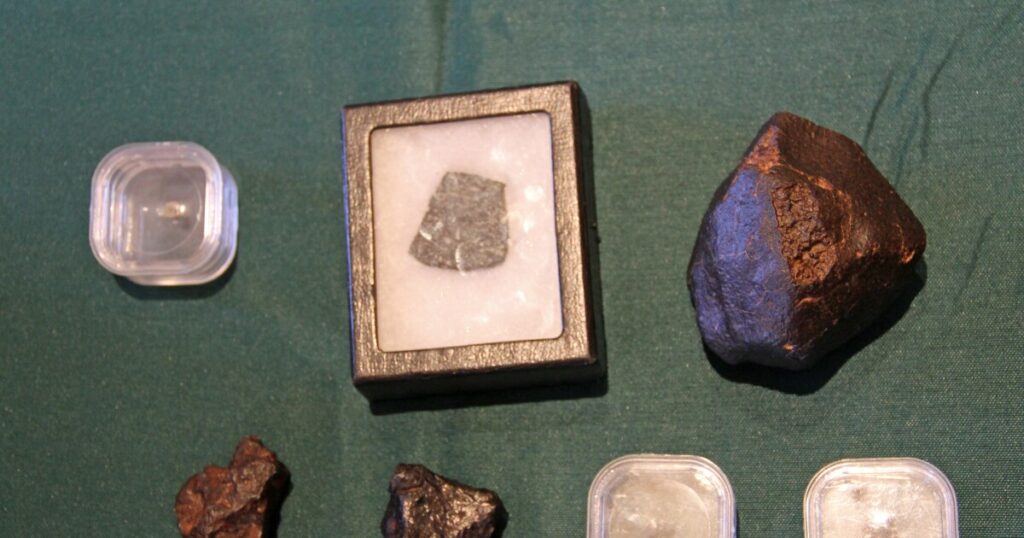
Every year, skywatchers are treated to the magnificent spectacle of meteor showers such as the Perseids. These celestial events captivate audiences with their dazzling displays of shooting stars, yet they leave no tangible remnants on Earth. Unlike meteorites, these fleeting streaks of light are composed of minuscule, fluffy particles that disintegrate before making contact with the ground.
Why Meteor Showers Don’t Result in Meteorites
The allure of meteor showers lies in their visual brilliance, but the science behind their formation explains why they don’t lead to meteorite impacts. These showers are composed of tiny particles with a low-density, clay-like composition. As they enter Earth’s atmosphere, the particles heat up and burn away, creating the brief yet beautiful streaks of light that people see in the night sky. Due to their material properties, these particles are unable to survive the journey through the atmosphere, preventing them from reaching the ground as meteorites.
The Perseids, one of the most well-known meteor showers, serve as a perfect example of this phenomenon. Occurring annually, they provide a stunning nighttime show but, like other meteor showers, they do not contribute to the collection of meteorites found on Earth.
For more information on meteor showers and their impact, visit the NASA Meteor Showers page.
—
Read More Arizona News

![Botched Ad Mix-Up: Super PAC Error in Arizona Congressional Race[embed]https://www.youtube.com/watch?v=bEMgIlCkHz0[/embed]](https://www.kitchentablenews.org/wp-content/uploads/2026/10/Botched-Ad-Mix-Up-Super-PAC-Error-in-Arizona-Congressional-RaceembedhttpswwwyoutubecomwatchvbEMgIlCkHz0embed.com2F0e2F962Fe971102f49e7a4f2a64fd3cc60a22Fjonatha.png "Botched Ad Mix-Up: Super PAC Error in Arizona Congressional Race[embed]https://www.youtube.com/watch?v=bEMgIlCkHz0[/embed]")