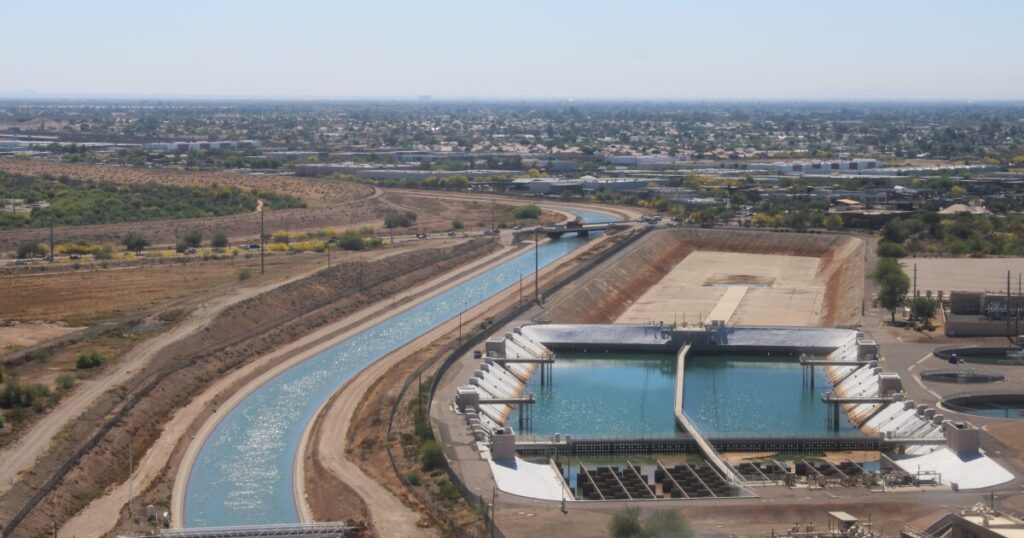
Arizona’s Infrastructure Faces Challenges Amid Drought and Growth
Arizona’s infrastructure, particularly its water systems, has been scrutinized in a recent evaluation by the American Society of Civil Engineers. The report, which assesses infrastructure across the state, highlights significant concerns about the condition of dams, wastewater systems, drinking water systems, stormwater systems, and levees. Each of these categories received no more than a “C” grade, which signifies mediocrity and a need for improvement. Nonetheless, Arizona’s scores surpass the national average.
The assessment reveals that, despite the low grades, Arizona’s infrastructure issues may not be as severe as they appear. For instance, the state’s dams, which earned a “C-“, are mostly small and remote, with major dams near populated areas generally in good condition. Frederick Tack, president of the Arizona Section of the American Society of Civil Engineers, noted that urban centers with more financial resources are faring better than rural areas, which tend to lower the overall state average.
“There are cities and utilities that are making amazing improvements and advancements in the industry to be ready for the future,” Tack stated, highlighting cities like Tucson, Phoenix, and Scottsdale.
When compared to other states, Arizona’s infrastructure is relatively stronger due to the newer infrastructure, whereas many eastern and southern states face more pressing replacement needs due to aging systems.
In response to drought and climate change challenges, Arizona and its neighbors dependent on the Colorado River have outlined ambitious plans for water infrastructure projects. These initiatives aim to counteract the effects of a drier climate. Investments have already been made in substantial water systems, with further projects underway, as both city and state authorities strive to maintain adequate water supplies for residents.
Tack emphasized the necessity for further investments, citing anticipated population and economic growth. With hotter and drier conditions, the demand for water management and energy will increase, necessitating infrastructure spending to keep pace with growth. He identified an “infrastructure gap” where maintenance costs are outstripping infrastructure investment.
“We cannot afford to keep building infrastructure future generations cannot afford,” Tack warned, stressing the long-term impacts of today’s decisions.
Drinking water systems received a “C-” largely due to concerns about both quantity and quality. With Arizona’s population expected to continue growing, foundational challenges in water supply persist. The report also points out that new federal PFAS standards will require over $12 billion in drinking water infrastructure investments over the next two decades, excluding tribal systems.
PFAS, a group of chemicals associated with health risks such as cancer, remain a pressing concern. Read more about PFAS contamination in southern Arizona here.
To ensure a sustainable future for Arizona, Tack advocates for strategic planning and adequate funding. He remarked, “The Arizona we are becoming — with more heat, more drought, more wildfire, more intense storms, this all affects water resources, water quality and the infrastructure as well,” emphasizing that the issue extends beyond infrastructure to economic implications.
—
Read More Arizona News

![Botched Ad Mix-Up: Super PAC Error in Arizona Congressional Race[embed]https://www.youtube.com/watch?v=bEMgIlCkHz0[/embed]](https://www.kitchentablenews.org/wp-content/uploads/2026/10/Botched-Ad-Mix-Up-Super-PAC-Error-in-Arizona-Congressional-RaceembedhttpswwwyoutubecomwatchvbEMgIlCkHz0embed.com2F0e2F962Fe971102f49e7a4f2a64fd3cc60a22Fjonatha.png "Botched Ad Mix-Up: Super PAC Error in Arizona Congressional Race[embed]https://www.youtube.com/watch?v=bEMgIlCkHz0[/embed]")