Interested in more updates on agriculture and environmental topics? Subscribe to the Harvest newsletter for the latest news and exclusive insights.
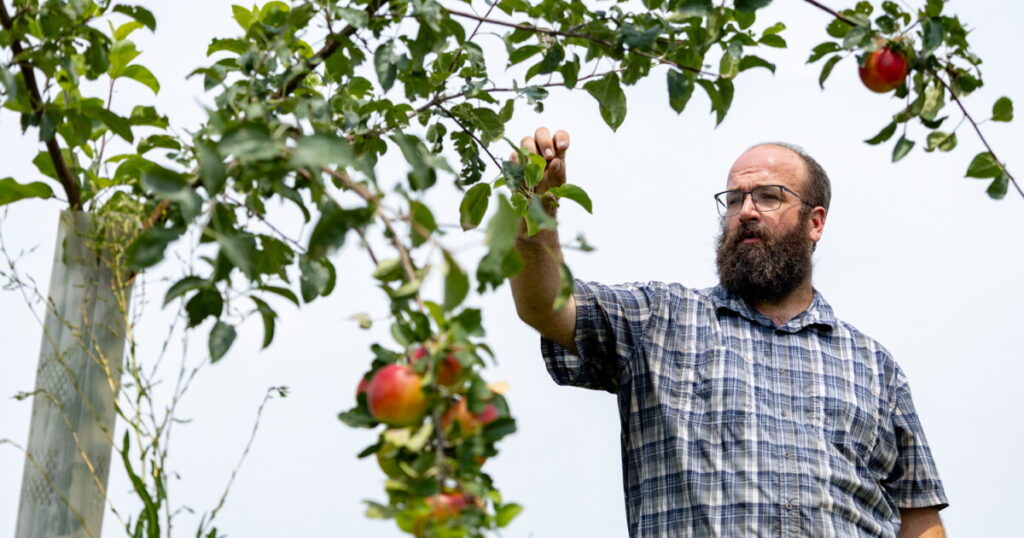
On a typical summer day, John Williams, the manager of a central Illinois vegetable farm, wanders through the fields he oversees. “All these white tubes coming up are tree tubes,” he explains, “so they’re little protections for newly planted trees.”
At Sola Gratia Farm in Urbana, Illinois, rows of hazelnut, apple, and pear trees are planted between fields and along the property edges. These trees were funded through the Natural Resources Conservation Service (NRCS) under the U.S. Department of Agriculture, designed to shield the farm from harsh weather conditions, according to Williams.
“That’ll help keep more of the soil on our land and less from running downhill,” Williams noted, emphasizing the soil preservation benefits.
NRCS personnel across the nation assist farmers like Williams by implementing soil conservation practices and providing financial incentives for adopting these methods.
Founded in response to the Dust Bowl, the NRCS has faced significant staffing reductions, losing nearly a quarter of its workforce in 2025 due to federal cutbacks, impacting farmers’ access to crucial conservation resources.
Sam Rink
/
Illinois Student Newsroom
Despite the challenges, NRCS staff have remained diligent, working with vast numbers of farmers. “They’ve always been a busy group of people,” Williams remarked. The USDA has announced upcoming changes aimed at enhancing conservation efforts and improving accountability, though specific details are yet to be disclosed.
Chuck Anderas from the Michael Fields Agricultural Institute praises NRCS as a prime example of effective government action, while noting that conservation advocates believe the agency already uses taxpayer money efficiently.
However, farmers like Adam Griebie face hurdles due to staff shortages. Griebie, who farms corn and soy in Minnesota, had to seek assistance from distant NRCS offices after local staff left, highlighting the increased challenges farmers now face.

Lost expertise, missed opportunities
In Wisconsin, the NRCS workforce was slashed by over 30%, leaving agricultural counties without staff. This loss of expertise is costly and challenging to replace, said Bernie Kluger, a former USDA senior staffer. He emphasized the specialized knowledge these local experts hold about their regions.
Efforts to aid underrepresented farmers have also suffered due to cuts. Programs targeting women, urban growers, and minority farmers have been reduced or eliminated, dismantling progress in addressing discrimination in agriculture.
Why soil conservation?
The advantages of conserving soil are numerous. Practices such as cover cropping and planting trees help retain soil moisture and prevent erosion, reducing downstream flooding and infrastructure damage.

Sam Rink
/
Illinois Student Newsroom
A study from 2022 reports that Midwestern cropland loses nearly 2 millimeters of soil annually due to erosion. Conservation methods can prevent fertilizers from contaminating waterways, saving substantial costs in water treatment.
As demand goes up, funding goes down
Despite the Biden administration’s substantial funding for the NRCS to combat climate change, many of these resources were rescinded in 2025. This has left farmers scrambling to secure limited funds.
Michael Happ from the Institute for Agriculture & Trade Policy notes that demand for NRCS programs is increasing, yet funding is decreasing, leading to a competitive environment for conservation grants.
“It seems like conservation as an idea keeps getting more and more popular among farmers,” Happ observed, yet with fewer available funds, many farmers face rejection, possibly deterring future applications.
For farmers like Adam Griebie, the challenges persist, with many feeling disadvantaged in accessing conservation programs compared to others. Griebie remains committed to seeking NRCS assistance, though he understands why some might be discouraged.
The Midwest Newsroom’s Daniel Wheaton analyzed Office of Personnel Management data for this report.
Harvest Public Media is a collaboration of public media newsrooms in the Midwest and Great Plains. It reports on food systems, agriculture, and rural issues.
—
Read More Michigan News