In Michigan’s Upper Peninsula, a brewing trade conflict with Canada is being felt acutely by local businesses and residents. Known for its reliance on cross-border commerce and tourism, this rural region is experiencing the impact of new U.S. tariffs, which could sway political outcomes in the upcoming U.S. Senate race.
The Upper Peninsula, commonly referred to as the UP, has historically leaned Republican, with Bart Stupak being the last Democrat to represent the area in Congress until 2011. Currently, the region is facing economic pressures following President Trump’s imposition of a 50% tariff on nearly $20 billion worth of Canadian goods, a decision that could significantly affect the local political landscape.
Yoopers, as UP residents are known, are grappling with rising prices for goods and groceries. The area’s remote location, accessible only by two bridges and a land border with Wisconsin, contributes to elevated shipping costs, exacerbated by high diesel prices.
Ben Rahilly, an entrepreneur in Newberry—a town about 60 miles from the Canadian border—owns various local businesses. Despite being surrounded by major employers like a prison, a hospital, and a mill, Rahilly finds small-town business operations challenging.
Russ McNamara / Michigan Public Radio
“Prices are going up. Our shipping charges are getting more and more every day. The cost of just goods is going up, so it’s making it tougher on our profit margins,” Rahilly said. “Trying to keep it small town, small prices … so people can afford to keep shopping with us.”
Marquette, the UP’s largest city, houses major retail chains that compete with local enterprises, yet it’s 100 miles away, making local businesses feel the squeeze.
Tony Haller, of the Sault Area Chamber of Commerce, shares the sentiment, citing ongoing frustrations. “Yeah, I think there’s certainly a sense of frustration between both communities,” he said.
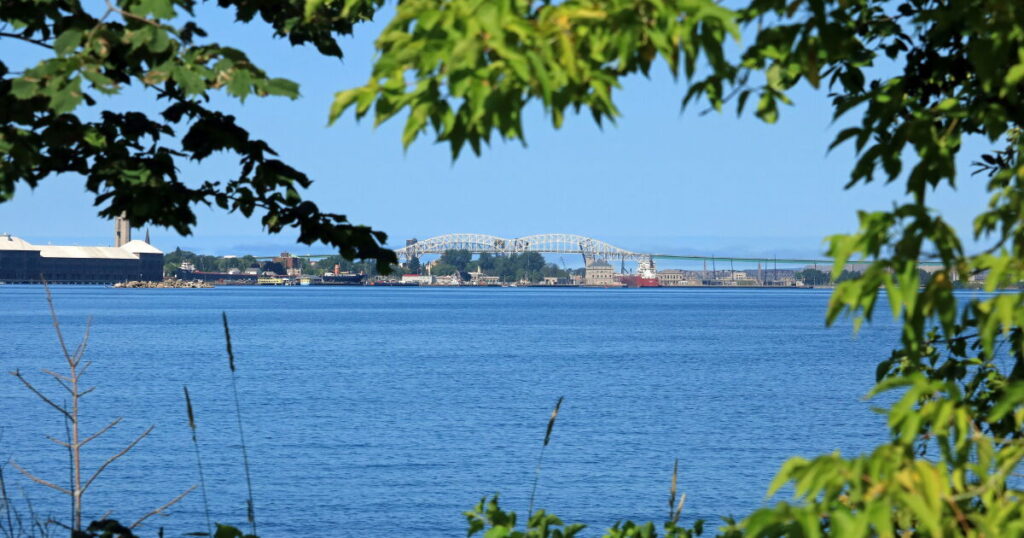
Linked by the International Bridge, Sault Ste. Marie in Michigan and its Canadian counterpart have witnessed a 25% decline in bridge traffic since Trump’s second term began. This has resulted in an estimated $62.7 million loss in revenue for businesses on the U.S. side, according to the International Bridge Administration and data from the Canadian government.
Haller remains optimistic but acknowledges the current challenges. “We’re hoping that when this all gets settled, that we’ll go back to some sort of normalcy,” he said.
Michigan’s economy is particularly vulnerable to trade disputes, with over a third of its exports, valued at more than $21 billion, going to Canada last year, as noted by the federal government.
Tourists like Todd Campbell, a trucking company owner from Tennessee, express mixed feelings about the situation. “I’m not real happy about that,” he said, criticizing the retaliatory tariffs while generally supporting Republican policies.

Russ McNamara / Michigan Public Radio
Despite his dissatisfaction with the tariffs, Campbell remains loyal to his conservative values, although he believes both political parties are self-serving. “I think both sides are really out for themselves, and we all get caught in the middle. And this is a good example of it,” he stated.
Meanwhile, Canada is preparing to introduce its own retaliatory tariffs against the U.S. later this month, further escalating tensions.
Copyright 2026 NPR
—
Read More Michigan News