
Debate Over Health Care Premiums Emerges in North Carolina Senate Race
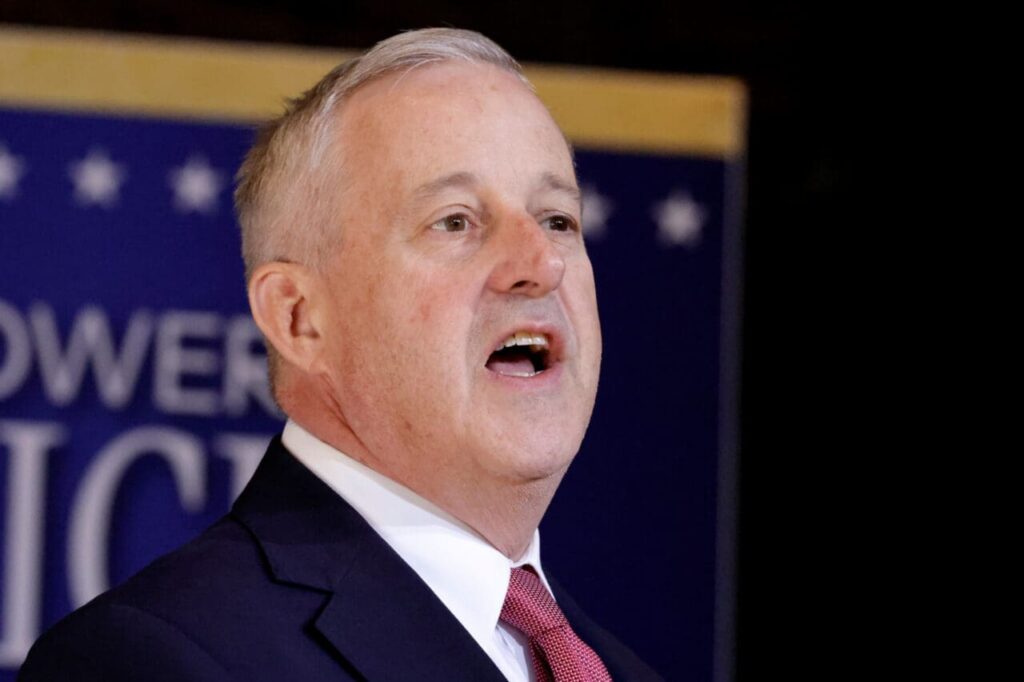
As the race for North Carolina’s open U.S. Senate seat intensifies, a contentious debate over health care costs has emerged. Republican candidate Michael Whatley has claimed that health care premiums skyrocketed during Roy Cooper’s tenure as governor, a statement that is being challenged by data from multiple sources.
Whatley, who is contending against Cooper in this crucial Senate race, asserted during an interview with Breitbart News on August 30 that premiums increased by 183% under Cooper’s leadership. “Under Roy Cooper’s reign, North Carolina became the most expensive state in the nation for health care costs,” Whatley stated. “Under his watch, health care companies have raised insurance premiums 183%, hurting our families’ bottom lines as they already struggle to make ends meet.”
However, the validity of Whatley’s claim is under scrutiny. The 183% figure he cited seems to originate from a 2021 Heritage Foundation analysis, which actually indicates that this surge in premiums occurred from 2013 to 2019. Importantly, Cooper assumed office in 2017, suggesting that the majority of this increase took place under the previous Republican governor, Pat McCrory.
Data from the Centers for Medicare & Medicaid Services (CMS) further challenges Whatley’s claims, showing a 12% decrease in average premiums in North Carolina during Cooper’s governorship, marking the third-largest drop nationwide between 2017 and 2024.
Moreover, Whatley’s assertion that North Carolina became the most expensive state for health care is also contentious. A Forbes study in January 2025 claimed North Carolina had the highest health care costs in 2024. However, Ascendient Healthcare, a consulting firm based in North Carolina, disputed these findings, pointing out that the study heavily relied on employer-sponsored insurance premiums and deductibles, which apply to less than half of the state’s residents.
Republican state treasurer Brad Briner expressed doubts about the Forbes study’s methodology, questioning its motives in an interview with the Carolina Public Press. Consequently, Forbes removed the study from its website.
The cost of health care remains a critical issue for voters, as highlighted by a KFF tracking poll from April that identified it as the top affordability concern. Almost nine in 10 respondents indicated that health care costs would significantly influence their voting decisions in the upcoming election.
The post Whatley’s 183% health care claim doesn’t add up appeared first on American Journal News.
—
Read More Kitchen Table News