In the shadow of the Grand Canyon, a Canadian mining company has been quietly transporting uranium ore through the Navajo Nation, sparking protests and concerns from Indigenous communities at home and abroad. As these voices rise, they echo across continents to Madagascar, where similar struggles unfold against the same corporation.
Uranium Transport Sparks Local Protests
Since August 2024, uranium ore has been transported from near the Grand Canyon’s South Rim to the sole operational uranium mill in the U.S. Concerns have been raised by Navajo residents regarding recent trucking accidents on Navajoland, while the Havasupai Tribe is troubled by increasing arsenic levels in groundwater near the Pinyon Plain Mine.
Protests in Utah
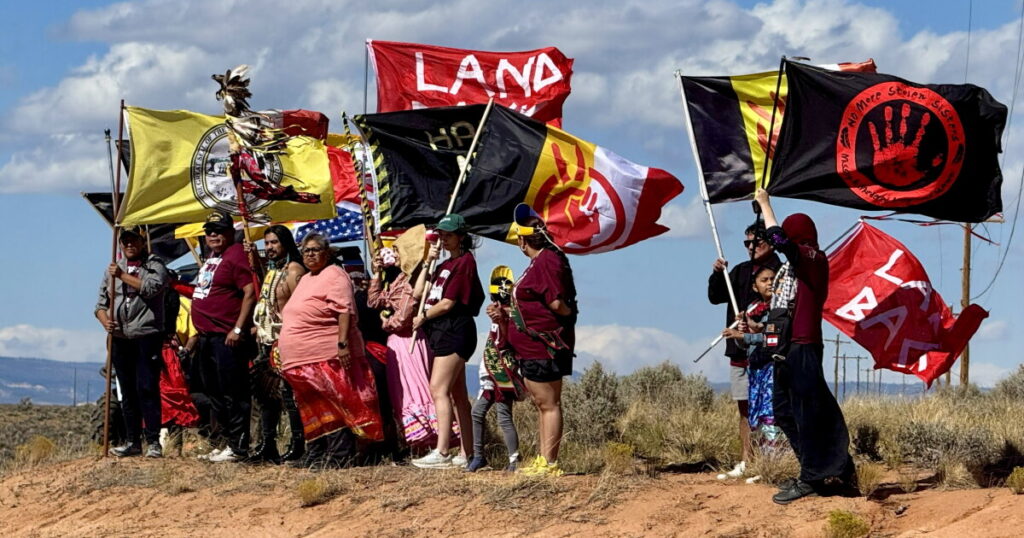
In October of last year, demonstrators from various regions gathered in White Mesa, Utah, shouting slogans like “Shut down Pinyon Plain! Uranium has got to go!” This area, part of San Juan County, is a critical point on the 300-mile transportation route for uranium ore. The Ute Mountain Ute community, residing here, has long been at odds with Energy Fuels over mining activities.
Gabriel Pietrorazio / KJZZ
This weekend marks ten years of annual spiritual walks in Utah, expressing solidarity with global Indigenous struggles against Energy Fuels.
Global Echoes from Madagascar
Thousands of miles away in Madagascar, similar tensions are brewing. An independent watchdog, CRAAD-OI, has accused the Canadian company of violating human rights in its quest for rare earth minerals. The organization filed a complaint with the Canadian government, urging Energy Fuels to respect the Free, Prior and Informed Consent (FPIC) of local communities.
CRAAD-OI founder Zo Randriamaro expressed concerns, stating, “We don’t have any proof that the company is aware of what is happening, but we do believe that it is.” The Vara Mada project in Madagascar, hosting some of the richest deposits of mineral sands, faces opposition from locals worried about environmental and social impacts.
Allegations of Violence
In Madagascar, protests have been met with severe crackdowns. At least one protestor was killed, and numerous others were arrested in what CRAAD-OI described as “arbitrary” detentions. Reports also allege that some detainees faced torture.
Energy Fuels executive vice president Mike van Akkooi has denied the company’s involvement in these incidents, attributing the violence to external factors like local unrest and cattle rustling.
Shared Struggles Unite Communities
Despite geographical distances, the Ute Mountain Ute Tribe in Utah and the Malagasy people of Madagascar share a common cause against Energy Fuels’ projects. Yolanda Badback, a member of the Ute Mountain Ute Tribe, expressed unity with Malagasy protestors: “We all need to be heard, no matter what nationality we are, because we’re all as one.”
—
Read More Arizona News