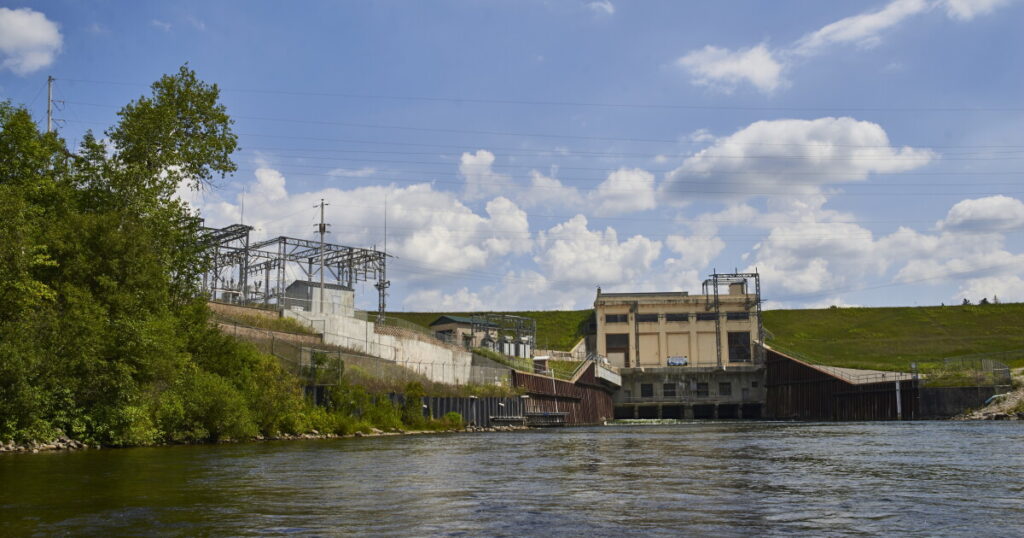
Time Extended for Consumers Energy to Negotiate Dams Sale
In an ongoing dispute over the future of 13 hydroelectric dams, Consumers Energy has been granted additional time by the Michigan Public Service Commission to negotiate a potential sale. The extension allows the utility company more leeway to discuss terms with those opposing the deal.
The Michigan Public Service Commission’s decision to approve a second waiver of the statutory deadline comes amid continued resistance from various stakeholders. Despite the extension, it remains ambiguous who exactly Consumers Energy is engaging with, as many intervenors have exited initial discussions still in opposition.
Howard Learner of the Environmental Law and Policy Center commented on the stalled negotiations, stating, “The attorney general, the governor’s office, the Michigan Department of Natural Resources, the conservation groups, the industrial customers, have all said the negotiations are not going anywhere.”
The proposal in question involves selling the aging dams to Confluence Hydro, a private equity energy firm, for a nominal fee of $1 each. Under the plan, Consumers Energy would continue to purchase the generated power, while the new owner would take on the responsibility for the dams’ safety.
Concerns about the sale were highlighted when an administrative law judge deemed the proposal too risky and not in the public interest back in June.
Learner urged the Public Service Commission to uphold the judge’s findings, emphasizing, “Enough is enough. The proposed dam sale is a bad deal for ratepayers, for the rivers, and for safe dams in Michigan. This is a bad deal that should be rejected by the public service commission. Let’s move forward.”
He further suggested that decisions regarding the dams should be individualized, taking into account the unique impacts on different communities.
Despite these challenges, Consumers Energy remains optimistic about reaching an agreement. Chris Fultz, the company’s senior vice president of electric supply, expressed their commitment to finding a resolution, stating, “We understand the desire for communities and our coworkers for an outcome in this case. We are providing for a little more time to reach a constructive agreement that will be a win for our customers, Michigan, and the communities we care about.”
Fultz added, “We continue to work with others to find solutions to ensure these dams will continue to operate safely and responsibly for years to come.” He acknowledged that some parties oppose further settlement efforts but reiterated the company’s dedication to achieving a beneficial agreement.
The Commission has permitted this final extension, setting a deadline for any settlement agreement to be filed by 5 p.m. on December 9. Should no agreement materialize, a final order on the sale will be issued on December 17.
While Learner acknowledges that the Commission might rule differently than the administrative law judge, he notes the detail and depth of the judge’s 312-page opinion. “The commission would really have to look at the same evidence, the same evidentiary record, and have a factual basis as well as a legal basis for reaching a different conclusion,” Learner mentioned. “And in this particular case, I think that would just be very, very hard for the commission to do in a legally sustainable way.”
—
Read More Michigan News