The Antiquities Act Dispute: A Legal Battle Over Utah’s National Monuments
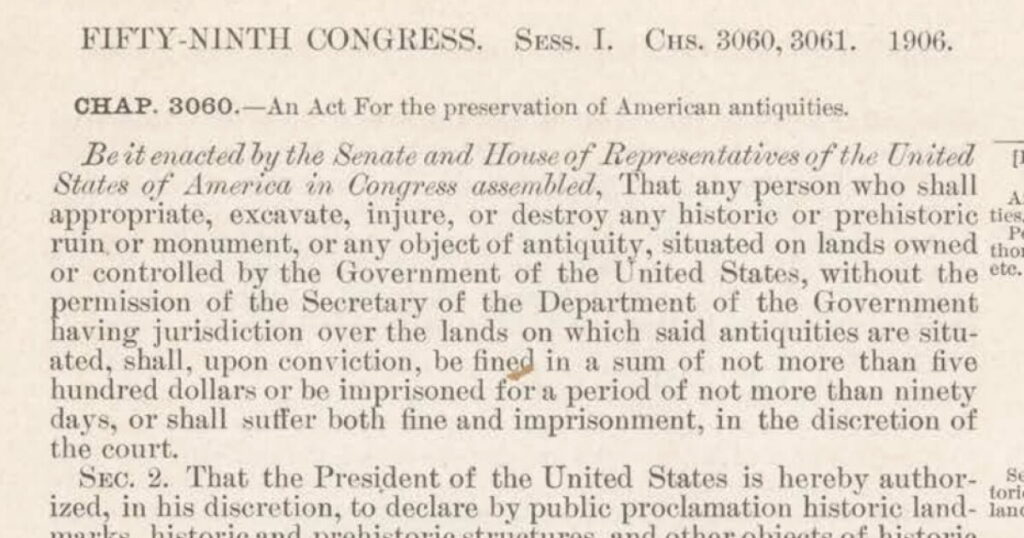
The legal clash over Utah’s national monuments reopens as differing perspectives on the 1906 Antiquities Act fuel a lawsuit aiming to counteract President Trump’s decision to scale back two significant sites. The Antiquities Act empowers presidents to declare national monuments but remains silent on reducing their sizes.
Environmental and Native American groups contest President Trump’s cuts to Bears Ears and Grand Staircase-Escalante, arguing these actions are illegal and unpopular, challenging the straightforward interpretation of the century-old law. Supporters of the reductions, including some Utah politicians, claim the presidential authority includes reversing prior decisions, especially when former presidents, such as Obama and Clinton, allegedly overused the act.
Chief Justice John Roberts highlighted in a 2021 Supreme Court case involving the Northeast Canyons and Seamounts Marine National Monument, that the Act has evolved into a seemingly boundless power to designate large areas, urging judicial review.
Mark Squillace, a University of Colorado law professor, states that Congress originally provided presidents with significant discretion in defining national monuments. Squillace, who authored a Georgia Law Review article titled “The Monumental Legacy of the Antiquities Act of 1906,” explains that the Act was born out of a need to protect ancestral Puebloan sites from looting.
Despite initial controversies, Congress settled on language allowing presidents to designate landmarks, historic sites, or scientifically significant objects as national monuments. This broad interpretation has been supported by court decisions, leading to the preservation of expansive landscapes like the 818,560-acre Grand Canyon National Monument.
Squillace notes that Bears Ears and Grand Staircase fit the landscape-sized monument category, as these areas hold cultural and ecological significance for Native American nations. However, the original intentions of the Act’s creators remain debated, leaving room for interpretation.
U.S. District Court Judge Tanya Chutkan has set a deadline of November 17 for the Trump administration and environmental groups to agree on a joint briefing schedule regarding the case.
—
Read More Arizona News