Students often receive guidance to stay in-state for college to avoid burdensome student debt. Public universities, supported by tax dollars, aim to offer an affordable, high-quality education to residents. However, in 34 states, attending a state flagship university costs low-income students over a third of their household income, exceeding $10,000 annually, even after accounting for grants and scholarships.
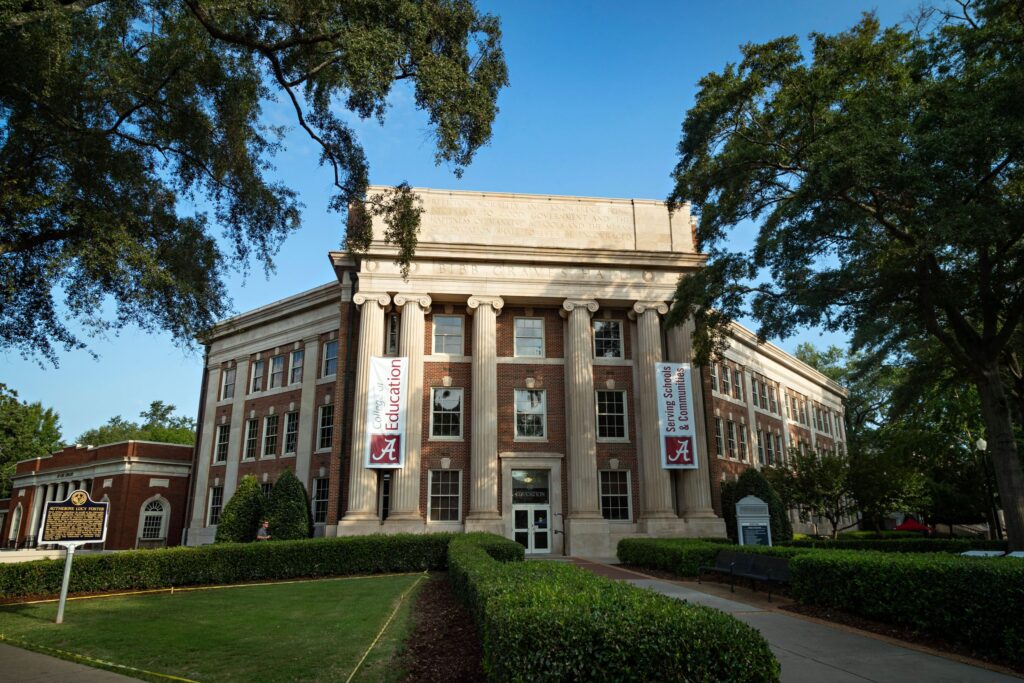
In Alabama, one of the most expensive states for public colleges in 2024, students from families earning less than $30,000 faced over $19,000 a year in costs at the University of Alabama. Pennsylvania State University presented similar financial challenges.
This financial strain is not limited to flagship universities. Over half of four-year public colleges, including regional institutions, require in-state students from low-income families to spend more than a third of their income on education. Despite a decline in net price at public colleges when adjusted for inflation, rising costs of living have outpaced wage growth, keeping higher education out of reach for many.
Some states, like Florida, have managed to keep college costs lower. Florida’s legislature has controlled tuition and maintained funding for higher education, making its four-year public colleges among the most affordable.
Even with federal student loans, students from families earning less than $30,000 still face additional costs at nearly 300 public four-year colleges, and over 50 public two-year colleges that grant bachelor’s degrees.
Students from families earning between $30,000 and $48,000 also struggle, needing to cover significant costs at close to 300 four-year public colleges after all scholarships and loans are applied.
About 16% of American households earn less than $30,000 annually, and over 25% earn less than $50,000.
State flagship universities, offering high graduation and job placement rates, are key to financial stability for low-income students. Yet, their affordability varies by location. For example, low-income students pay around $1,000 at the University of Michigan, while costs soar at Pennsylvania State University and the University of Alabama.
Alabama’s public colleges, including the University of North Alabama, are among the most expensive, costing low-income families an average of $14,000 annually. Meanwhile, certain public colleges nationwide, particularly in New York City, offer more affordable options, with tuition under $5,000 for low-income families.
Methodology:
Where does this data come from? The data uses the federal definition of net price, considering total attendance costs minus grants and scholarships for dependent students. Income brackets used are below $30,000 and $30,000 to $48,000, as maintained by the IPEDS system. Median household income varies by state, from $105,000 in Massachusetts to $59,000 in Mississippi.
How did we choose which dataset to use? To ensure fair state comparisons, only four-year public colleges primarily granting bachelor’s degrees were considered, avoiding institutions where associate degree costs might skew results.
How many colleges cost low-income families a third of their income? At 291 of the 553 four-year colleges in 2023-24, net price exceeded $10,000 for low-income students. The same was true for 57 primarily two-year colleges offering four-year degrees.
Why did we use the median of an average to compare states? The median of overall averages provides an accurate representation of student costs, reflecting the midpoint where half pay more and half pay less.
“`
—
Read More Kitchen Table News