Arizona Joins Legal Battle Over Colorado River Water Cuts
Mounting tensions over Colorado River water allocations have prompted Arizona to join Nevada in a legal battle against the federal government’s recent cutback plan. Arizona’s move highlights the escalating struggle for water resources in the arid Southwest.
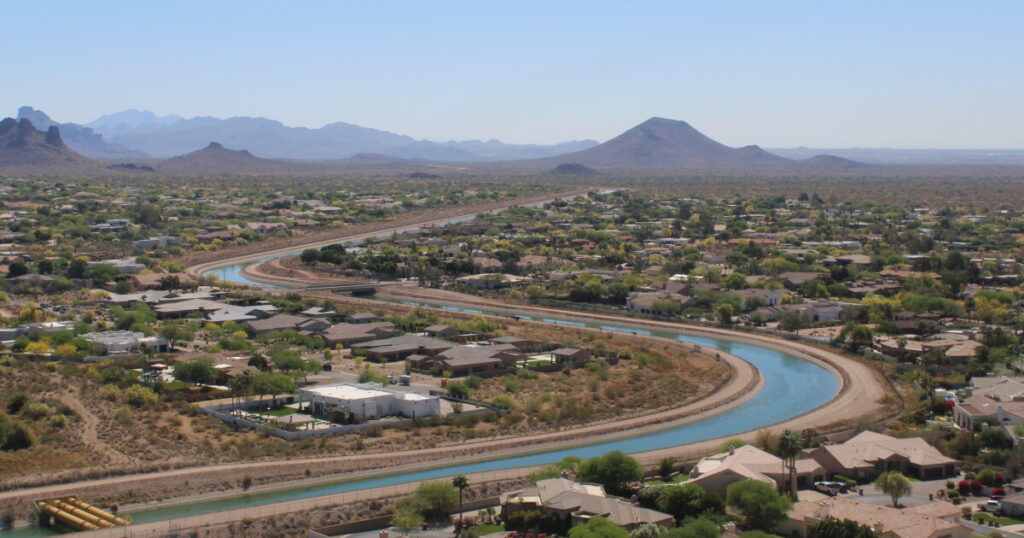
The Central Arizona Project (CAP), responsible for a 336-mile canal system delivering Colorado River water to Phoenix and Tucson, recently sought to intervene in an ongoing lawsuit. Originally initiated by Nevada in August, the lawsuit contends that the Interior Department’s cutbacks are excessively damaging to local populations and economies.
Mid-October saw Arizona’s water department aligning with the lawsuit, asserting that the federal government failed to adequately assess the detrimental effects on water users across Arizona, California, and Nevada before announcing new rules that could reduce their Colorado River allocations by as much as 40%.
Under the federal plan, CAP faces potentially severe reductions, with its water supply possibly halving next year and facing further depletion over the coming decade. This legal challenge asserts that the federal government’s planned reductions should be reconsidered.
The plan emerged after the seven states sharing the Colorado River were unable to agree on reducing their water consumption amidst severe drought conditions, exacerbated by climate change, as reported earlier this year.
In response to the lack of state consensus, federal authorities devised their own strategy to stabilize water levels at critical reservoirs. Nevada, Arizona, and CAP now argue that this federal plan is both insufficient and unlawful.
“CAP has spent years negotiating with the federal government to avoid the need for this litigation,” stated Brenda Burman, CAP general manager. “Our goal has been to stay out of court, but not at the expense of defending our rights and the laws governing the Colorado River. The law should be upheld.”
Burman emphasizes that the cutbacks disproportionately target Arizona, California, and Nevada, while not imposing similar restrictions on the Upper Basin states of Colorado, New Mexico, Utah, and Wyoming.
The lawsuit insists that these upstream states are legally obligated to send more water downstream, in accordance with the 1922 Colorado River Compact, a requirement that the federal plan fails to enforce.
“The federal government can’t ignore the obligations and watch the Compact be breached without any plan to bring it back into compliance and at the same time manufacture a drought for the Lower Basin,” Burman stated. “Particularly, they can’t put that burden all on CAP’s shoulders.”
The outcome of this case is expected to take time, and does not preclude the possibility of a more drastic legal confrontation between states over the Colorado River. Arizona has been vocal about potential legal actions against upstream states for failing to deliver adequate water.
While the exact reductions for the three Lower Basin states remain undecided, these states are negotiating a separate agreement to distribute the burden more evenly. However, progress appears stalled as the January 1 deadline approaches.
“Between the three states, everyone is still talking,” Burman mentioned. “We are hopeful of having something we can announce and bring to our boards and get an agreement with in the coming weeks.”
EDITOR’S NOTE: This story has been updated to correct the day CAP general manager Brenda Burman spoke to reporters.
—
Read More Arizona News