Arizona’s landscape once thrived with pumpkin patches, but today, the number of farms and harvested acreage has significantly reduced. In 2022, the U.S. Department of Agriculture reported only 56 acres of pumpkins harvested across 125 farms, a stark decline from 241 acres over 114 farms in 2017.
Traditionally, Indigenous communities in the region practiced the Three Sisters planting method, integrating squash with corn and beans for mutual growth benefits. This method continues to be cherished by home gardeners today.
The Arizona Historical Society notes that Phoenix almost bore the name “Pumpkinville” due to the wild pumpkins that sprouted near old irrigation channels during the 1860s and 70s. However, urban development, water scarcity, and rising temperatures have nearly erased these wild pumpkin patches.
Pumpkins, classified as a type of squash, require substantial water, being composed of over 90% water, shares Melissa Kruse-Peeples of Arizona State University Garden Commons. The plant’s sprawling nature necessitates ample space, with vines extending up to 20 feet from a single seed, producing two to five pumpkins.
Alan Solis from Apple Annie’s Orchard emphasizes the importance of soil quality and diligent watering to thrive in Arizona’s hot climate. “We start planting them in July, and one of the successes to why our pumpkins come out so good is our soil and how we take care of them,” Solis explained. “We do anything that we can to make sure the plants stay hydrated throughout the day, especially in Arizona. It’s very hot, so we gotta water them all the time.”
Paul Pascual
/
Cronkite News
Despite the general decline in pumpkin cultivation, Apple Annie’s Orchard in Willcox stands as a testament to persistence. Just 81 miles from Tucson, this farm maintains its pumpkin patch alongside 125 acres of diverse produce and flowers. Apple Annie’s began with over 6,000 apple trees in the 1980s and expanded to pumpkins in 2003 after acquiring Hunsdon Farms.
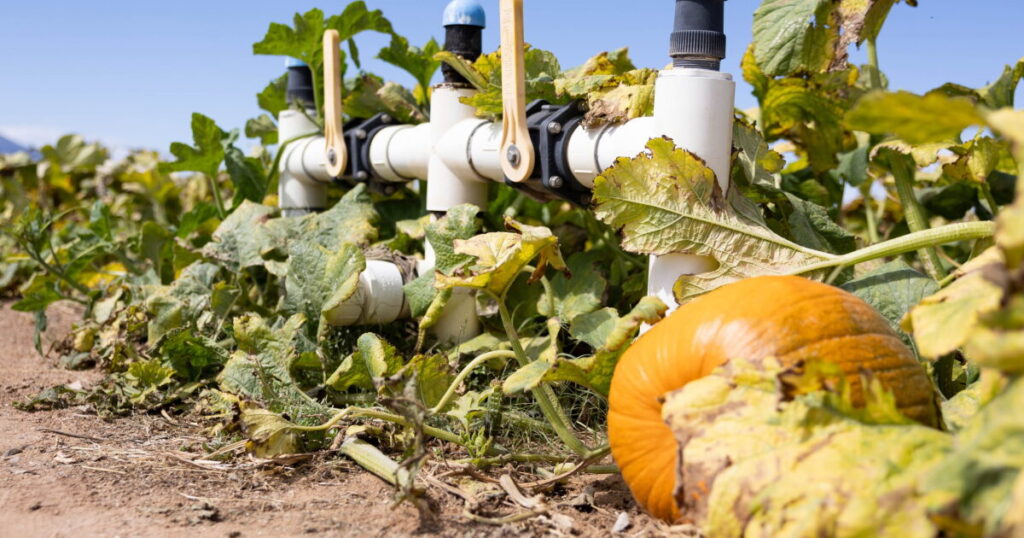
Celebrating its 40th year, the orchard benefits from Willcox’s favorable growing conditions at an elevation of 4,182 feet, which offers a cooler climate compared to Phoenix’s heat. The farm employs subsurface drip irrigation to conserve water, as explained by Mandy Kirkendall, the orchard’s director: “It’s underground so the water is going directly into the plant, and there isn’t the evaporation as if it was on top of the ground.” This method, according to Southern Irrigation, can reduce water usage by 20-40% compared to traditional sprinklers.
The farm relies on groundwater from its wells, with one residential and two commercial wells providing the needed water. The oldest well, drilled in 1977, has a current water level at 160 feet, according to the Arizona Department of Water Resources.
Apple Annie’s plants pumpkins in July for an October harvest, though pest control remains a concern. Kruse-Peeples notes that bugs can severely damage the plants, especially given Arizona’s mild winters that do not eliminate insect populations. While Apple Annie’s strives for organic pest control, it prioritizes crop preservation in case of infestations.
Cost management remains a challenging aspect for the farm, with measures like minimizing tractor use due to fuel costs and managing customer interactions to prevent damage to pumpkin vines during harvest.
This article first appeared on Cronkite News and is republished here under a Creative Commons Attribution-NoDerivatives 4.0 International License.
—
Read More Arizona News