Central Arizona Project Board Criticizes Federal Water Allocation Plans
Amid ongoing debates over water rights and conservation, the Central Arizona Project (CAP) board has expressed dissatisfaction with recent federal water management guidelines. The board contends these plans are biased against Arizona and other lower basin states.
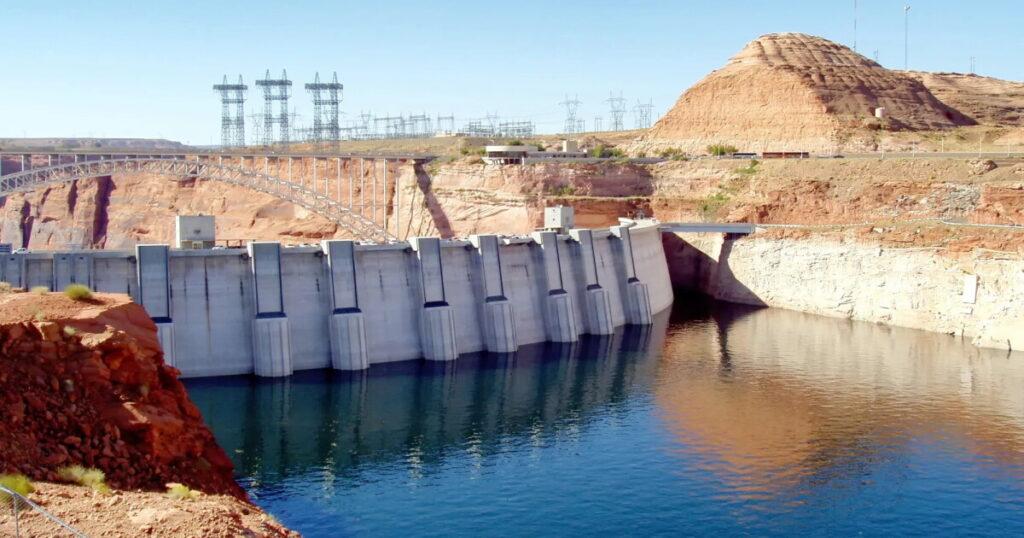
The CAP board, formally known as the Central Arizona Water Conservation District, recently scrutinized the Federal Bureau of Reclamation’s new 10-year water conservation strategy. This plan aims to manage water resources for the Colorado River, Lake Mead, and Lake Powell, but has been labeled as disproportionately harming Arizona.
Brenda Burman, the general manager of the CAP board, previously issued a public statement criticizing the federal mandates. She highlighted that these guidelines “disproportionately harm Arizona and are unacceptable,” urging a review and reconsideration.
During a September 3 meeting, CAP officials argued that the guidelines deviate from the longstanding 80-year-old compact agreement and fail to consider Arizona’s economic implications. The Upper Basin states are not required to make similar water cuts, which the CAP board sees as unfair.
The federal strategy mandates a reduction of 1.25 million acre-feet of water annually for the next two years among Arizona, California, and Nevada, with a voluntary cut of 700,000 acre-feet by 2028. CAP’s director of water policy, Vineetha Kartha, expressed skepticism about achieving the target water levels for Lake Mead, currently at 1,040 feet.
Josh Randall, a senior policy analyst at CAP, echoed concerns about the feasibility of the plan, citing the need for more time to reach the desired water levels even with favorable weather conditions.
Arizona, facing the second-largest water allocation cut among the Lower Basin states, anticipates losing 760,000 acre-feet of its water supply. Burman mentioned the possibility of legal action, while Nevada has already filed a lawsuit against the federal government.

Unlike the Lower Basin, Upper Basin states—Colorado, Wyoming, Utah, and New Mexico—are not required to reduce water usage but must release specific amounts of water under the Colorado River Compact. CAP board vice president Alexandra Arboleda stressed the need for shared responsibility among all basin states.
“We are very upset that the reductions are not being shared equitably in this system. We think there needs to be shared sacrifice. We think that every water user in the Colorado River Basin needs to conserve, be more efficient,” Arboleda said. “We think that every state within the Colorado River Basin and both countries have to be part of the solution, and agree to reductions in their demand to leave more water in the system.”
As Arizona grapples with federal mandates, local officials like Max Wilson, Phoenix’s water resource management advisor, reassure residents of water availability but caution about rising costs. Arboleda highlighted that the financial impact would be felt in water rates and agricultural goods.
Cronkite News is produced by the Walter Cronkite School of Journalism and Mass Communication at Arizona State University.
—
Read More Arizona News