Unveiling Ancient Secrets: The Discovery of Devonian Fossil Fish in Arizona
In an intriguing twist of geological history, more than 80 years ago, a remarkable discovery was made on the slopes of Mt. Elden, near Flagstaff, Arizona. This discovery had its roots in the work of Major L.F. Brady, a geologist from the Museum of Northern Arizona. High up on the mountain’s eastern flank, Brady unearthed something extraordinary within the ancient sedimentary rocks.
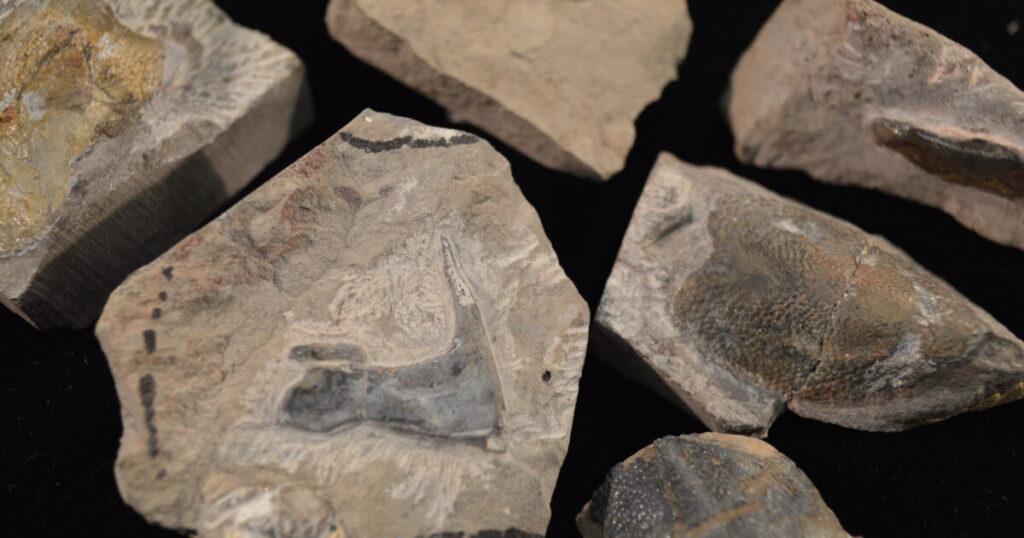
These rocks, older than the rest of Mt. Elden, had been displaced and tilted by the formation of a lava dome approximately 500,000 years ago. Within the limestone strata of the Martin Formation, Brady found fossilized remnants of fish dating back to the late Devonian Period, over 360 million years ago. These fossils marked the first time Devonian fossil fish were discovered in Arizona, and they were identified as Placoderms, an extinct class of armored fish.
The term “Placoderm” originates from the Greek words for “plate-skinned.” These ancient fish were characterized by bony armor plates that shielded their heads and upper bodies. Notably, Placoderms were the first jawed vertebrates, dominating the seas during the Devonian era. Although their jaws lacked teeth, they featured tooth-like structures formed from the continuation of their bony skull plates.
Many Placoderms were formidable predators, with sizes ranging from a few inches to the colossal Dunkleosteus, an apex predator that roamed the Devonian seas, reaching lengths of up to 30 feet with its massive jaws.
Although the Placoderm fossils from Mt. Elden were only a few inches long, they hold significant value. These fossils remain a vital part of the Museum of Northern Arizona’s vertebrate collection, representing a key piece of Major Brady’s scientific legacy.
This article was inspired by the work of Steve Schwartz, produced by KNAU and the Sustainable Communities Program at Northern Arizona University.
“`
—
Read More Arizona News