Ancient Footprints Reveal Climate Changes Faced by Early North Americans
In a groundbreaking discovery, researchers have uncovered evidence that the earliest inhabitants of North America, residing in what is now New Mexico, faced rapid environmental changes during the last ice age. This revelation comes from the University of Arizona’s study, which has shed light on the living conditions of these early people.
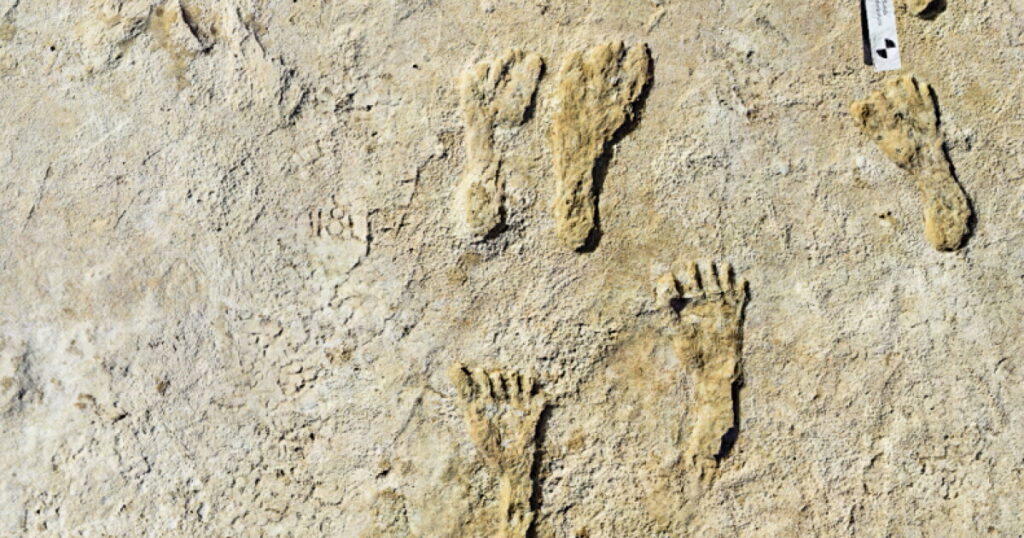
Footprints found in White Sands National Park, believed to be as old as 23,000 years, stand as the earliest evidence of human presence in North America. These imprints offer a unique glimpse into the lives of ancient populations and their surroundings.
A collaborative effort by researchers from the University of Arizona and the U.S. Geological Survey involved examining fossilized pollen from the site. This analysis enabled scientists to reconstruct the climate experienced by these early humans, revealing changes occurring within a single generation, approximately 50 years.
The study identified a dramatic shift in vegetation and sediment layers, indicating a transition from a dense pine forest to a pinyon and juniper forest over a century. These changes align with global climate shifts occurring at the time, coupled with the recession of Lake Otero, an ancient lake that once spanned nearly the entire area of the present-day National Park during the ice age.
—
Read More Arizona News