Unprecedented Floods Offer Temporary Reprieve to Parched Southwest Reservoirs
The recent severe weather in the U.S. Southwest has brought an unexpected boost to the region’s depleted water reserves, following a prolonged megadrought. The intense rain and flooding from late October to early November have impacted local communities but have also fed into critical water bodies.
Overflowing waterways led to evacuations and disrupted access, but according to Martin Hoerling, a climate scientist and hydrologist at the University of Colorado, Boulder, the overall water influx into lakes and aquifers is a welcome surprise. “That’s somewhat of an unexpected boost from Mother Nature,” Hoerling commented.
Last winter’s meager snowfall failed to significantly replenish water bodies, making the recent downpours even more critical. The El Niño phenomenon has further exacerbated the heavy rains and could continue to impact the water supply for months, potentially benefiting Western reservoirs, aquifers, and snowpack.
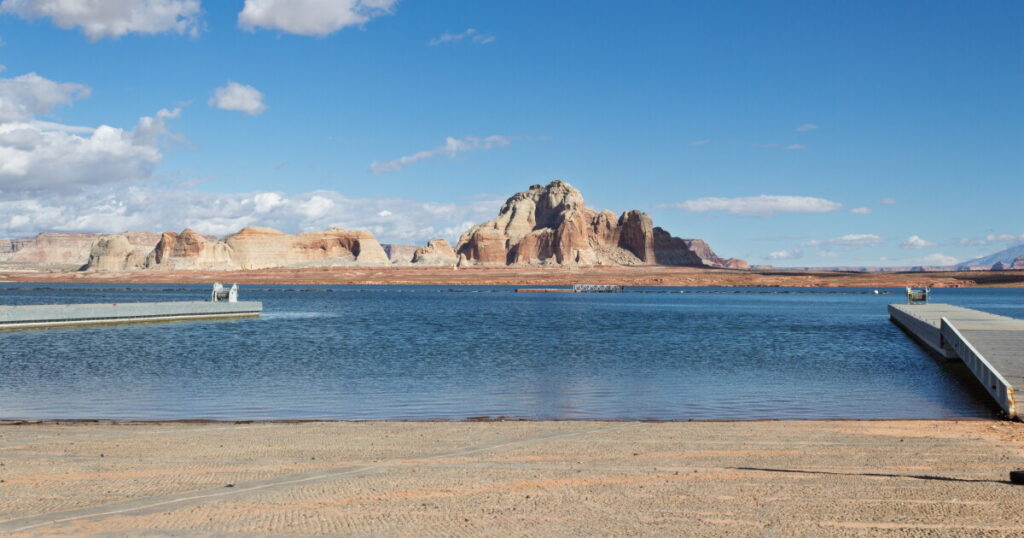
In a remarkable change, Lake Powell, the second-largest reservoir in the U.S., experienced a rise of over 20 feet (6.1 meters) since mid-September, surpassing the gains from the snowmelt earlier this year. Nevertheless, the reservoir remains just over a quarter full, with most boat launches still non-operational. Hoerling estimates that the combined effect of floodwaters and additional rain could add over 1.2 million acre-feet of water, sufficient to supply approximately 4 million families for a year.
Significant Rainfall Eases Local Water Restrictions
Communities in the Southwest have recorded some of the wettest conditions in decades. In Pagosa Springs, Colorado, a deluge of roughly 7 inches (17.78 centimeters) of rain lifted water restrictions affecting over 10,000 residents. Town manager David Harris noted, “While the storm was destructive, I think there is a silver lining.”
Upper Lake Mary in Northern Arizona, a critical water source for Flagstaff, received over 3 billion gallons of water, significantly bolstering the region’s water supply, according to Flagstaff water production manager Brian Huntzinger. “It’s just a great, great thing to see,” Huntzinger remarked, highlighting the potential for an overflow before the onset of snow.
Central Arizona faced significant flooding as well, with waters channeling into the Verde River. This led to controlled releases from nearly full dams into typically dry sections of the river, as reported by Bo Svoma, a meteorologist with the Salt River Project.
Continued Drought Challenges Water Management in the Southwest
Despite the recent influx, the region remains under drought conditions, and the U.S. Bureau of Reclamation maintains its current water release strategy from Lake Powell until the snowpack peaks, expected around April. “Considerable uncertainty remains,” said Mary Carlson, a spokesperson for the Bureau.
Under a federal water management plan, California, Nevada, and Arizona are set to reduce water use by 1.25 million acre-feet annually over the next two years, with potential for larger cuts. Some Arizona cities are taking proactive steps to reduce dependency on the Colorado River by funding projects to capture storm runoff, according to Svoma.
Hoerling emphasized the need for long-term strategies, stating, “We need to figure out how to be resilient in a drier future. And we’re not quite there yet.”
—
Read More Arizona News