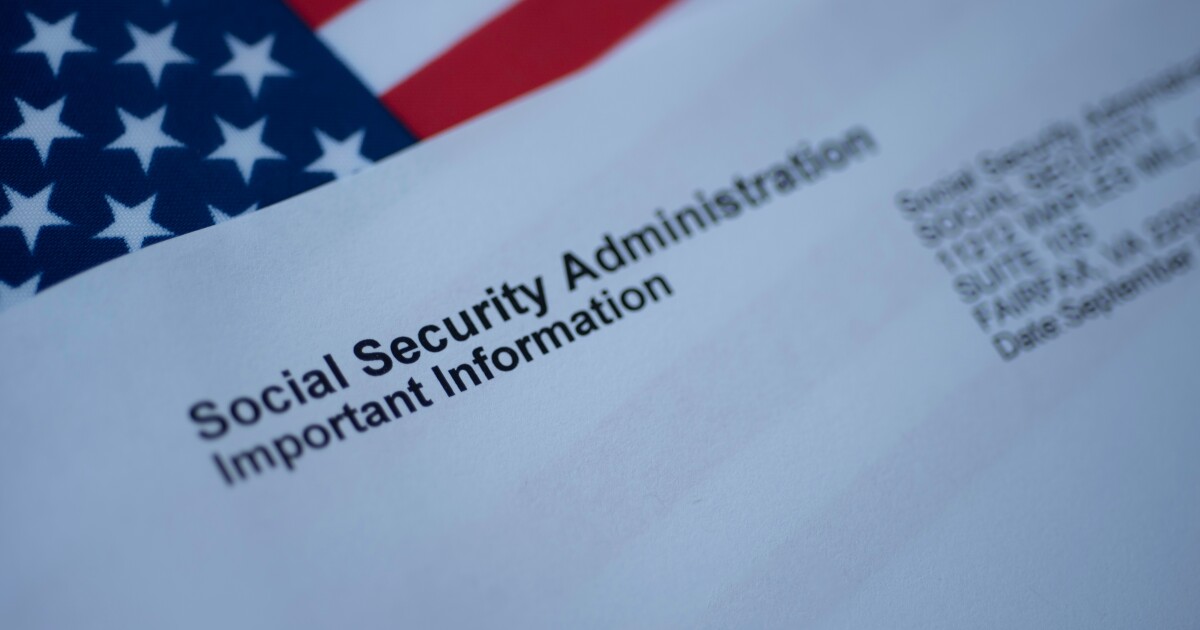
The proposed SAVE America Act is stirring debate as it calls for in-person proof of citizenship to register to vote. Advocates, including President Donald Trump, argue it’s a necessary step to curb illegal voting by undocumented immigrants, although such occurrences are both rare and unlawful.
However, tribal leaders express concerns this legislation could impose additional voting barriers for Indigenous communities. Ryan Heinsius of KNAU spoke with Crystalyne Curley, Speaker of the Navajo Nation Council, a key figure opposing the measure.
Challenges for Indigenous Voters
RYAN HEINSIUS: Tribal leaders have long opposed increased ID requirements for voting. What makes this proposal particularly challenging for Navajo and other Indigenous citizens?
CRYSTALYNE CURLEY: The primary issue is documentation. Birth certificates and tribal IDs like the Certificate of Indian Blood (CIB) don’t specify birthplace or citizenship. Most Navajo people might possess one form of ID but not the other, leading to verification issues.
Feedback from elders highlights financial and logistical burdens. Many live on fixed incomes, often around $500 monthly, and already face rising costs of essentials like food and gas. This proposal adds to their worries.
HEINSIUS: Does this mean multiple long trips to vote?
CURLEY: Yes, just to vote. For instance, residents from Low Mountain, Arizona, a remote area, must travel to Chinle or St. Michaels, a 100-mile round trip. They need to register, verify documents, vote in the primary, and again in the general election. That’s potentially three long trips if all goes smoothly.
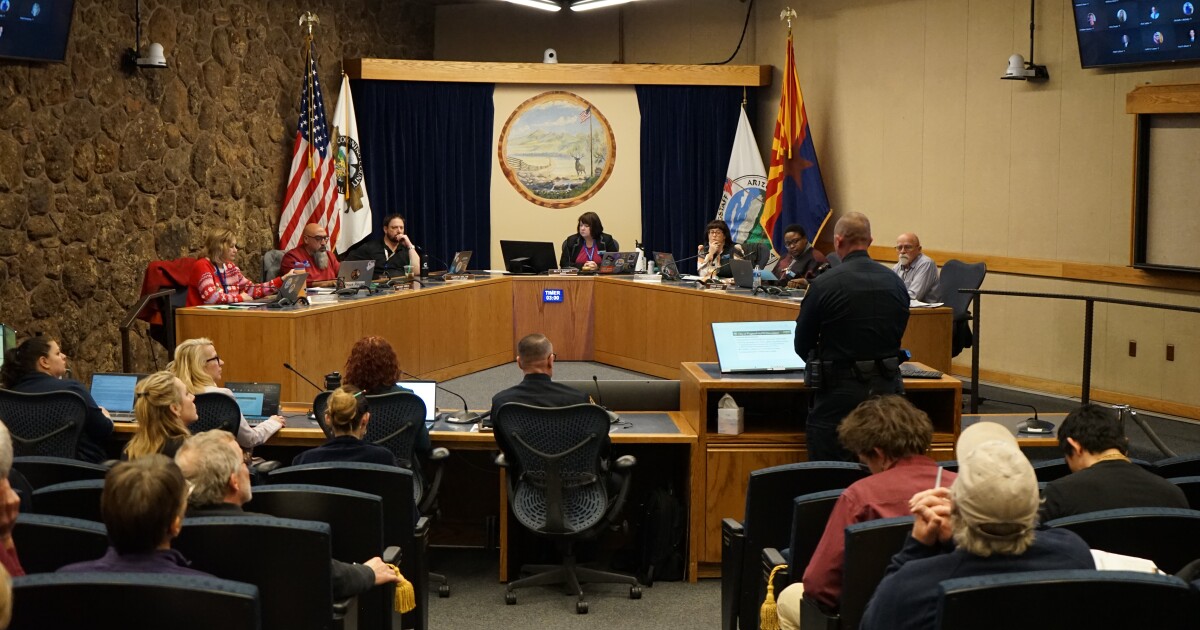
A Navajo Nation Council committee has unanimously passed legislation opposing the SAVE America Act, requiring proof of citizenship for voter registration.
Concerns Over Voter Influence
HEINSIUS: You’ve mentioned the growing impact of Indigenous voting power. Could this be an attempt to diminish that influence?
CURLEY: Certainly. Our voter turnout is rising among the Navajo and other tribal nations. This law could set us back, adding to existing barriers like real ID requirements and citizenship proof. It feels like a step backward, especially since our right to vote is relatively recent, granted in the 1940s. We should be advancing voting access, not adding hurdles.
HEINSIUS: What about Trump’s recent executive order on mail-in voting? How might it affect Navajo Nation voters?
CURLEY: Most Navajo voters in Arizona depend on mail-in voting due to transportation challenges, weather conditions, and income constraints. Often, over half opt for mail-in ballots. If mail-in voting is restricted, it could silence over 50% of our voters.
HEINSIUS: Speaker Curley, thank you for your insights.
CURLEY: You’re welcome. We’re hopeful Congress will support tribes like the Navajo Nation in opposing the SAVE Act and work to enhance voting access, not create more obstacles.
A Republican voting overhaul returns to Capitol Hill, now with a photo ID requirement and a new name. Critics argue it may disenfranchise millions.
—
Read More Arizona News