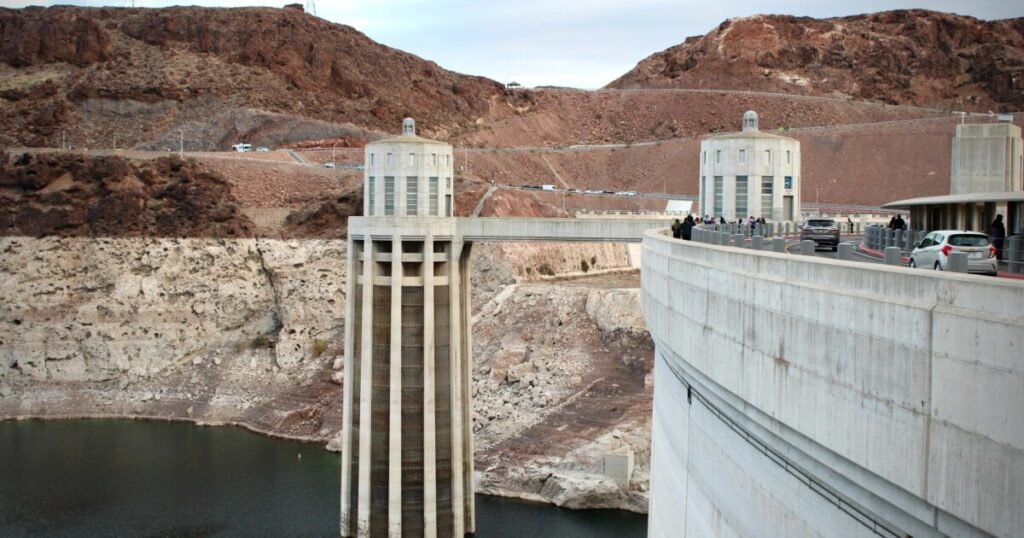
The recent unveiling of federal plans to manage the dwindling Colorado River water supply has sparked legal contention, with Nevada taking a stand against the Interior Department. This legal action highlights the complexities and disputes among states reliant on this crucial water source.
Nevada’s water authorities initiated a lawsuit against the federal government, challenging a strategy that significantly curtails water distribution among the Lower Basin states—Arizona, California, and Nevada. The lawsuit argues that these reductions unfairly burden Nevada while sparing the Upper Basin states, which include Colorado, New Mexico, Utah, and Wyoming, from similar cutbacks.
Nevada’s Stance on Federal Water Plan
The federal initiative aims to regulate Colorado River water demand through 2027 and 2028, with significant implications for Arizona’s water allocation. Nevada Governor Joe Lombardo criticized the plan, stating, “The Department of the Interior can’t roll Nevada and solve the entire Colorado River shortage on the backs of the Lower Basin states.” He emphasized Nevada’s willingness to contribute to solutions but insisted on equitable participation from all states involved.
The proposed management strategy grants the Interior Department the authority to slash over 70% of Nevada’s Colorado River water share. Although a temporary arrangement with reduced cutbacks is in place through 2028, the prospect of larger reductions looms.
Reactions and Implications
Arizona’s officials are still assessing the implications of Nevada’s legal move. Tom Buschatzke, Arizona’s principal water authority, noted the unexpected nature of the lawsuit, receiving news of it early Monday morning. He stated, “We’re still evaluating… But it certainly adds a significant additional level of uncertainty to all of the outcomes facing us.”
As negotiations continue, experts like Elizabeth Koebele from the University of Nevada, Reno, expressed surprise at Nevada’s legal approach, noting it diverges from anticipated legal strategies. The lawsuit challenges the federal government’s procedural adherence in formulating the water management plans, suggesting a failure to adequately consider the socioeconomic impacts on Nevada.
Potential Legal and Environmental Ramifications
Nevada’s legal challenge underscores dissatisfaction with the federal approach, asserting, as Koebele puts it, “If you’re unwilling to address some of those debates, then the solutions that you’re putting out aren’t necessarily lawful or fair to us.” While this lawsuit might not escalate to the Supreme Court, prolonged legal battles could impede urgent interventions needed for the Colorado River’s critically low reservoirs.
The urgency of addressing the Colorado River’s challenges is underscored by record-low reservoir levels, necessitating immediate and effective strategies to prevent systemic collapse. As Koebele advises, “we also probably need to figure out how to take some emergency measures in the short term to keep the system from crashing.”
—
Read More Arizona News

![Botched Ad Mix-Up: Super PAC Error in Arizona Congressional Race[embed]https://www.youtube.com/watch?v=bEMgIlCkHz0[/embed]](https://www.kitchentablenews.org/wp-content/uploads/2026/10/Botched-Ad-Mix-Up-Super-PAC-Error-in-Arizona-Congressional-RaceembedhttpswwwyoutubecomwatchvbEMgIlCkHz0embed.com2F0e2F962Fe971102f49e7a4f2a64fd3cc60a22Fjonatha.png "Botched Ad Mix-Up: Super PAC Error in Arizona Congressional Race[embed]https://www.youtube.com/watch?v=bEMgIlCkHz0[/embed]")