Forget fun runs and PTA bake sales.
The future of public school fundraising might soon resemble payroll deductions or tax-season campaigns urging filers to allocate donations to local public schools.
President Donald Trump’s tax overhaul, the One Big Beautiful Bill Act, introduced a national school voucher-style program aiding families with private or homeschool expenses, while also benefiting public schools. As per U.S. Treasury guidelines released in June, specific nonprofits can collect donations directed from federal taxes to cover public school costs like transportation or tutoring.
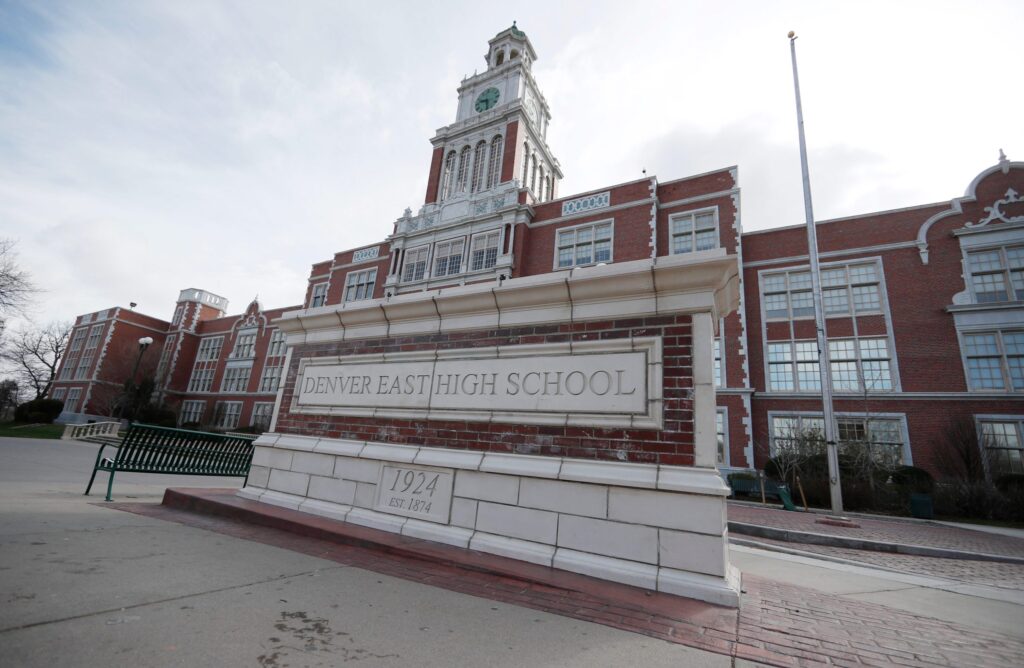
Sara Hazel, president of the Denver Public Schools Foundation, is among the district leaders planning to leverage this financial opportunity. She urges potential donors, “Do you want that money going to the IRS or local kids?”
The program enables taxpayers to contribute up to $1,700 to a scholarship-granting organization, receiving a dollar-for-dollar federal income tax credit.
These intermediaries, formed by nonprofits such as public school foundations, can be approved by the state. They would then distribute funds to benefit private, homeschool, or public school applicants.
Marguerite Roza, a school finance expert, advised school districts, many struggling with budget cuts and closures, not to overlook this funding source. “Any time there’s an available revenue source, generally we don’t see districts saying, ‘No thank you,’” Roza stated.
With 30 states opting into the program, it’s now up to school district leaders to decide on participation.
Experts suggest scholarships could provide districts with funds equating to 3% of their budget. However, this revenue could provoke political backlash, as teachers unions view it as a voucher expansion tool.
Concerns also arise about favoring districts with wealthy donors over low-income areas, where residents may not owe enough in federal taxes to contribute.
Thomas Toch, director of the FutureEd think tank at Georgetown University, worries the program might be a political strategy to promote school choice. “It was designed to make the case that this program can support the public sector in order to win support in blue states,” Toch commented.
Related: 10 things to know about Trump’s new school voucher program
The scholarship tax credits mark a significant shift from traditional federal school support.
Funds bypass the Department of Education, avoiding congressional spending decisions. Treasury regulators will soon issue formal rules to guide the program, covering expenses like field trips, technology, or support services.
The inclusion of public schools presents governors and superintendents with a dilemma: embrace a Trump-backed program boosting finances or leave the tax-credit funds unclaimed.
“The reality is this program exists, and if there are dollars on the table that can go to our children and families, I don’t understand the purpose of not trying to do everything we possibly can,” said Justin Dayhoff, CFO for Nevada’s Clark County School District.
Clark County, facing budget constraints and declining enrollment, has laid off staff amid financial strains. Enrollment has dwindled by over 35,000 students since the pandemic.
Related: Arizona gave families public money for private schools. Then private schools raised tuition
The financial impact of the voucher-style program on school districts remains uncertain.
Some experts anticipate fundraising could involve districts partnering with employers to enroll workers in the tax credit program, similar to existing pretax donation systems.
Roza, from Georgetown, estimated that enrolling district employees could yield about $200 per student, with potential increases through corporate partnerships.
Local employers are seen as crucial to this effort, according to Hazel of the Denver Public Schools Foundation.
Her foundation has yet to formally approach corporate partners like Chevron or United Airlines about enrolling employees in the tax credit program. Hazel is also considering potential competition with other Colorado districts for business leaders’ support.
“We’re the largest school district in Colorado, so we already have an advantage,” she noted. “But how can we go to a company and say, ‘Your employees must choose between all these great school districts?’”
Related: A lot goes on in classrooms from kindergarten to high school. Keep up with our free weekly newsletter on K-12 education.
However, her fundraising plans face operational challenges.
Under the new law, at least 90% of donations to scholarship-granting organizations must go directly to scholarships, limiting funds for marketing, staff, audits, and payment processing.
Despite awaiting further Treasury guidance, Hazel envisions what the funds could achieve for Denver schools.
“My dream is I can give every second grader a tutor and we get everyone to grade-level reading and math,” she stated. “There are things like that that are so scalable and would support every student.”
Contact staff writer Neal Morton at 212-678-8247, on Signal at nealmorton.99, or via email at morton@hechingerreport.org.
This story about the One Big Beautiful Bill Act was produced by The Hechinger Report, a nonprofit, independent news organization focused on inequality and innovation in education. Sign up for the Hechinger newsletter.

—
Read More Kitchen Table News


![Botched Ad Mix-Up: Super PAC Error in Arizona Congressional Race[embed]https://www.youtube.com/watch?v=bEMgIlCkHz0[/embed]](https://www.kitchentablenews.org/wp-content/uploads/2026/10/Botched-Ad-Mix-Up-Super-PAC-Error-in-Arizona-Congressional-RaceembedhttpswwwyoutubecomwatchvbEMgIlCkHz0embed.com2F0e2F962Fe971102f49e7a4f2a64fd3cc60a22Fjonatha.png "Botched Ad Mix-Up: Super PAC Error in Arizona Congressional Race[embed]https://www.youtube.com/watch?v=bEMgIlCkHz0[/embed]")