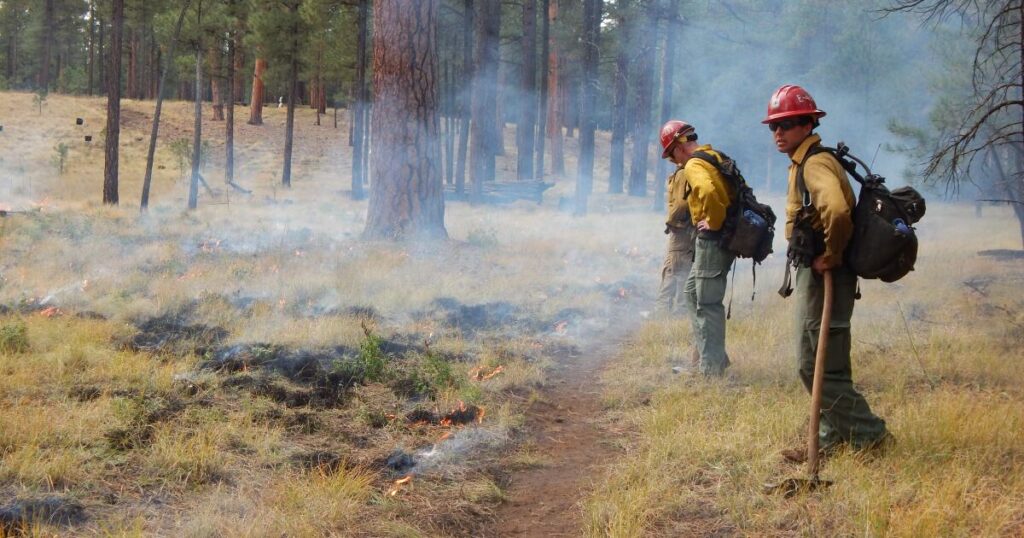
Wildland firefighters may soon receive a significant boost in their compensation, as a new proposal from the U.S. Office of Management and Budget aims to provide them with 25% hazard pay during prescribed burns. This initiative seeks to align their pay for planned ignitions with what they receive during wildfire suppression.
Historically, firefighters have been compensated with hazard pay for tackling wildfires, but the new regulation would extend this benefit to cover prescribed burns as well. Matthew Brossard, who serves as a National Business Representative for the National Federation of Federal Employees, emphasized the importance of this change. “It’s kind of rightening [sic] the wrong of the exposure to these carcinogens. Some of the most smoke I’ve ever ingested is on prescribed fire,” he stated. Brossard has a long history with the U.S. Forest Service, having served 22 years, predominantly in Southern California.
Firefighters are facing increased smoke exposure year-round due to the rising number of prescribed burns. Brossard noted, “[Firefighters are] busier in the summer months and the fire season, and now we’re burning more and more in the winter. So instead of having six to eight months of exposure, now firefighters are being exposed [to smoke] 12 months out of the year.”
The safety protocols for prescribed burns mirror those of wildfire suppression, requiring firefighters to carry identical protective gear. Brossard pointed out that this policy shift acknowledges the expanding scientific understanding of the health effects associated with wood smoke. A 2019 Forest Service study highlighted that wildland firefighters are at an elevated risk for lung cancer and cardiovascular disease, with wood smoke being a primary contributor.
The OMB is currently inviting public feedback on this proposed change until June 15.
President Donald Trump is withdrawing his nomination of the head of the hospitality company Delaware North to lead the National Park Service.
—
Read More Arizona News