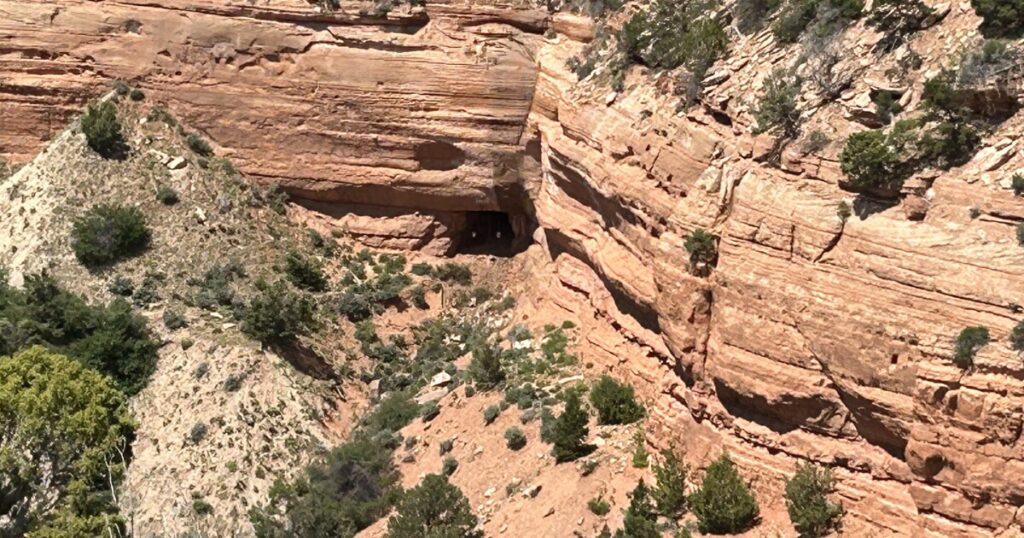
Efforts to address the pressing issue of abandoned mines on tribal lands are gaining momentum with a new legislative proposal. Recently, a U.S. House committee examined a bill aimed at reshaping the relationship between tribal nations and the federal government concerning these environmental hazards.
The House Energy and Commerce Subcommittee on the Environment has moved forward with the Legacy Mine Cleanup Act of 2025. This legislation, which enjoys bipartisan support from Arizona’s congressional representatives, including U.S. Reps. Eli Crane, Greg Stanton, and Sen. Mark Kelly, has also received backing from Navajo Nation President Buu Nygren. Although previously introduced in 2022, the bill did not pass at that time.
A key feature of the bill is the formal establishment of the Office of Mountains, Deserts, and Plains within the U.S. Environmental Protection Agency (EPA). This office would play a crucial role in tracking and coordinating the cleanup of abandoned mine sites, particularly the approximately 500 uranium mines affecting the Navajo Nation. Additionally, it will explore “innovative technologies and reuse approaches” to enhance cleanup efforts.
One such technology under consideration is backed by Wyoming-based DISA Tech. Greyson Buckingham, co-founder and CEO of the company, described their process at the hearing: “Our technology, high-pressure slurry ablation, is a mechanical process that uses water and particle-on-particle collisions to strip uranium, radium and vanadium off the sand [of mine tailings].” According to a 2023 EPA study, this method reduced contamination by over 90% on the Navajo Nation.
However, a 2025 EPA paper on the same technology revealed it “did not achieve site-specific Navajo residential cleanup goals for uranium.” The method has faced criticism from environmental groups, such as Dooda DISA, which argue that it remains experimental, consumes excessive water, and fails to completely resolve contamination. Dooda DISA also highlights a conflict with the 2005 Diné Natural Resources Protection Act, which bans uranium mining.
Besides advancing new cleanup technologies, the legislation seeks to provide funding to tribes for addressing abandoned hardrock mines. The Government Accountability Office estimates the presence of about 140,000 such mines across the United States.
In addition to the Legacy Mine Cleanup Act, the committee reviewed another proposal that mandates the EPA to devise a national strategy for recovering critical minerals within two years. Buckingham expressed support for this bill, known as the CHARM Act, alongside the Legacy Mine Cleanup Act of 2025.
—
Read More Arizona News


![Botched Ad Mix-Up: Super PAC Error in Arizona Congressional Race[embed]https://www.youtube.com/watch?v=bEMgIlCkHz0[/embed]](https://www.kitchentablenews.org/wp-content/uploads/2026/10/Botched-Ad-Mix-Up-Super-PAC-Error-in-Arizona-Congressional-RaceembedhttpswwwyoutubecomwatchvbEMgIlCkHz0embed.com2F0e2F962Fe971102f49e7a4f2a64fd3cc60a22Fjonatha.png "Botched Ad Mix-Up: Super PAC Error in Arizona Congressional Race[embed]https://www.youtube.com/watch?v=bEMgIlCkHz0[/embed]")