Cattle Cross U.S.-Mexico Border After Year-Long Hiatus Due to Screwworm Concerns
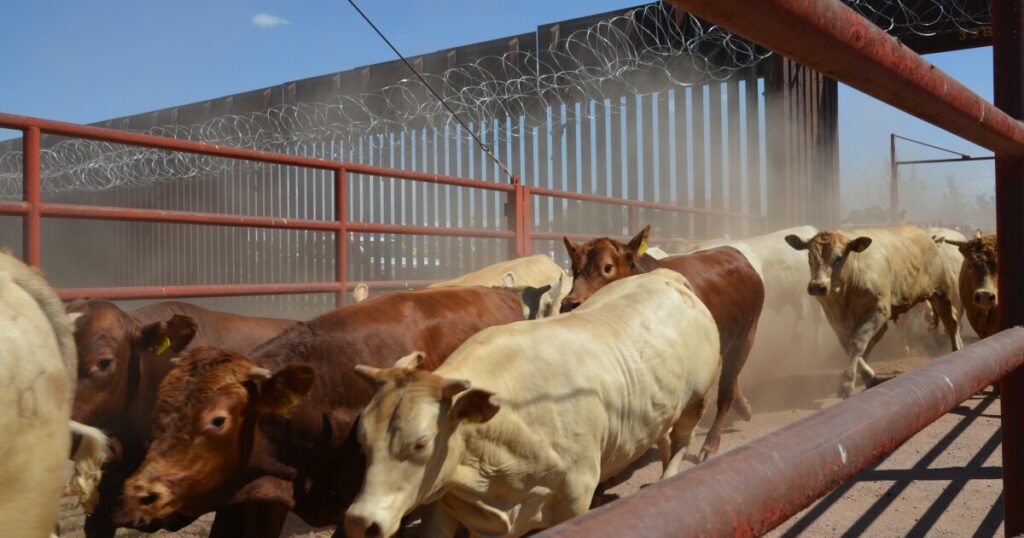
In a significant move for cross-border agricultural trade, nearly 700 cattle made their way through the 30-foot border wall into Douglas, Arizona, marking the first such crossing in over a year. This reopening is part of a new bilateral effort to control the spread of the New World screwworm, a flesh-eating parasite.
Gerardo Guerrero Gonzalez from Mexico’s agriculture ministry emphasized the importance of cross-border cooperation in combating the parasite, stating, “Binational coordination is fundamental to control and eradicate the New World screwworm.” This initiative comes shortly after a case of the parasite was identified in Sonora, a state south of Arizona, from where the cattle originated.
Despite the recent detection in Sonora, around 400 miles away from Douglas, officials assure that the cattle crossing the border are free from the parasite. “All the cattle that are coming from Mexico are completely healthy,” Guerrero Gonzalez confirmed.

Alan Huddleston from the U.S. Department of Agriculture’s Animal and Plant Health Inspection Service (APHIS) detailed the extensive inspection protocol these cattle underwent. This includes checks by screwworm-detecting dogs. Huddleston explained, “This whole process of reopening the Douglas port is a proof of concept that we have designed an animal import protocol for cattle that will ensure that cattle that are imported into the United States legally, and are imported using our protocol, will have a negligible risk of bringing New World screwworm into the country.”
The success of this protocol in Douglas might pave the way for other border ports to follow suit.
Meanwhile, U.S. cattle ranchers are seeing high market prices as the national cattle herd hits historic lows, pushing up consumer costs. Rancher Frank Ambriz, who oversees cattle near Douglas, is diligently ensuring his herd remains parasite-free. “I go to the ranch at least 24 hours,” Ambriz said, humorously adding, “I’m trying to put another hour into the day so it can be 25.”

Ambriz views the reopening positively, anticipating benefits for the industry despite potential price decreases. He favors resumed live cattle imports over recent announcements to ease ground beef tariffs, which have faced criticism from U.S. ranchers and legislators.
“It’s going to hurt us down the road, prices are going to take a drop,” Ambriz remarked, reflecting on the potential market impacts.
—
Read More Arizona News

![Botched Ad Mix-Up: Super PAC Error in Arizona Congressional Race[embed]https://www.youtube.com/watch?v=bEMgIlCkHz0[/embed]](https://www.kitchentablenews.org/wp-content/uploads/2026/10/Botched-Ad-Mix-Up-Super-PAC-Error-in-Arizona-Congressional-RaceembedhttpswwwyoutubecomwatchvbEMgIlCkHz0embed.com2F0e2F962Fe971102f49e7a4f2a64fd3cc60a22Fjonatha.png "Botched Ad Mix-Up: Super PAC Error in Arizona Congressional Race[embed]https://www.youtube.com/watch?v=bEMgIlCkHz0[/embed]")