Democrats Move to Fulfill Pledge on Data Center Restrictions
Although Democrats won’t officially control Congress until January 2027, they have already begun to make strides toward one of their key campaign promises: imposing restrictions on data centers. In recent weeks, over a dozen Democratic legislators in the House and Senate have introduced or supported bills aimed at banning data center development on federal public lands.
This legislative push is a direct counter to efforts by President Donald Trump and Interior Secretary Doug Burgum, who have been advocating for such developments as a way to circumvent state and local opposition. Oregon Representative Maxine Dexter introduced the Protecting Our Public Lands from Data Centers Act on November 11. She stated, “These treasured lands are where people hunt, fish, hike and graze livestock,” and emphasized that her bill aims to preserve these lands from data center developments for future generations. Her remarks can be found here.
The ongoing initiatives by the administration and the Democratic response were initially reported by ProPublica.
Data centers, crucial for powering AI systems and various online services, have become controversial due to their high electricity and water consumption, which have been linked to increased utility costs in nearby areas. Additionally, local residents have raised concerns about the consistent noise these centers produce, described as a low-frequency hum akin to an air conditioning unit. More information on these complaints is available here.
In response, numerous municipalities have enacted laws prohibiting data center construction. New York is currently considering a statewide ban. Allowing data centers on federally owned public lands could potentially allow developers to sidestep these local restrictions.
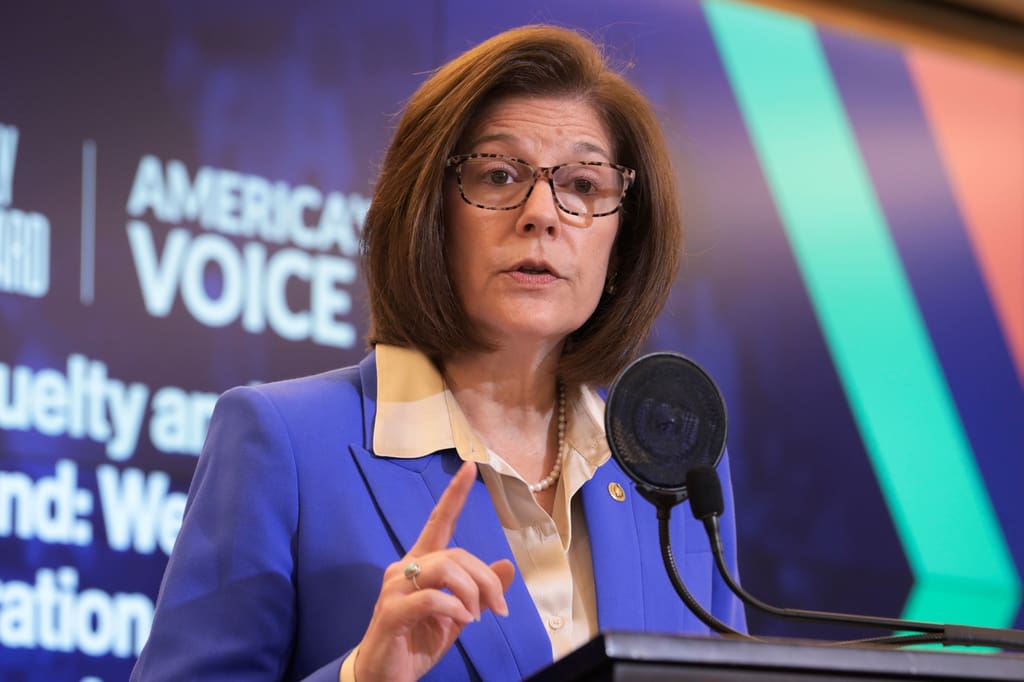
Nevada Senator Catherine Cortez Masto, set to lead the Senate Energy and Natural Resources Committee, has also voiced her opposition. On social media, she stated, “Our public lands aren’t a piggy bank for Trump’s powerful friends.” Cortez Masto is actively working on related legislation.
Michigan Representative Rashida Tlaib had previously introduced the No AI Data Centers on Federal Lands Act in July, but it was blocked by House Republicans. She now plans to reintroduce the bill, according to ProPublica.
The backlash against data centers played a significant role in the 2026 midterms, where Democrats gained 44 House seats and nine Senate seats by November 19. Republicans have struggled to present a unified stance on the issue, while major GOP campaign groups continue to receive substantial donations from companies like Amazon, Meta, and OpenAI, all of whom support data centers. Details on these donations can be found here.
Some Senate Republicans attempted to address the issue with the Ratepayer Protection Act, a bill designed to make large data centers responsible for their own electricity costs. However, critics argue that the bill lacks enforceability, as it merely requires public utility commissions to hold hearings without mandating the enactment of any standards.
Connecticut Senator Chris Murphy criticized the bill, stating to Yahoo Finance, “It’s just fakery to try to fool voters into forgetting that Republicans spent the entire term trying to stop states from regulating AI.”
An ABC News poll indicates that 66% of Americans are opposed to building more data centers in the U.S., with 72% specifically against such developments in their communities.
—
Read More Kitchen Table News