For stories of life in our changing world, subscribe here to the global health newsletter.
In a surprising turn of events, the Teen Pregnancy Prevention Program grants, a significant source of funding for organizations across the United States, have been largely terminated by the federal Department of Health and Human Services. This decision, made in late June, has resulted in the cancellation of most grants, affecting numerous organizations including health departments, universities, and Planned Parenthood affiliates, leaving only a handful of programs still supported.
Last July, the Trump administration mandated that organizations receiving these grants align their program materials with specific executive orders, emphasizing biological sex over gender ideology. Organizations like Healthy Futures of Texas, which operates in various Texan communities, had to undergo extensive revisions to comply with these new rules. “We had to essentially adapt and revise all of the already approved curricula,” said Ginger Mullaney, the CEO of Healthy Futures of Texas.
Despite efforts to meet federal requirements, the organization was blindsided when its $2 million annual grant was abruptly canceled. This follows a broader decision by the Department of Health and Human Services to revoke funding for nearly all Teen Pregnancy Prevention Program grantees, which amounted to $66 million nationwide. The official reason cited was a “misalignment with agency priority, specifically normalizing sexual activity for minors.”
A History of ‘Rigorous’ Evaluation
The Teen Pregnancy Prevention program, established in 2010, has long been under scrutiny. Despite the teen pregnancy rate in the U.S. declining dramatically since the 1990s, it remains higher than in peer countries, with significant social and economic costs. Prior to the establishment of this funding stream, programs were rigorously evaluated using randomized controlled trials, considered the gold standard in public policy effectiveness, according to Nicholas Mark from the University of Wisconsin Madison.
The program’s foundation aimed at reducing teen pregnancy and promoting healthy behaviors among teenagers. However, the Trump administration, along with conservative groups such as the Heritage Foundation, have criticized it, leading to an initial cancellation during Trump’s first term that was later reversed after legal challenges. Despite this, President Trump’s recent budget proposal sought to eliminate the program, citing concerns over its efficacy and alleged misuse of taxpayer funds.
‘Normalizing Sexual Activity for Minors’
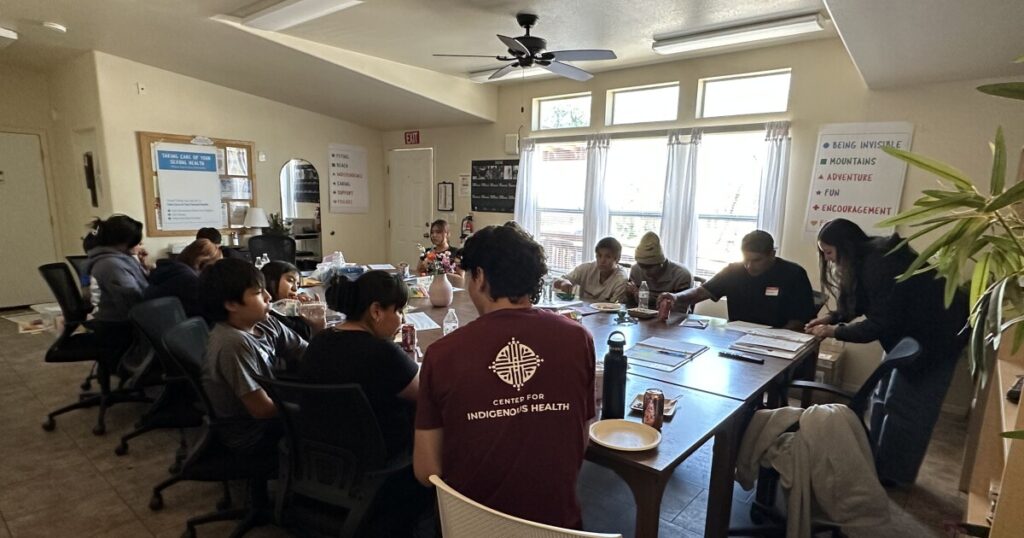
The federal funding cuts have had tangible impacts on individuals like Paige Preston, an 18-year-old from the Navajo Nation, who attended a LiFT workshop provided by the Johns Hopkins Center for Indigenous Health. This workshop, which was canceled due to funding cuts, was a source of critical sexual health education for Preston and her peers. “It connects you with your trusted adult,” she explained, emphasizing the importance of having a safe space for learning about sexual health.
Preston’s experience underscores the significant role these programs play, particularly in communities with high teen pregnancy rates. She highlights that many young people in her community, where American Indian and Alaska Natives face the highest teen pregnancy rates, rely on such programs for education that may not be accessible at home or in school.
The rationale for funding termination, described by Nicholas Mark as a “bizarre” framework, raises concerns about the availability of reliable sexual health information for teenagers. “In a world where teens have smartphones,” Mark argues, “it seems silly to think that having a source of verifiable, trusted information on safe sex would be worse than the information environment that people are already steeped in.”
Copyright 2026 NPR
—
Read More Michigan News