Exploring the Versatility of Arizona’s Barrel Cactus
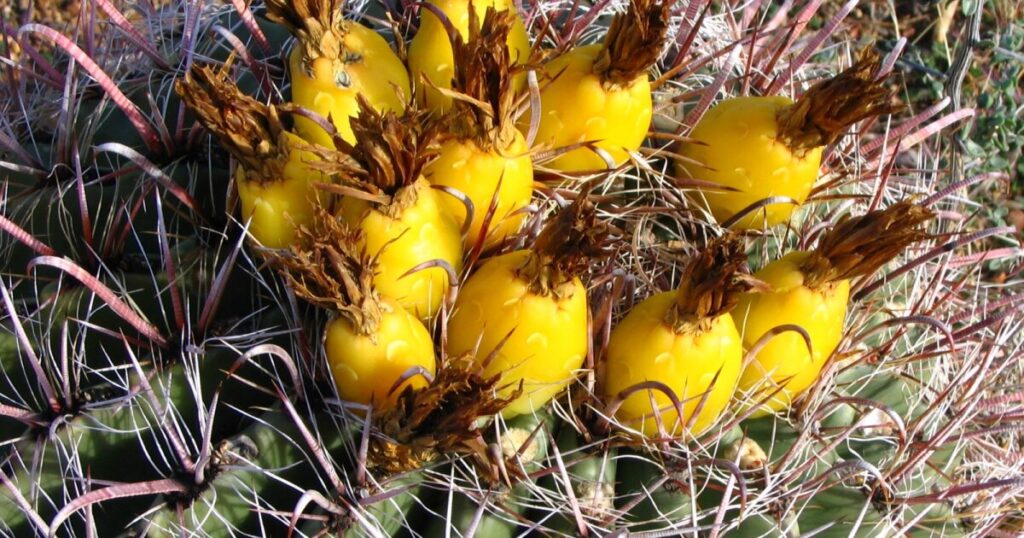
While traversing the arid landscapes of Arizona, one may encounter the barrel cactus, a plant that offers more than its barrel-like appearance suggests. Though it won’t quench your thirst, this desert native is adorned with striking yellow fruits, reminiscent of tiny pineapples, which have long served multiple roles in Indigenous cultures.
According to A.F. Whiting’s Havasupai Habitat, the barrel cactus’s utility extends beyond aesthetics. Historically, its hollowed-out form was used as makeshift cooking pots, while its durable spines were crafted into ornamental rings. In a playful twist, children even rolled these cacti down hills as part of a traditional game.
The culinary potential of the barrel cactus fruit is equally noteworthy. With its smooth, spineless exterior and a core brimming with edible black seeds, the fruit can be consumed raw or integrated into various dishes. Alan Bergo, a James Beard Award-winning chef, chronicles his annual quests for this unique ingredient in Arizona. He describes the fruit as “very tart, sour and bright,” a testament to its ability to enhance both sweet and savory culinary creations. From stews to chutneys and flatbreads, Bergo has explored the fruit’s diverse applications.
For the Hualapai people in Northern Arizona, the tradition of harvesting and roasting barrel cacti is a time-honored practice, emphasizing the plant’s cultural significance.
Next time you’re on a desert trail and spot these vibrant fruits, consider sampling them to experience a taste of Arizona’s natural bounty.
This Earth Note was written by Cory Tompkins and produced by KNAU and the Sustainable Communities Program at Northern Arizona University.
—
Read More Arizona News