Michigan’s Political Landscape Shifts as Lt. Gov. Garlin Gilchrist II Alters Course
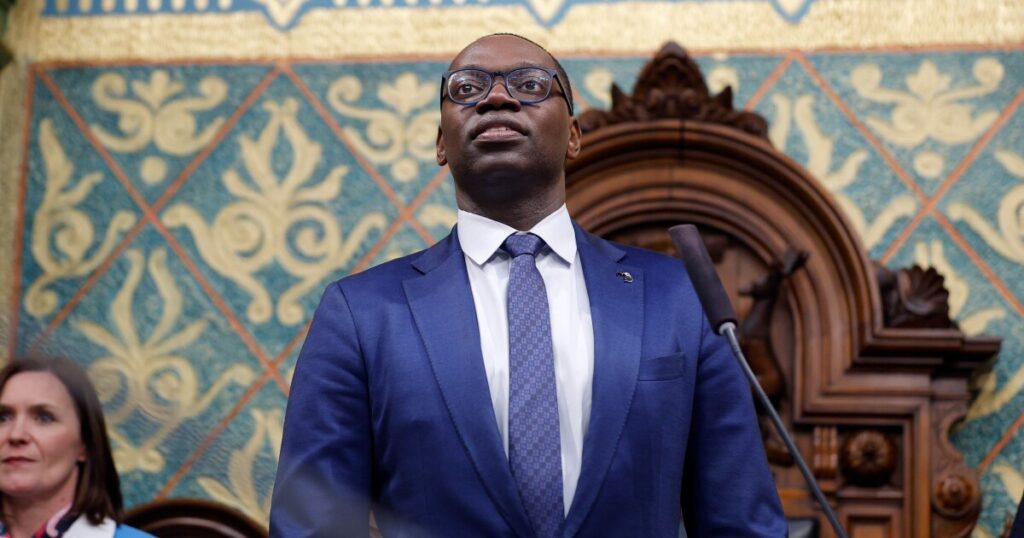
In a significant shake-up in Michigan’s political scene, Lt. Gov. Garlin Gilchrist II has decided to halt his gubernatorial campaign and instead pursue the position of secretary of state. This development was announced in a video message on Monday, where Gilchrist, a progressive figure from Detroit, emphasized his ongoing commitment to public service without specifying the reason for his pivot.
The move is set to reshape the Democratic primary dynamics, potentially clearing the path for frontrunner Jocelyn Benson, Michigan’s current Secretary of State, in the quest to succeed the term-limited Gov. Gretchen Whitmer.
Gilchrist highlighted Michigan’s pivotal role in the national electoral landscape, stating, “Michigan has been ground zero in the battle for free and fair elections before, and it will be again.” His campaign has struggled to compete with Benson’s established name recognition and financial resources, with Gilchrist disclosing campaign funds of approximately $378,000 against Benson’s substantial $2.98 million war chest as of October.
With Gilchrist’s shift, Benson is poised to face only Genesee County Sheriff Chris Swanson in the Democratic primary set for August.
Adding complexity to the political landscape is the presence of an independent candidate, former Detroit Mayor Mike Duggan, who has opted to bypass the costly primary process. This decision has drawn criticism from the Michigan Democratic Party, especially for Duggan’s lack of opposition to policies during President Donald Trump’s second term.
On the Republican front, the primary race features notable figures such as U.S. Rep. John James, former Michigan Attorney General Mike Cox, state Senate Leader Aaric Nesbitt, and former Michigan House speaker Tom Leonard.
For the role of secretary of state, Gilchrist joins a crowded field of Democratic contenders, including Barb Byrum, Ingham County clerk; Aghogho Edevbie, deputy secretary of state; Suzanna Shkreli, a former aide to Whitmer and commissioner of the Michigan State Lottery; and Adam Hollier, a former state senator from Detroit. The Democratic nominee is slated to be determined by precinct delegates at the party convention on April 19, as Michigan does not conduct primary elections for this position.
The Republican nomination process will unfold at their convention on March 28, with hopefuls including Anthony Forlini, Macomb County Clerk, and Monica Yatooma, an executive from Oakland County.
This year’s elections in Michigan are not limited to the governor and secretary of state positions; voters will also decide on a new state attorney general and a U.S. senator come November.
—
Read More Michigan News